
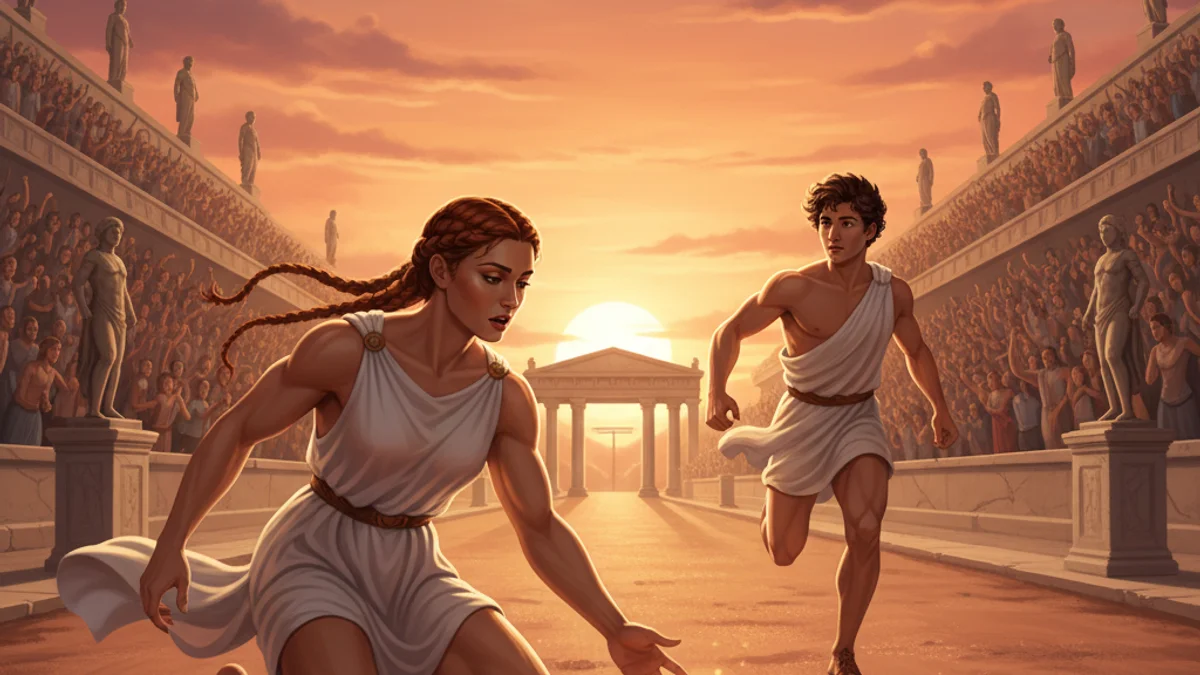
Atalanta was a formidable huntress, raised in the wild and blessed with speed that surpassed any man. Wary of an oracle's prophecy that marriage would be her undoing, she declared a challenge for her many suitors: they must beat her in a footrace, or face immediate execution. Many lost their lives until Hippomenes fell in love with her. Knowing he could not outrun her naturally, he prayed to Aphrodite, the goddess of love. Aphrodite gave him three enchanted golden apples from the Garden of the Hesperides. During the high-stakes race, whenever Atalanta surged ahead, Hippomenes tossed an apple in her path. Entranced by their divine shimmer and weight, Atalanta paused three times to retrieve them. This calculated distraction allowed Hippomenes to cross the finish line first, winning the hand of the woman who thought herself unbeatable.
Wit and strategy can overcome even the greatest physical advantages, but distractions can lead one away from their primary goal.
Questions about this story
Why did Atalanta refuse to marry?
Atalanta refused to marry because an oracle warned that marriage would lead to her ruin. To deter suitors, she established a deadly footrace where the penalty for losing was death.
Who helped Hippomenes win the race against Atalanta?
The goddess Aphrodite helped Hippomenes by providing him with three golden apples. She did this because Hippomenes prayed for her help and she wished to see the prideful Atalanta fall in love.
What happened to Atalanta and Hippomenes in the end?
After the race, the couple neglected to thank Aphrodite for her help. Enraged, the goddess caused them to offend the gods in a temple, and they were subsequently transformed into lions as punishment.
Where did the golden apples come from?
The golden apples came from the Garden of the Hesperides, a sacred orchard where Hera grew her most precious fruit. In some versions, they are said to have come from the island of Cyprus.
Advertisement

Good night.
