
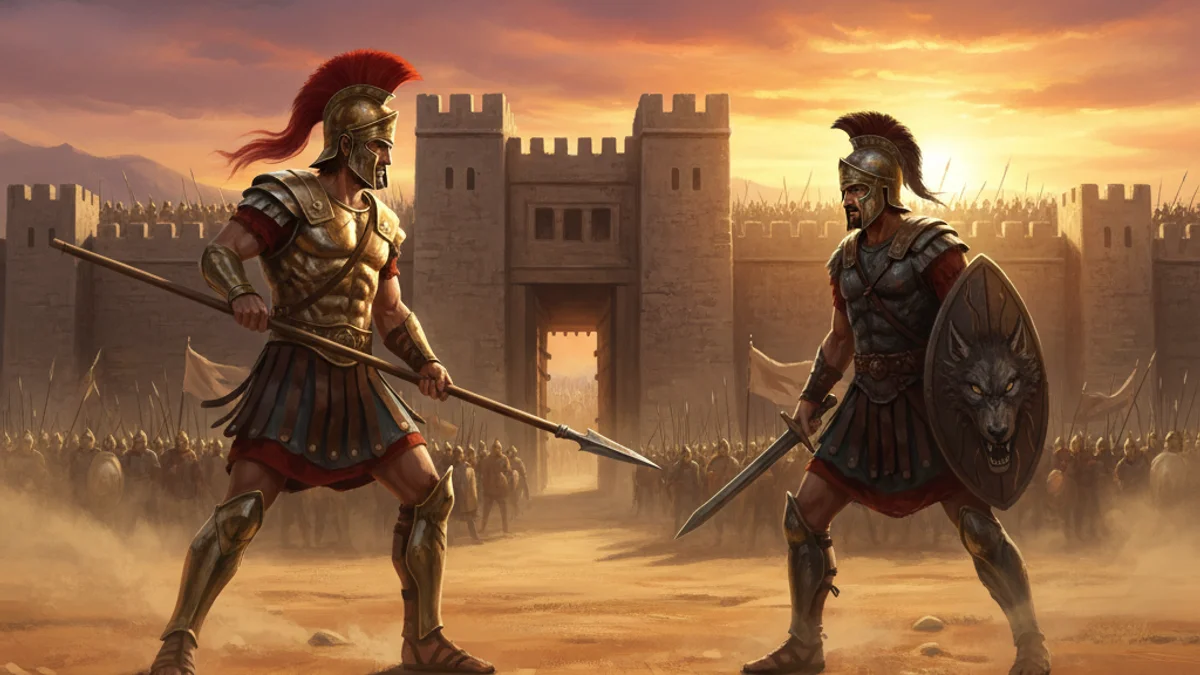
During the tenth year of the Trojan War, the Greek hero Achilles withdrew from battle in a fit of pride. His absence allowed the Trojan prince Hector to push the Greeks back to their ships. In the chaos, Achilles’ closest companion, Patroclus, donned Achilles' armor to inspire the troops but was slain by Hector. Consumed by a blinding rage and grief, Achilles returned to the field, slaughtering Trojans until he reached Hector at the Scaean Gates. Although Hector was Troy's greatest protector, he was eventually outmatched by Achilles' divine fury and the intervention of Athena. After killing Hector, Achilles dishonored his foe by dragging the body behind his chariot. However, when King Priam of Troy secretly entered the Greek camp to plead for his son’s remains, Achilles saw his own father’s likeness in the old king. He relented, showing a moment of profound humanity by returning Hector's body for a proper funeral, marking the tragic intersection of war and compassion.
Even in the midst of vengeful rage, true greatness is found in the capacity for empathy and honoring the dignity of one's enemies.
Questions about this story
What is the moral of Achilles and Hector?
The story teaches that uncontrollable rage leads to dehumanization, but empathy can restore one's spirit. It highlights that even the greatest warriors are bound by fate and shared human suffering.
Why did Achilles kill Hector?
Achilles killed Hector to avenge the death of his best friend, Patroclus. Hector had killed Patroclus in battle, mistaking him for Achilles because Patroclus was wearing Achilles' armor.
How did Achilles treat Hector's body?
Initially, Achilles acted with cruelty by piercing Hector's ankles and dragging his body behind a chariot around the city of Troy. He eventually relented and returned the body after King Priam pleaded with him.
Who helped Achilles defeat Hector?
The goddess Athena aided Achilles by disguising herself as Hector's brother, Deiphobus, to trick Hector into standing his ground. She also returned Achilles' spear to him during the combat.
Advertisement
Good night.
