Story Summary
Discover the wit of Nasrudin and the Pot. When a neighbor’s greed leads him to believe a pot can give birth, Mulla Nasrudin teaches him a lesson about death.
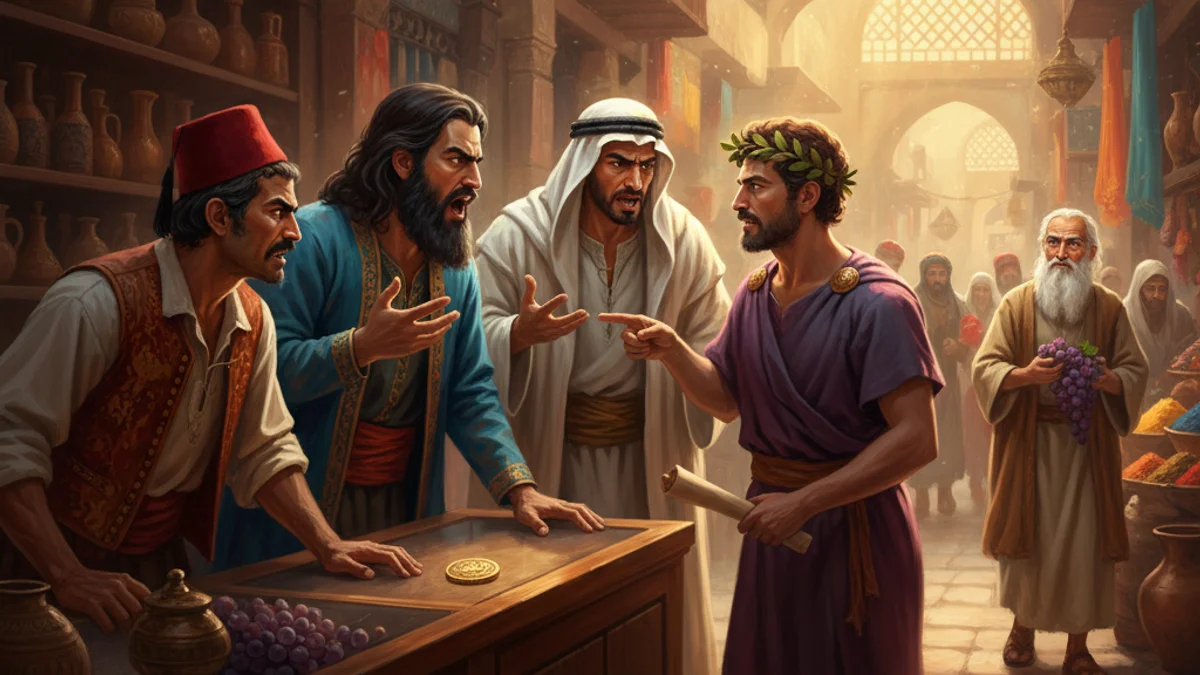
One day, Mulla Nasrudin borrowed a large cooking pot from his neighbor. A few days later, he returned the pot with a tiny pot tucked inside. When the curious neighbor asked about the smaller vessel, Nasrudin replied with a straight face, 'Congratulations! Your pot was pregnant while in my care, and it gave birth to this child.' Delighted by the prospect of a free pot, the neighbor greedily accepted the explanation and both items. A week later, Nasrudin borrowed the large pot again. This time, weeks passed without its return. When the neighbor finally came to Nasrudin's door to reclaim it, the Mulla looked at him sadly and said, 'I have terrible news. Your pot has died.' The neighbor was outraged, shouting, 'That is ridiculous! How can a cooking pot die?' Nasrudin smiled calmly and replied, 'If you were willing to believe that a pot could give birth, why is it so hard for you to believe that it can die?'
The Moral
Greed often blinds us to logic; if you accept an impossible gain, you must also be prepared to accept an impossible loss.
“If you can believe a pot can give birth, why is it so hard to believe it can die?”
Fun Fact
Mulla Nasrudin is a beloved folk character across the Middle East, Balkans, and Central Asia, with many countries claiming him as their own historical figure.
Frequently Asked Questions
What is the moral of Nasrudin and the Pot?
The moral is that greed makes people abandon logic and consistency. If someone is willing to accept a benefit based on a lie, they must also accept the consequences when that same lie works against them.
Who is Mulla Nasrudin in Sufi literature?
Mulla Nasrudin is a fictional character in Sufi folklore known as a 'wise fool.' His stories use humor and absurdity to point out human hypocrisies and provide deep spiritual or psychological insights.
Why did Nasrudin give the neighbor a small pot first?
Nasrudin gave the neighbor a small pot to test his integrity and set a trap. By accepting the 'birth' of the pot, the neighbor proved he was greedy enough to believe an impossibility if it benefitted him.
What does the 'dead pot' symbolize in the story?
The dead pot symbolizes the inevitable loss that follows ill-gotten or illogical gains. It represents the logical conclusion of the neighbor's own greed-driven reasoning.
Is Nasrudin and the Pot a real Sufi teaching?
Yes, it is one of the most famous Nasrudin tales used in Sufi teaching to illustrate how the ego (nafs) can easily be manipulated by its own desires and lack of common sense.
How does this story address the concept of justice?
The story suggests a form of poetic justice where the neighbor's own lack of logic is used to punish him. Nasrudin essentially uses the neighbor's greed as a mirror to reflect his own foolishness.