Story Summary
Experience the tragic Persian legend of Layla and Majnun, a haunting tale of star-crossed lovers whose devotion leads to madness and spiritual transcendence.
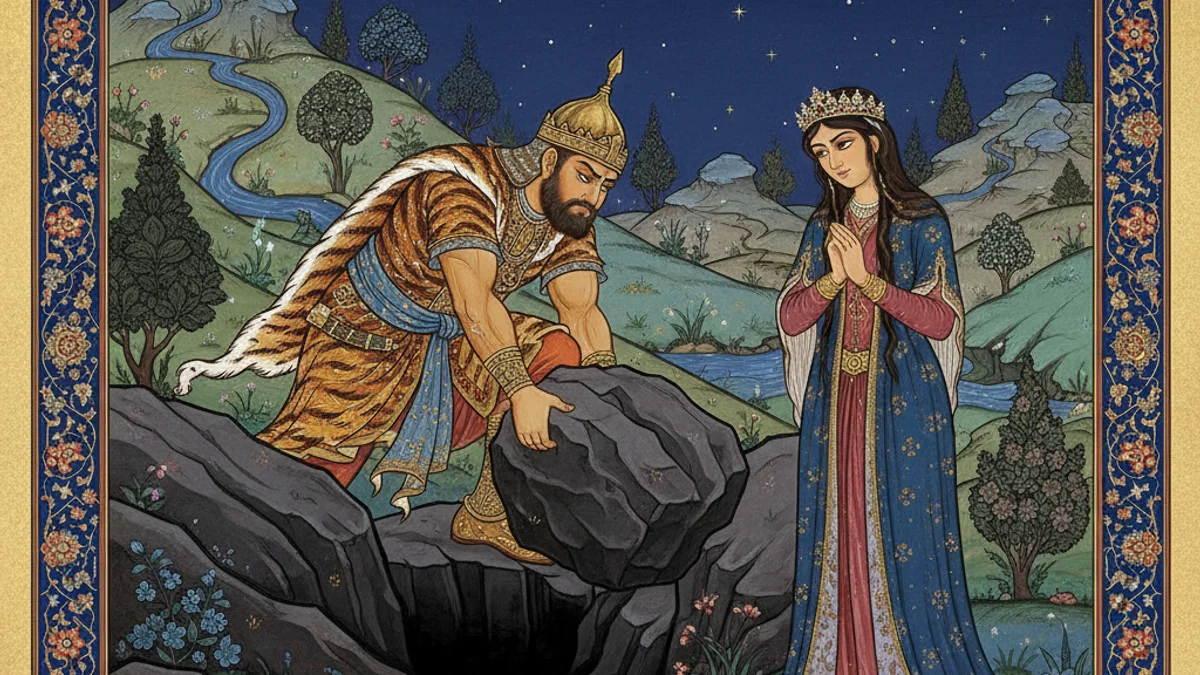
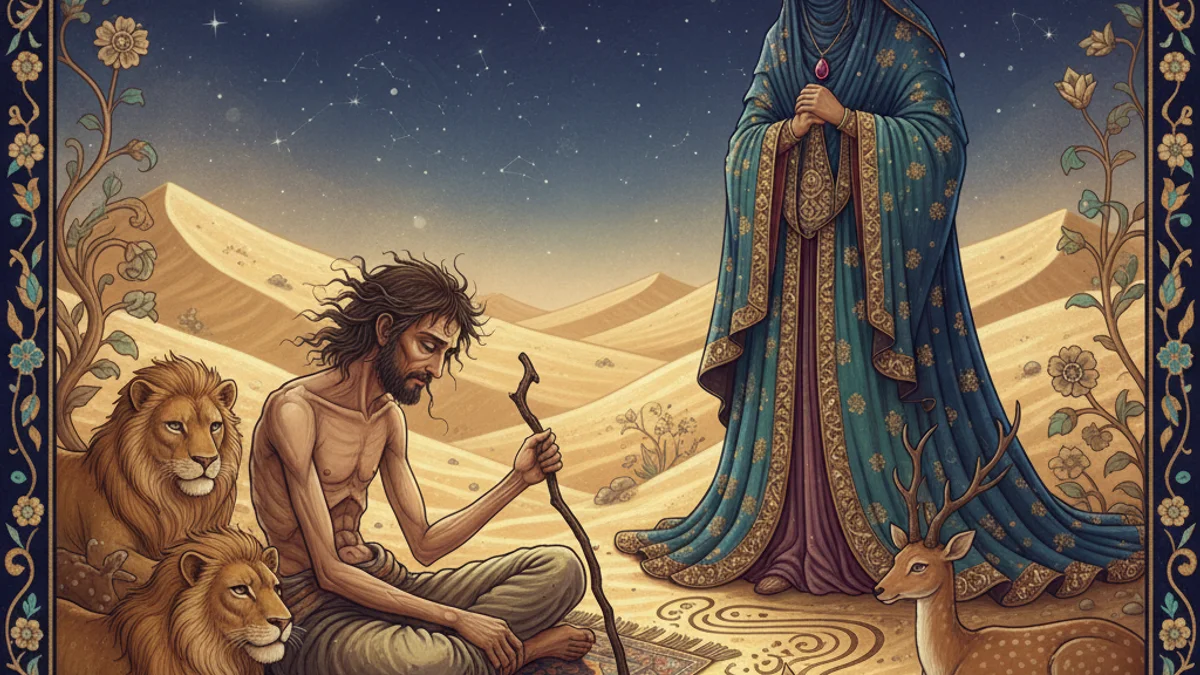
In the deserts of Arabia, young Qays ibn al-Mulawwah fell deeply in love with his classmate, the beautiful Layla. Their bond grew through shared poetry, but when Qays openly sang of his devotion, Layla’s father deemed the public display scandalous and forbade their union. Separated from his soulmate, Qays fled into the wilderness, his grief so profound that he lost his mind, earning the name 'Majnun'—the Madman. He lived among wild animals, writing verses for Layla in the sand. Layla was forced to marry another man, yet she remained loyal to Qays in her heart, eventually dying of a broken heart. Upon hearing of her death, Majnun traveled to her grave, where he too breathed his last. Legend says they were buried side by side, finally united in a world beyond the physical.
The Moral
True love is a spiritual journey that transcends the physical world, proving that the soul's devotion is eternal even when earthly union is denied.
“I pass by these walls, the walls of Layla, and I kiss this wall and that wall. It is not love of the walls that has enthralled my heart, but of the One who dwells within.”
Fun Fact
Lord Byron famously referred to the story of Layla and Majnun as 'The Romeo and Juliet of the East,' highlighting its status as the definitive tragic romance of the Orient.
Frequently Asked Questions
What is the moral of Layla and Majnun?
The story suggests that pure love is a form of spiritual madness that brings one closer to the Divine. It teaches that the bond of the soul is more powerful than any social or physical barrier.
Is the story of Layla and Majnun based on a true story?
The legend is based on the real-life 7th-century Arab poet Qays ibn al-Mulawwah. While the details became mythologized over centuries, his poems about his unrequited love for Layla al-Aamiriya are historical facts.
Why is Qays called Majnun?
The word 'Majnun' in Arabic means 'madman' or 'possessed.' He was given this name by his community because his obsession with Layla caused him to abandon society and live in the wild.
How does the story of Layla and Majnun end?
The story ends tragically with both lovers dying of grief. Layla dies first after a life of forced marriage and isolation, and Majnun dies shortly after at her graveside, unable to live without her.
Who wrote the most famous version of this story?
The most celebrated version was written by the 12th-century Persian poet Nizami Ganjavi. His epic poem transformed the folk tale into a masterpiece of Sufi literature and courtly romance.
Is Layla and Majnun similar to Romeo and Juliet?
Yes, it is often called the 'Romeo and Juliet of the East.' Both stories feature star-crossed lovers from feuding or restrictive backgrounds whose love only finds peace in death.
Discussion (0)
Share your thoughts on this story
No comments yet. Be the first to share your thoughts!