
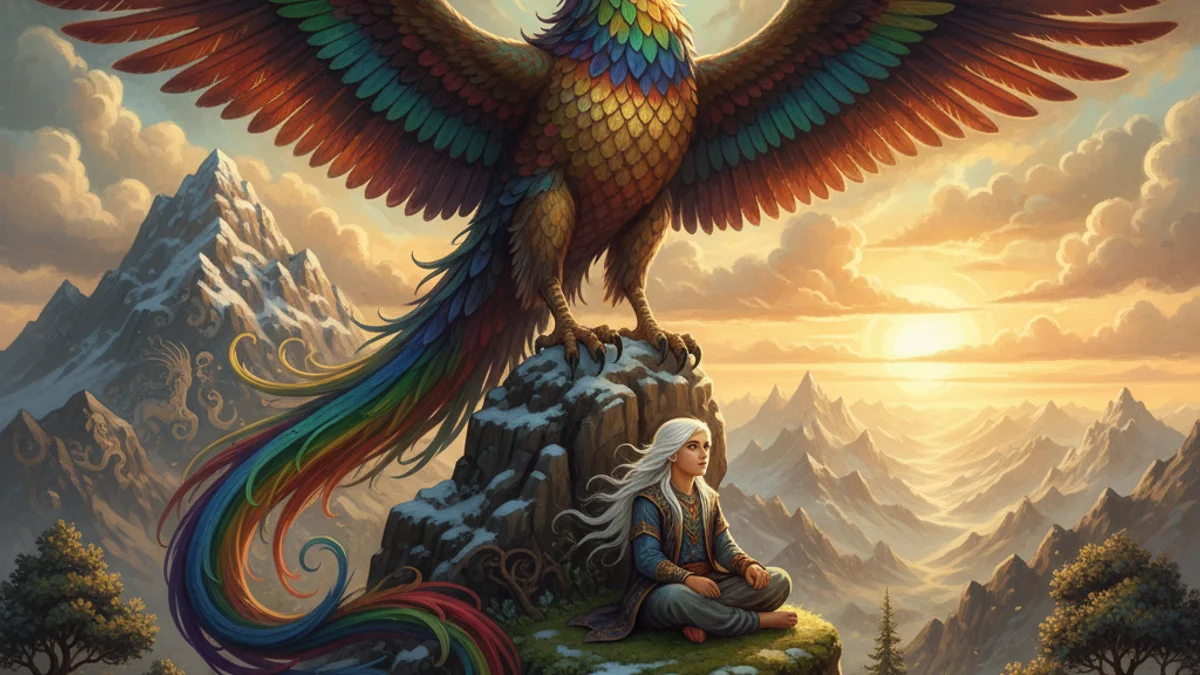
When King Sam of Persia was blessed with a son, his joy turned to fear upon seeing the infant. The boy, Zal, was born with hair as white as snow. Fearing it was a curse or the mark of a demon, Sam abandoned the child at the foot of Mount Alborz. However, the Simorgh—a giant, mythical bird of immense wisdom—found the crying infant. Instead of devouring him, she carried him to her high nest and raised him alongside her own chicks. Years later, a remorseful Sam, guided by a dream, traveled to the mountain to seek his son. The Simorgh, seeing that Zal's destiny lay with his own kind, returned him to his father. Before they parted, she gave Zal one of her feathers, telling him to burn it if he ever faced a trial he could not overcome. Zal returned to become a great hero, eventually fathering the legendary Rostam, and the Simorgh remained his eternal guardian.
True nobility is found in one's character rather than outward appearance, and even the most rejected souls can achieve greatness through compassion.
Questions about this story
What is the moral of Zal and the Simorgh?
The story teaches that physical differences should not be judged as omens of evil. It emphasizes that wisdom and love can be found in the most unexpected places, bridging the gap between humans and nature.
Why was Zal abandoned by his father?
Zal was born with albinism, resulting in striking white hair. His father, Sam, viewed this as a mark of the Ahriman (demons) and feared the social shame of a child who looked like an old man.
Who is the Simorgh in Persian mythology?
The Simorgh is a benevolent, mythical bird of immense age and wisdom. She is often depicted as a protector of heroes and a source of divine healing and knowledge in the Shahnameh.
How does Zal call the Simorgh for help?
The Simorgh gave Zal a golden feather from her wing. By casting the feather into a fire, Zal could summon the bird from across the world to assist him in times of dire need.
Advertisement


Good night.
