Story Summary
Discover the timeless wisdom of The Horse and the Stag. Learn why seeking revenge can lead to the loss of freedom in this classic Aesop’s fable for all ages.
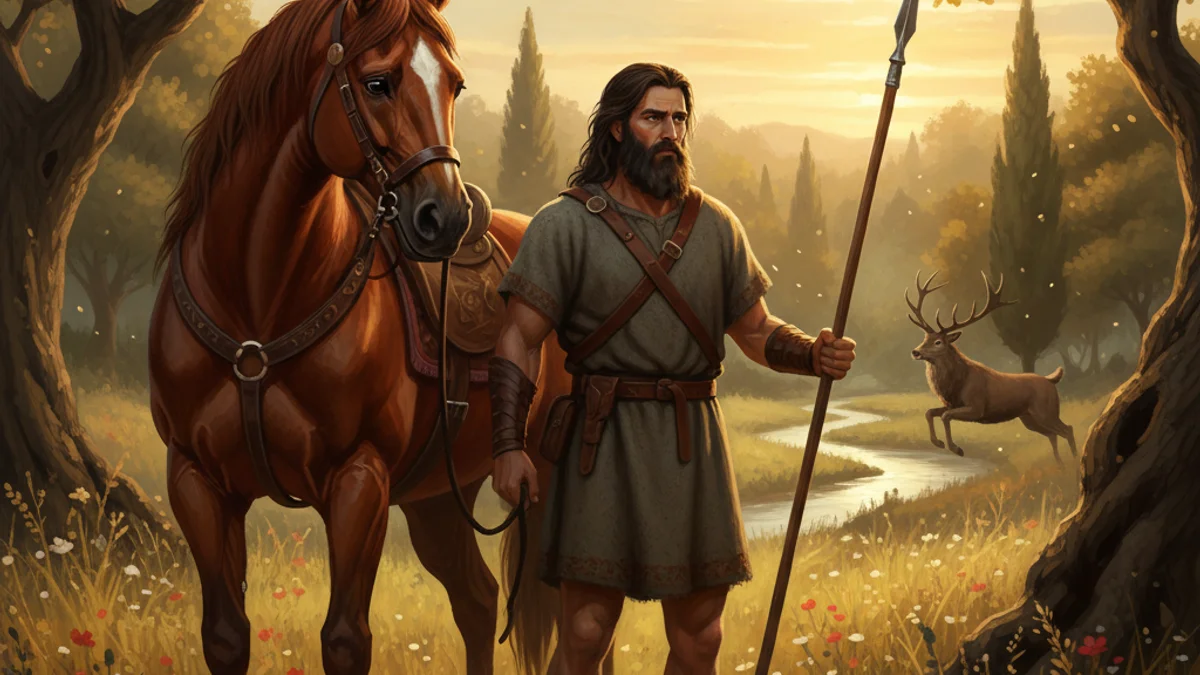
A Horse and a Stag were once engaged in a bitter dispute over a choice piece of pasture. The Stag, with his sharp antlers, repeatedly drove the Horse away from the best grass. Seeking revenge, the Horse approached a Man and asked for his assistance in defeating the Stag. The Man agreed to help, but on one condition: the Horse must allow a bit to be placed in his mouth and a saddle to be strapped to his back so the Man could ride him into battle. Eager for victory, the Horse consented. Together, they easily chased the Stag away. However, when the Horse asked the Man to remove the harness and set him free, the Man refused. Having discovered the Horse's strength and utility, the Man kept him bridled and saddled as his servant forevermore.
The Moral
It is better to endure a small grievance from an equal than to lose your liberty by seeking the help of a master.
“I have my revenge, but I have lost my liberty.”
Fun Fact
This fable was famously cited by the ancient poet Stesichorus as a political warning to the citizens of Himera to prevent them from granting a dictator a private bodyguard.
Frequently Asked Questions
What is the moral of The Horse and the Stag?
The moral is that the desire for revenge can lead to a loss of freedom. It warns that accepting help from those more powerful than you can result in your own enslavement.
Who is the author of The Horse and the Stag?
This story is traditionally attributed to Aesop, the legendary Greek storyteller. It is part of the collection known as Aesop's Fables, used for centuries to teach moral lessons.
Why did the horse seek the man's help?
The horse sought help because he was having a dispute with a stag over grazing lands. Unable to defeat the stag on his own, he turned to a human hunter for assistance.
What was the price the horse paid for his revenge?
The horse paid with his liberty by allowing the man to put a bit in his mouth and a saddle on his back. While he defeated his enemy, he remained under the man's control forever.
Is The Horse and the Stag a real Aesop fable?
Yes, it is a well-documented Aesop's fable. It has been retold by various authors throughout history, including the Roman poet Phaedrus and the French writer Jean de La Fontaine.
What does the stag represent in the story?
The stag represents a rival or a minor annoyance. The story suggests that sometimes it is better to tolerate a rival than to invite a master into your life to solve the problem.
Discussion (0)
Share your thoughts on this story
No comments yet. Be the first to share your thoughts!