Story Summary
Discover the Mesopotamian myth The Descent of Ishtar, as the goddess of love journeys through seven gates to the underworld to face her sister, Ereshkigal.
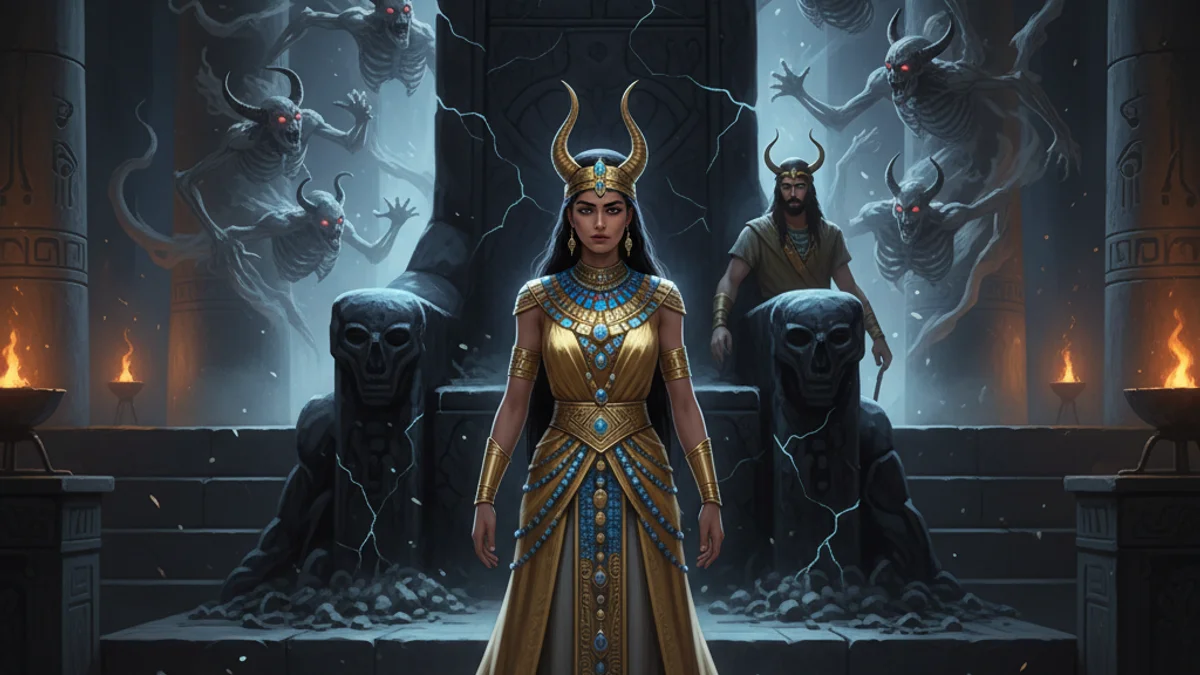
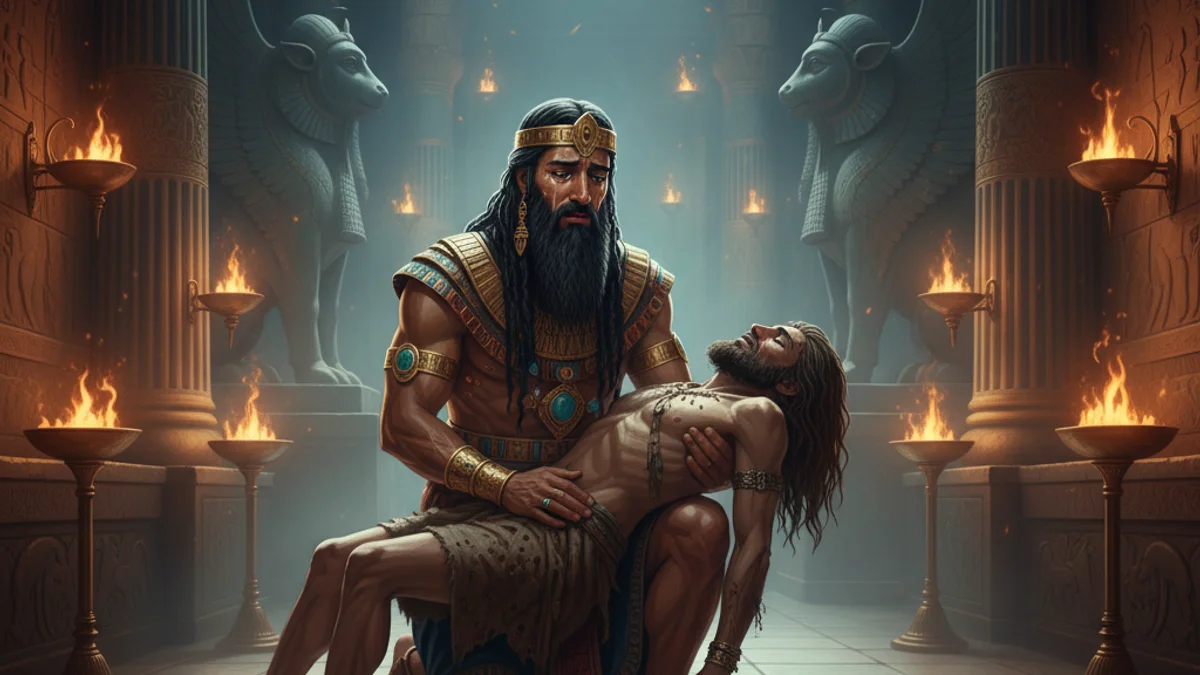
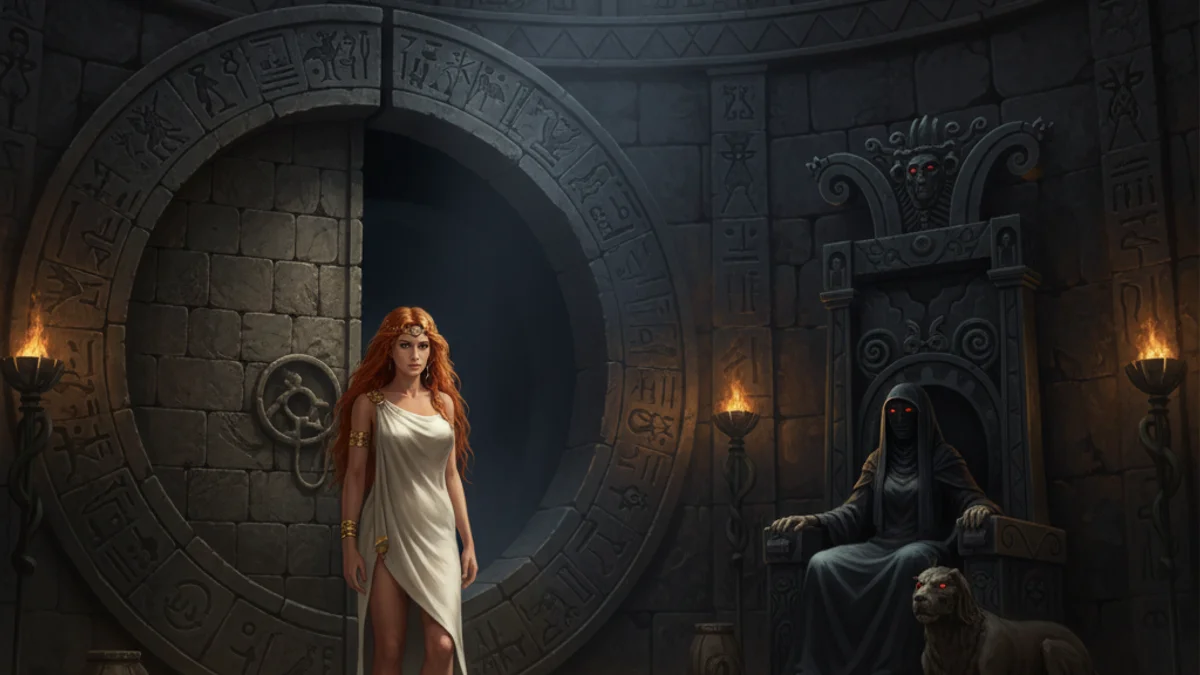
Ishtar, the Queen of Heaven and goddess of love and war, set her heart upon the 'Great Below,' the dark realm of the dead ruled by her sister, Ereshkigal. Adorning herself with seven sacred jewels and royal garments, she approached the first of the seven gates of the underworld. At each gate, the gatekeeper Neti demanded a price for passage: one of her precious items. At the first gate, her crown; at the second, her earrings; and so on, until she stood naked and powerless before her sister. Ereshkigal, consumed by rage, unleashed sixty diseases upon Ishtar, imprisoning her in the darkness. As Ishtar languished, all fertility on Earth vanished; crops failed, and no new life was born. Realizing the peril, the god Ea created Asushunamir, a beautiful being, to charm Ereshkigal into releasing Ishtar. Though Ereshkigal cursed the messenger, she allowed Ishtar to be sprinkled with the Water of Life. Ishtar ascended, reclaiming her garments at each gate, but she was forced to provide a substitute to take her place in the underworld. Finding her husband Tammuz feasting instead of mourning, she decreed he would dwell in the dark realm for half of every year.
The Moral
Even the most powerful must submit to the laws of nature and the cycle of life, death, and rebirth.
“Be silent, Ishtar, for the customs of the Underworld are perfect.”
Fun Fact
This myth is one of the world's oldest examples of the 'dying-and-rising god' archetype, influencing later stories like the Greek myth of Persephone.
Frequently Asked Questions
What is the moral of The Descent of Ishtar?
The story illustrates the inevitability of death and the necessity of balance between the upper world and the underworld. It teaches that even gods are subject to universal laws and that sacrifice is often required for renewal.
Why did Ishtar descend into the underworld?
While her motivations vary by version, she primarily sought to extend her power into the realm of the dead or to witness the funeral of Gugalanna, the husband of her sister Ereshkigal.
What do the seven gates represent in the myth?
The gates represent the stripping away of earthly ego, power, and status. By losing one piece of jewelry or clothing at each gate, Ishtar is reduced to her most vulnerable, mortal-like state.
How did Ishtar's descent affect the world above?
Ishtar was the goddess of fertility and passion; without her presence, all reproductive activity on Earth ceased. Neither humans nor animals could conceive, threatening the survival of all life.
Who rescued Ishtar from the underworld?
The wise god Ea created a being named Asushunamir to enter the underworld and charm Ereshkigal. Through cleverness, Asushunamir secured the release of Ishtar using the Water of Life.
Who took Ishtar's place in the underworld?
Ishtar chose her husband, Tammuz, as her substitute because he did not mourn her absence. Eventually, it was decided he would spend half the year in the underworld, explaining the changing seasons.