Story Summary
Discover the tragic Inuit legend of Sedna Goddess of the Sea (Extended). Learn how her betrayal and sacrifice created the whales, seals, and walruses of the deep.
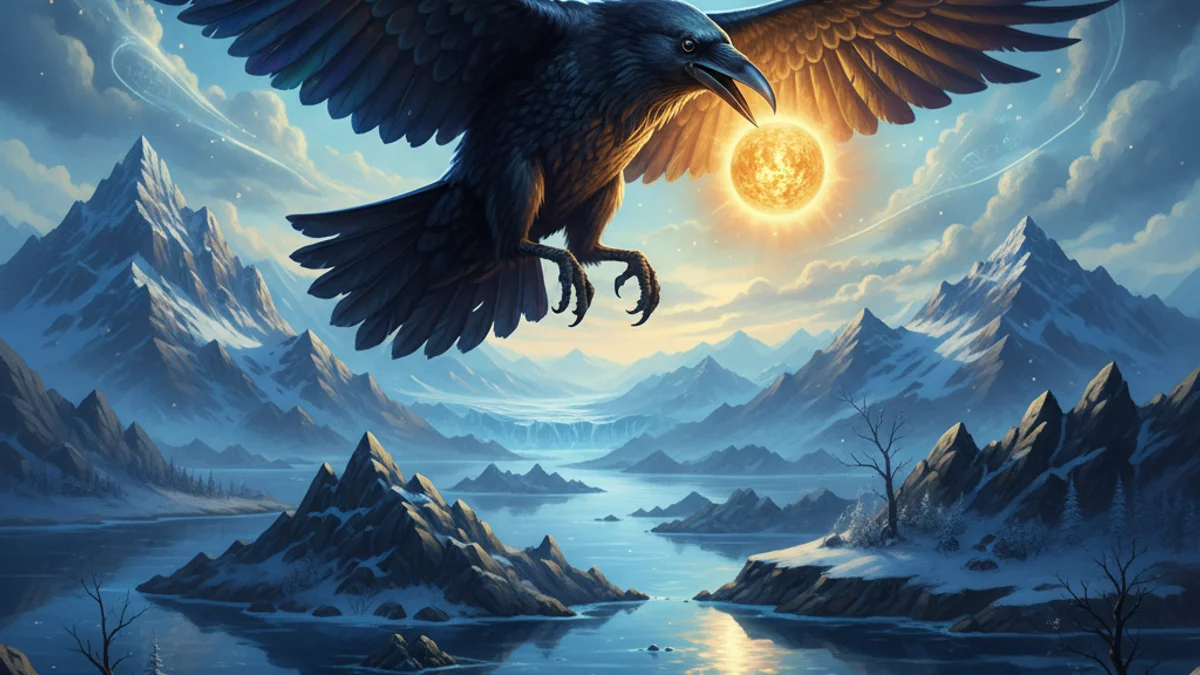
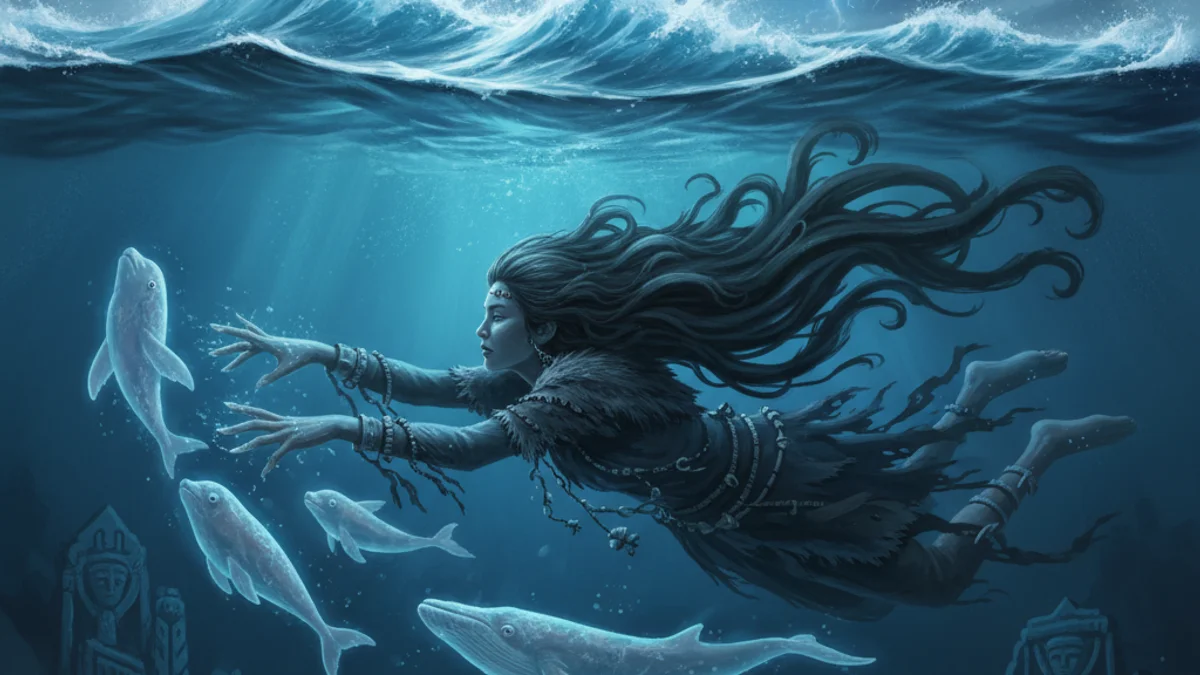
Long ago, in the frozen lands of the north, there lived a beautiful young woman named Sedna. Though many hunters sought her hand, she refused them all, possessing a pride as vast as the tundra. One day, a handsome stranger in a shimmering cloak arrived, promising her a life of silk and luxury on a faraway island. Sedna, charmed by his words, left her family and followed him. However, upon reaching his home, the stranger revealed his true form: he was a Fulmar, a bird-spirit, and his home was a cold, desolate nest of jagged stones. Trapped and miserable, Sedna's cries eventually reached her father, who paddled his kayak across the sea to rescue her. As they fled, the Fulmar discovered her absence and beat his massive wings, conjuring a terrifying storm that threatened to capsize the boat. Terrified for his own life, Sedna’s father decided to sacrifice her to appease the spirit, throwing her into the frigid waves. When Sedna clung to the edge of the kayak, her father struck her fingers with his oar. As her severed joints fell into the deep, they transformed: the tips became seals, the middle joints became walruses, and the bases became whales. Sedna sank to the bottom of the ocean, where she transformed into the Mother of the Sea, ruling over all creatures of the deep from her watery throne.
The Moral
Our survival is deeply connected to the sacrifices of the natural world, requiring us to treat all living creatures with profound respect and humility.
“From the depths of betrayal rose the mother of all that swims in the cold, dark deep.”
Fun Fact
In many Inuit traditions, Sedna is known by different names, such as Arnapkapfaaluk or Nuliayuk, and she is considered one of the most important deities for survival in the Arctic.
Frequently Asked Questions
What is the moral of Sedna Goddess of the Sea (Extended)?
The story emphasizes that the resources we rely on for survival come from sacrifice. It teaches that humans must respect the sea and its inhabitants, as their abundance depends on the will of the goddess.
Why did Sedna's father throw her overboard?
In his desperation to survive a violent storm created by the bird-spirit, he chose self-preservation over his daughter's life. This act of betrayal is the central tragedy that leads to Sedna's transformation.
How were the sea animals created in this myth?
The animals of the sea were born from Sedna's fingers. When her father cut them off as she clung to the boat, the different joints of her fingers fell into the ocean and shifted into seals, walruses, and whales.
Why do shamans comb Sedna's hair?
Because Sedna has no fingers, she cannot comb her own hair. When humans break taboos, her hair becomes tangled and dirty, making her angry; a shaman must travel to the bottom of the sea to comb it to appease her and release the animals for hunters.
Who was the mysterious suitor in the story?
The suitor was a Fulmar, a type of arctic sea bird that had taken human form to trick Sedna into marriage. His anger at her escape caused the storm that led to her descent into the sea.
What does Sedna represent in Inuit culture?
Sedna represents the soul of the sea and the provider of life. She is both a figure of terror and a necessary provider, embodying the harsh reality and the bounty of the Arctic environment.