Story Summary
Explore the legendary Dede Korkut Epic, a collection of heroic tales reflecting the bravery and wisdom of the ancient Oghuz Turks in Middle Eastern folklore.
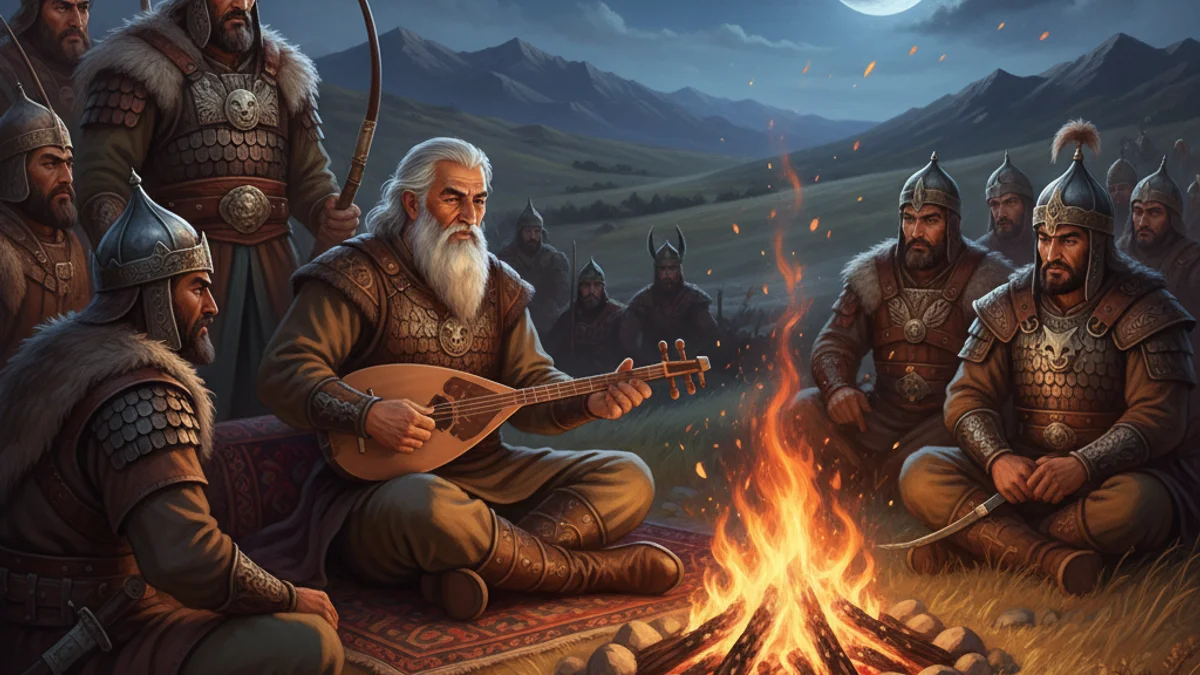
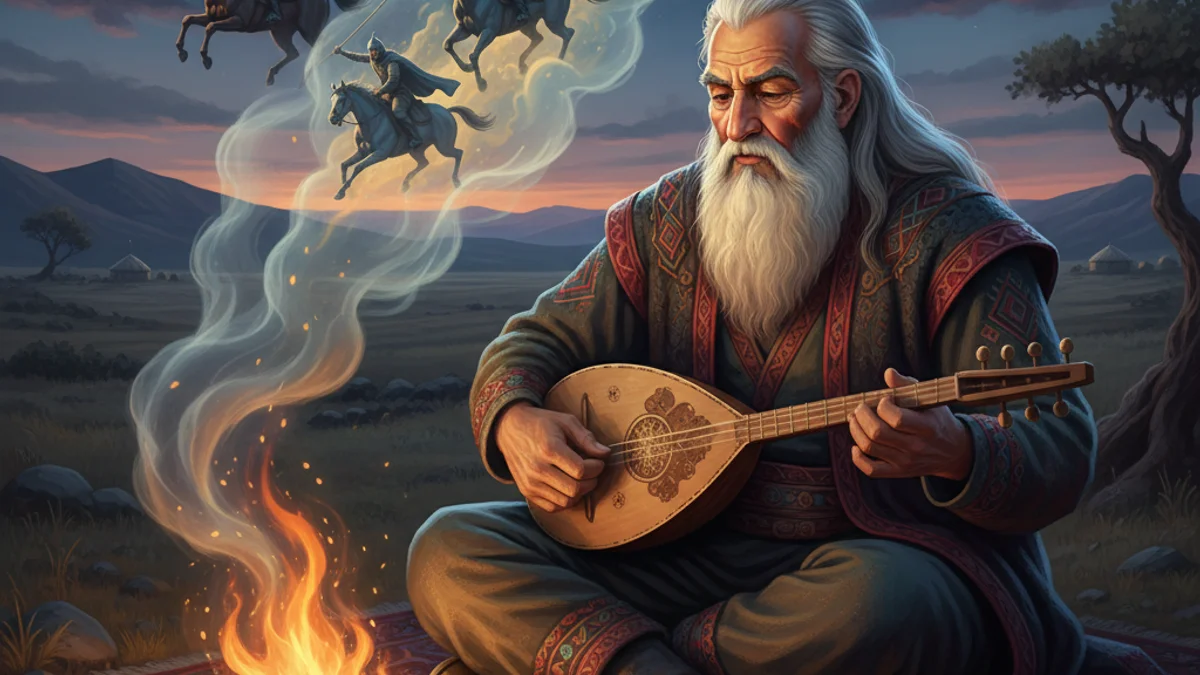
In the ancient days of the Oghuz Turks, there lived a wise sage named Dede Korkut. He was the spiritual guide and storyteller of his people, appearing whenever a hero performed a great deed. One such hero was Bogach Khan, the son of Dirse Khan. When the boy was young, he faced a fierce, rampaging bull in the arena. With strength and wit, he struck the bull’s forehead and forced it down, earning his name from Dede Korkut himself. Yet, palace intrigue later turned his father against him, leading to a tragic betrayal in the mountains. He survived through his mother's love and his own resilience, eventually saving his father from bandits. Dede Korkut sang his praises, reminding the people that true nobility is found in courage, forgiveness, and the bonds of family.
The Moral
True strength lies not only in physical prowess but in the loyalty one holds for family and the wisdom to distinguish truth from deceit.
“The land is not yours unless you die for it; the soil is not yours unless you till it.”
Fun Fact
The Book of Dede Korkut was officially included in UNESCO’s Representative List of the Intangible Cultural Heritage of Humanity in 2018.
Frequently Asked Questions
What is the moral of Dede Korkut Epic?
The moral emphasizes that honor is earned through bravery and that family unity is the bedrock of society. It teaches that wisdom, represented by the figure of Dede Korkut, is as vital to a tribe's survival as the sword.
Who was Dede Korkut in Turkish history?
Dede Korkut is a legendary soothsayer and bard who serves as the collective memory of the Oghuz Turkic tribes. He is the one who names heroes and settles disputes through his spiritual insight and storytelling.
What are the Book of Dede Korkut stories about?
The stories recount the adventures of Oghuz heroes, their battles against monsters like the cyclops Tepegoz, and their internal struggles with betrayal. They serve as a foundational cultural text for Turkic identity and social values.
When was the Dede Korkut Epic written?
While the stories originated in the oral tradition between the 9th and 13th centuries, the written manuscripts we have today date back to the 15th century. They preserve the Oghuz dialect and many pre-Islamic Turkic motifs.
Why is Dede Korkut important to Turkic culture?
It is important because it encapsulates the values, language, and social structures of the Turkic peoples during their migration. It remains a vital literary link to their ancestral heritage across Central Asia and the Caucasus.
Is Dede Korkut a real historical person?
While he is treated as a historical figure in folklore, Dede Korkut is largely considered a semi-mythical archetype of a tribal sage. Many regions in Turkey, Azerbaijan, and Kazakhstan claim his tomb as their own.