Story Summary
In Till and the Innkeeper, the legendary trickster Till Eulenspiegel uses his wits to pay for the smell of a roast with the sound of his jingling coins.
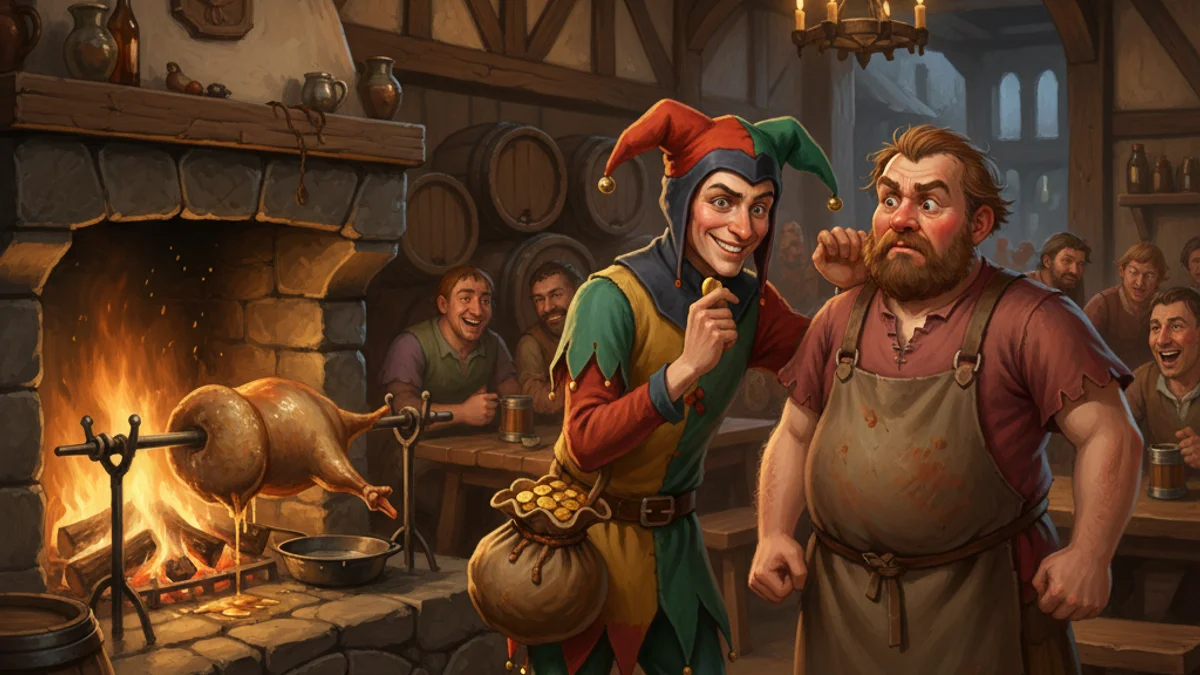
Till Eulenspiegel, the wandering trickster, once stopped at a village inn. He had no money for a meal, so he sat near the hearth, inhaling the delicious aroma of a goose roasting on the spit. When Till rose to leave, the greedy innkeeper blocked his path, demanding payment for the 'meal' Till had enjoyed through his nose. Till did not argue. Instead, he took a leather bag of coins from his belt and shook it vigorously next to the innkeeper’s ear. When the innkeeper reached for the bag, Till pulled it back and tucked it away. 'The sound of the money is the payment for the smell of the roast,' Till declared with a grin. 'We are now even.'
The Moral
Unreasonable demands deserve clever, symbolic responses. Greed often results in being outwitted by one's own logic.
“The sound of the money is the payment for the smell of the roast.”
Fun Fact
The stories of Till Eulenspiegel were so popular that his name entered the French and Dutch languages as a word for 'mischievous' or 'wag.'
Frequently Asked Questions
What is the moral of Till and the Innkeeper?
The moral is that greed and petty demands can be defeated by clever wit. It suggests that if one charges for something intangible like a smell, they should be satisfied with an intangible payment like a sound.
Who was Till Eulenspiegel?
Till Eulenspiegel is a famous trickster figure from German folklore, known for his practical jokes and social commentary. He is often depicted wearing a jester's cap and exposing the hypocrisy of those he meets.
How did Till outsmart the innkeeper?
When the innkeeper demanded money for the smell of roasting meat, Till shook his purse so the man could hear the coins. He argued that the sound of the money was a fair trade for the scent of the food.
Is Till Eulenspiegel a real person?
While Till is largely a folkloric character, some historians believe he was based on a real person who lived in the 14th century. His adventures were first collected in a book around 1510.
What does the name Eulenspiegel mean?
The name translates to 'Owl-Mirror,' which represents wisdom (the owl) and reflecting the truth back to people (the mirror). It signifies how Till showed people their own foolishness.
Why is this story considered a trickster tale?
It is a trickster tale because the protagonist uses his intellect and a clever play on words to escape a difficult situation. It highlights the triumph of the underdog over a greedy figure.
Discussion (0)
Share your thoughts on this story
No comments yet. Be the first to share your thoughts!