Story Summary
Socrates and the Hemlock recounts the final hours of the great philosopher, who chose to face execution rather than abandon his principles or the laws of Athens.
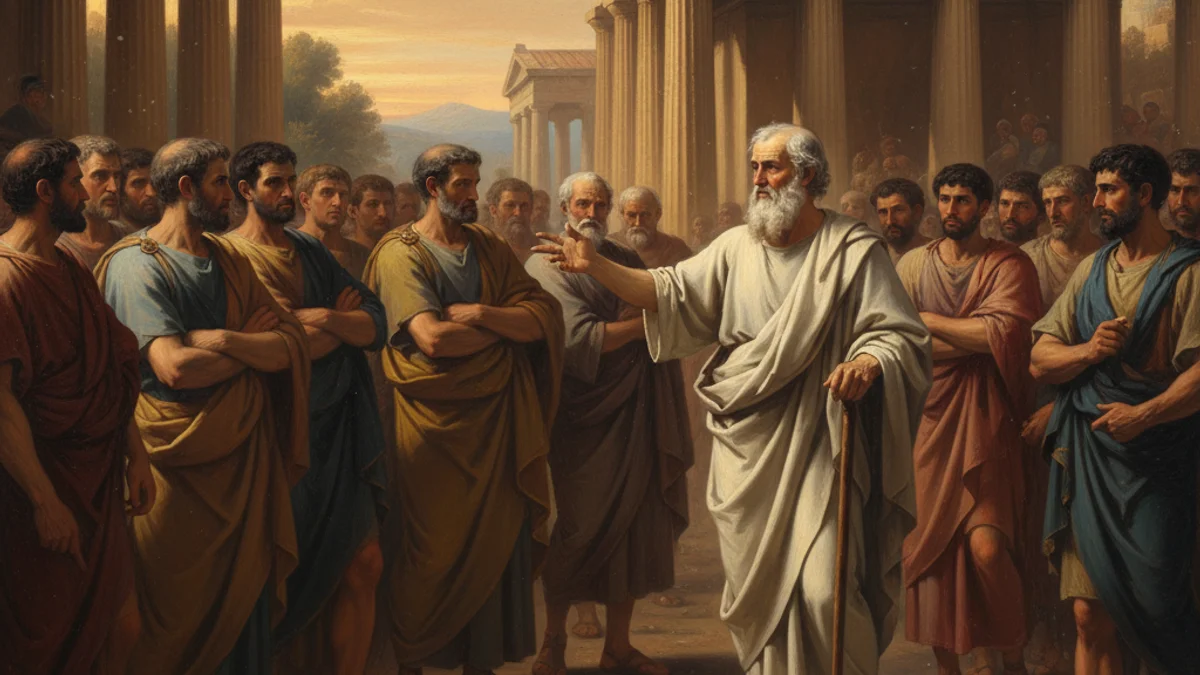
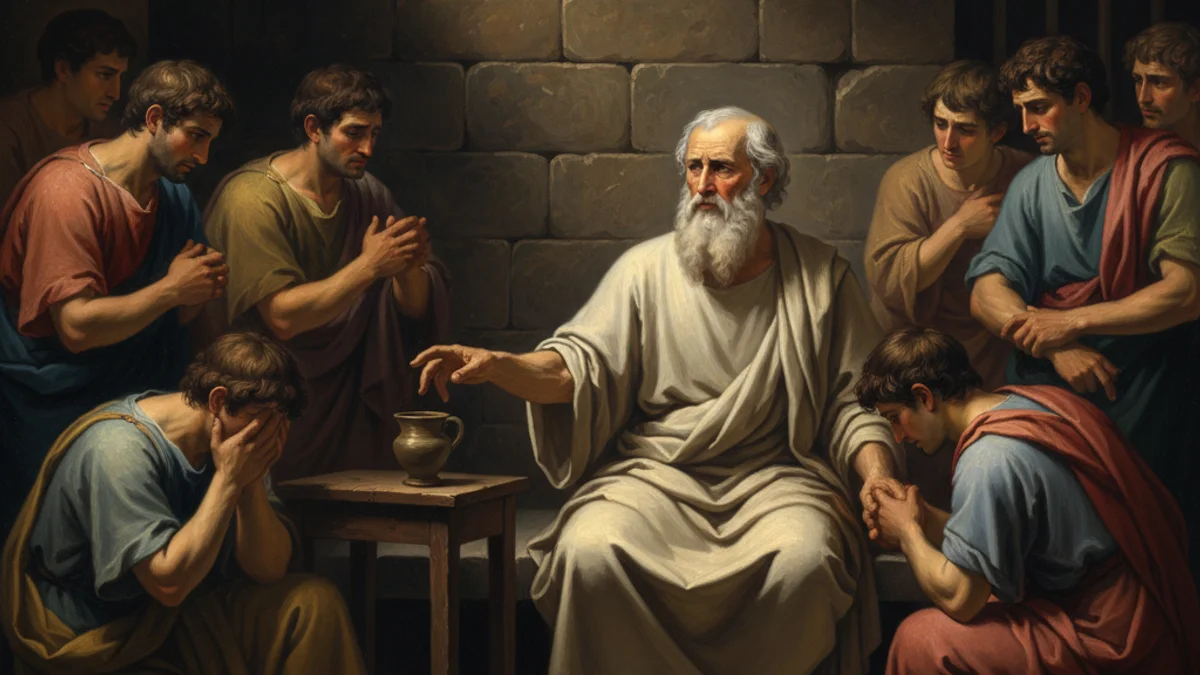
In 399 BC, the philosopher Socrates was sentenced to death by an Athenian jury for impiety and corrupting the youth. Despite the opportunity to escape arranged by his wealthy friend Crito, Socrates refused, arguing that to flee would be to break the social contract he had lived by his entire life. On his final day, he gathered his students in his prison cell and engaged in a calm, profound dialogue about the immortality of the soul. When the time came, the jailer brought the cup of poisonous hemlock. With a steady hand and a serene countenance, Socrates drank the draught, comforting his weeping friends as he did so. He walked until his legs grew heavy, then lay down, meeting his end with the same unwavering commitment to truth and logic that had defined his life.
The Moral
True integrity lies in standing by one's principles and the rule of law, even when faced with the ultimate sacrifice.
“The unexamined life is not worth living.”
Fun Fact
Plato, who recorded the story, was not actually present at Socrates' death; he was reportedly ill, so he reconstructed the events based on the testimony of others.
Frequently Asked Questions
What is the moral of Socrates and the Hemlock?
The moral is that personal integrity and the pursuit of truth are more valuable than life itself. Socrates demonstrates that a philosopher must live and die according to their reasoned convictions.
Why did Socrates choose to drink the hemlock?
He believed that as a citizen of Athens who had enjoyed the benefits of its laws, he was duty-bound to accept its judgment. Escaping would have been an act of hypocrisy against his own teachings.
What were Socrates' last words?
His last words were, 'Crito, I owe a cock to Asclepius; will you remember to pay the debt?' This is often interpreted as a suggestion that death was a cure for the 'illness' of life.
What were the charges against Socrates?
He was officially charged with failing to acknowledge the gods recognized by the state and for 'corrupting the youth' of Athens through his questioning methods.
Who wrote about the death of Socrates?
The primary account of his death is found in the 'Phaedo,' written by his most famous student, Plato, who described the scene in vivid detail.
What is hemlock and how does it work?
Hemlock is a highly poisonous plant containing coniine. In ancient Greece, it was used for executions as it causes progressive paralysis and respiratory failure while leaving the mind clear.
Discussion (0)
Share your thoughts on this story
No comments yet. Be the first to share your thoughts!