Story Summary
Discover how Mahatma Gandhi Makes His Own Cloth to inspire a nation. This tale explores the Khadi movement and the power of self-reliance in India's history.
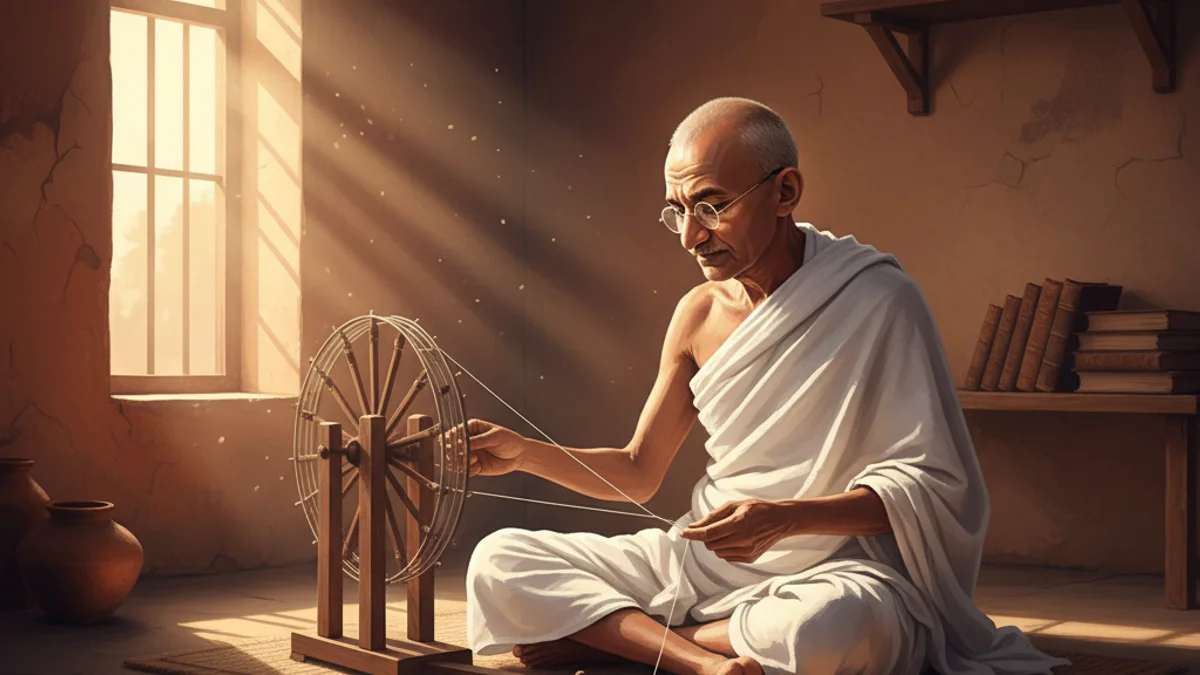
During India's struggle for independence, Mahatma Gandhi realized that true freedom was not just political, but economic. He observed how British-made textiles had decimated local weavers, leaving millions in poverty. To protest this exploitation, Gandhi began the Khadi movement, urging every Indian to spin their own yarn and wear hand-woven cloth. He led by example, setting aside time every day to sit with his wooden spinning wheel, known as the charkha. Even during intense political negotiations or while visiting world leaders, Gandhi remained committed to his simple white garments made of hand-spun fabric. By making his own cloth, Gandhi transformed a humble tool into a powerful symbol of defiance and self-reliance, proving that a nation’s strength lies in the hands of its common people working toward a shared goal.
The Moral
True independence begins with self-reliance and the dignity of manual labor. Small, consistent actions by many can topple the greatest empires.
“There is no beauty in the finest cloth if it makes hunger and unhappiness.”
Fun Fact
The Charkha was so significant to Gandhi that he insisted on spinning for at least an hour every day, even when he was ill or traveling overseas.
Frequently Asked Questions
What is the moral of Gandhi Makes His Own Cloth?
The story teaches the importance of self-reliance and the dignity of labor. Gandhi showed that simple, everyday actions can lead to massive social and political change by empowering the individual.
Why did Gandhi spin his own yarn?
He spun his own yarn to promote 'Khadi,' a hand-spun cloth, aiming to boycott British imports. This helped revive the local Indian economy and empowered the poor to be self-sufficient instead of dependent on foreign goods.
What was the name of Gandhi's spinning wheel?
The spinning wheel is called a Charkha. It became a powerful symbol of the Indian independence movement and was even featured on early versions of the Indian national flag to represent the masses.
What was the Khadi movement?
The Khadi movement was a socio-political campaign led by Gandhi to encourage Indians to use locally made fabrics. It aimed to achieve economic freedom and protest against colonial industrial exploitation through non-violent means.
How did spinning cloth help India's independence?
It unified people across different classes through a shared task and weakened the British textile industry's economic grip on India. It served as a visible, non-violent form of protest that everyone could participate in.
Is the Charkha still important today?
Yes, the Charkha remains a revered symbol of peace, self-sufficiency, and the Swadeshi philosophy. It continues to inspire artisans, activists, and advocates of sustainable fashion throughout the world.
Discussion (0)
Share your thoughts on this story
No comments yet. Be the first to share your thoughts!