Story Summary
Discover the legend of Saturn and the Golden Age, a time of eternal peace and abundance in ancient Italy when the god Saturn taught humanity agriculture.
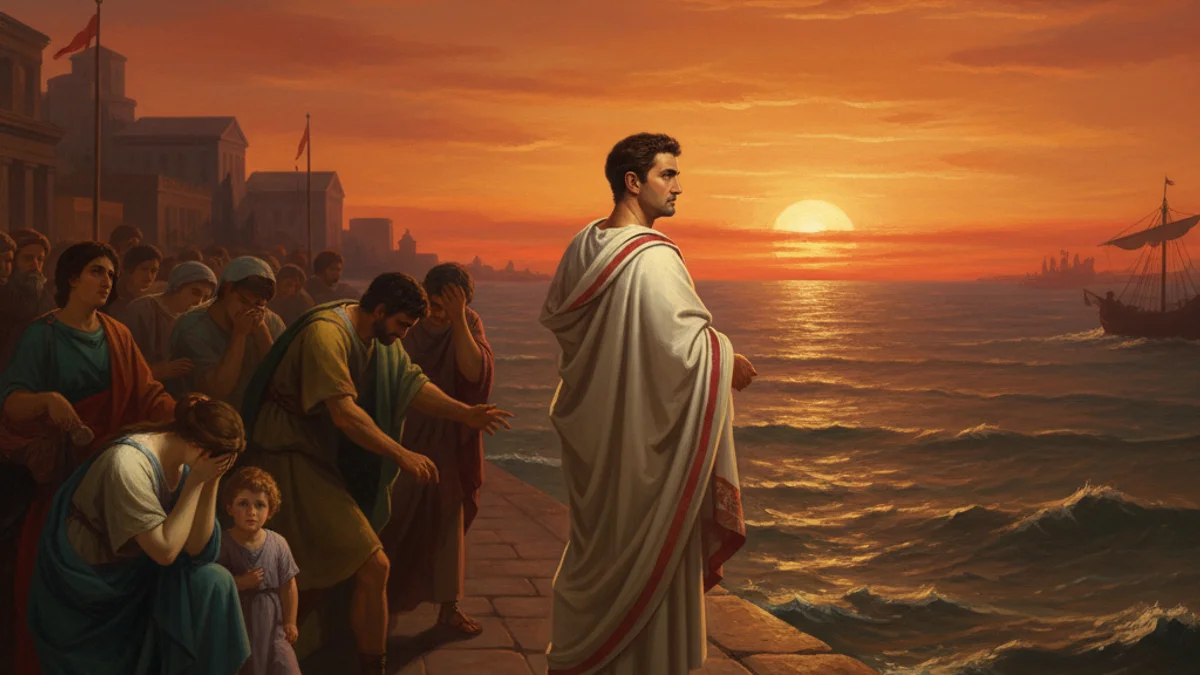
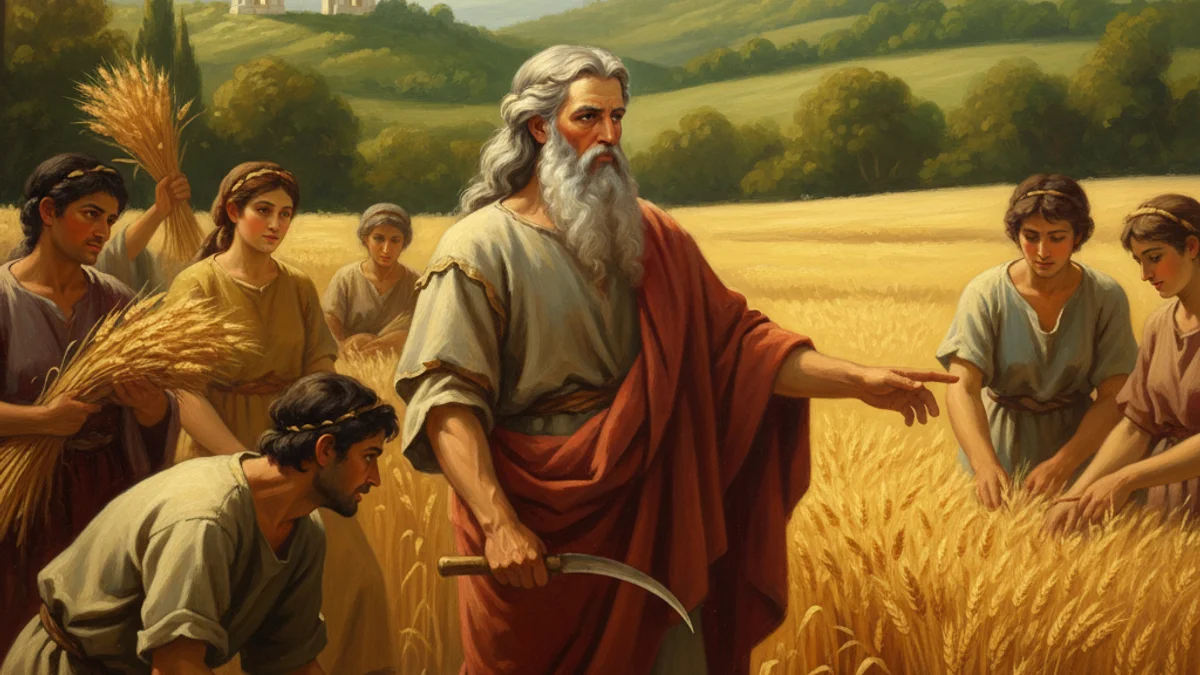
After being dethroned by his son Jupiter, the god Saturn fled to the shores of Italy, seeking refuge in the region of Latium. He was welcomed by Janus, the two-faced god of beginnings, who shared his kingdom with the exile. Saturn did not bring the vengeful nature of his past; instead, he brought the gifts of civilization. He taught the primitive people how to till the earth, plant vines, and harvest grain. Under his gentle guidance, a 'Golden Age' dawned. It was an era of profound peace and equality where the earth provided abundance without the need for labor. No walls fortified cities, and no laws were written, for justice lived naturally in the hearts of all men. Slaves and masters did not exist, and the world lived in a state of eternal spring. Though the age eventually gave way to others, the memory of Saturn's peaceful reign remained the Roman ideal of a perfect society.
The Moral
True prosperity and peace are achieved through the mastery of nature, the sharing of knowledge, and the practice of natural justice.
“In that blessed age, the earth itself brought forth all things more fruitfully without the rake or plow.”
Fun Fact
The Roman festival of Saturnalia was so popular that many of its traditions, such as gift-giving and feasting, influenced the modern celebration of Christmas.
Frequently Asked Questions
What is the moral of Saturn and the Golden Age?
The story suggests that the height of human civilization is found in peace, agriculture, and inherent justice. It teaches that a great leader nurtures his people through knowledge and abundance rather than through force.
Who welcomed Saturn to Italy after his exile?
Saturn was welcomed by Janus, the Roman god of gates, transitions, and beginnings. Janus is famously depicted with two faces, looking toward both the past and the future.
What characterized the Golden Age in Roman mythology?
The Golden Age was defined by eternal spring, universal peace, and social equality. The earth provided food spontaneously, meaning humans did not have to toil, and there was no need for laws or private property.
How does the Roman Saturn differ from the Greek Cronus?
While the Greek Cronus is often seen as a cruel or fleeting figure, the Roman Saturn was reimagined as a benevolent god of agriculture. His arrival in Italy marked a transition from a destructive deity to a civilizing force.
What Roman festival celebrated the Golden Age?
The festival of Saturnalia celebrated this mythical era. During the festivities, social norms were inverted, work was suspended, and masters served their slaves to mimic the equality of the Golden Age.
Why did the Golden Age come to an end?
In most myths, the Golden Age ended when Saturn departed or was succeeded by Jupiter. This transition marked the beginning of the Silver Age, where humans had to work the land and endure changing seasons.