Story Summary
Discover the legendary Norse myth of Idunn's Apples (Extended), where Loki's trickery threatens the gods' immortality until a daring rescue saves Asgard.
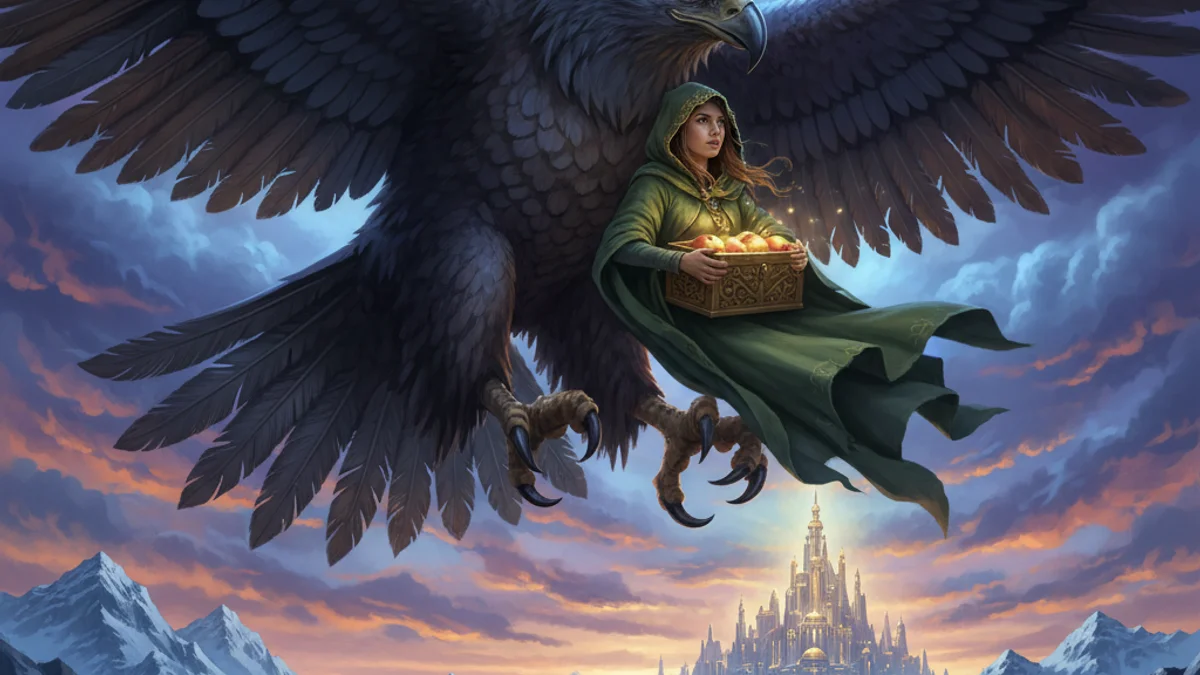
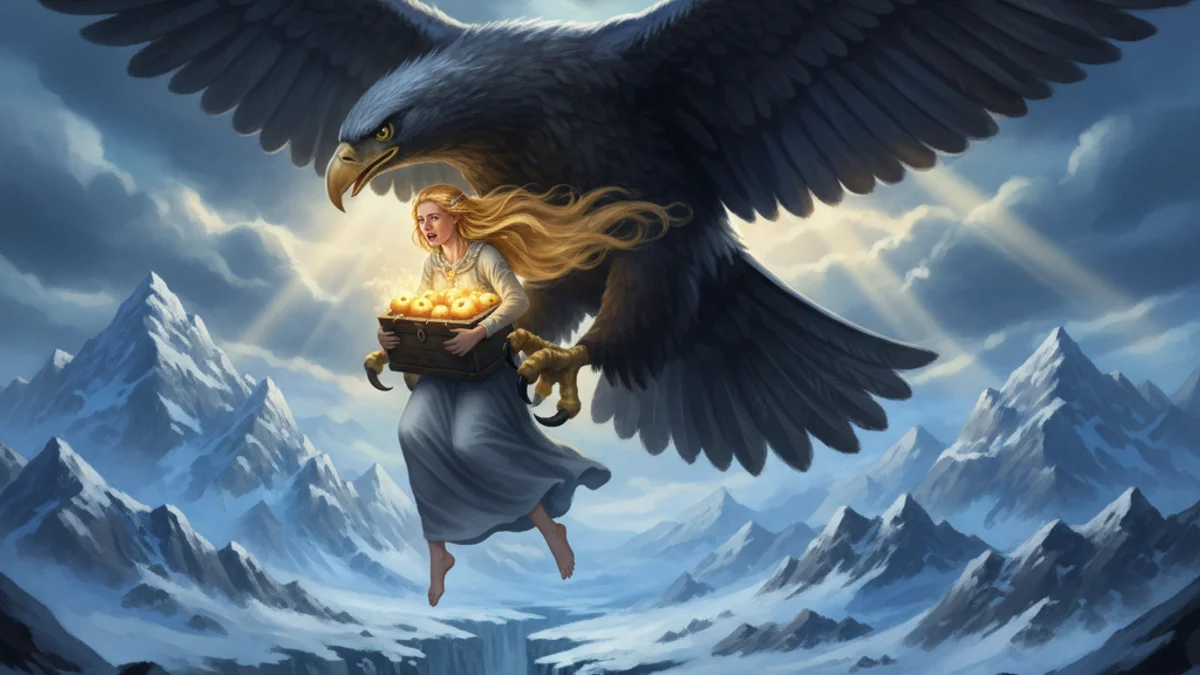
While traveling through a desolate mountain range, Odin, Hoenir, and Loki found themselves unable to cook an ox for their meal. A giant eagle perched above revealed he was using magic to prevent the meat from cooking, demanding a share for himself. When the eagle took the best portions, an enraged Loki struck the bird with a staff, only to find himself magically bound to the creature as it took flight. The eagle, the giant Thjazi in disguise, refused to release Loki unless he promised to lure the goddess Idunn and her youth-bestowing golden apples out of Asgard. Fearing for his life, Loki agreed. Back in Asgard, Loki told Idunn he had found even better apples in a nearby forest. Trusting him, Idunn followed, only to be snatched by Thjazi and carried to the frozen realm of Jotunheim. Deprived of their daily fruit, the Aesir began to wither, their hair turning grey and their strength failing. Realizing Loki's treachery, they threatened him with death unless he brought her back. Borrowing Freyja’s falcon cloak, Loki flew to Thjazi’s hall, turned Idunn into a nut, and fled. Thjazi pursued in eagle form, but as Loki cleared the walls of Asgard, the gods ignited a massive fire that singed the giant's wings. Thjazi fell and was slain, and Idunn’s return restored the eternal youth of the gods.
The Moral
The consequences of one's betrayal can jeopardize the entire community, and true restoration requires taking personal responsibility for one's errors.
“Without the golden fruit, even the mightiest gods must bow to the grey touch of time.”
Fun Fact
In ancient Norse culture, apples were not native to Scandinavia; the 'apples' in the original myths likely referred to generic fruit or nuts before the influence of later European folklore.
Frequently Asked Questions
What is the moral of Idunn's Apples (Extended)?
The story teaches that selfish actions and broken trusts have far-reaching consequences that can harm everyone. It also emphasizes that those who cause a problem have a duty to risk everything to fix it.
Why are Idunn's apples so important to the Norse gods?
Unlike many other pantheons, the Norse gods were not naturally immortal; they required Idunn's magical golden apples to maintain their youth and vitality. Without them, they would age and die like mortals.
How did Loki manage to rescue Idunn?
Loki used a magical falcon cloak borrowed from the goddess Freyja to fly to Jotunheim. He turned Idunn into a small hazelnut so he could carry her in his talons while flying back to Asgard.
Who was the giant Thjazi in this myth?
Thjazi was a powerful frost giant who could shapeshift into a massive eagle. He desired Idunn's apples to gain the immortality of the gods for himself and his kin.
How did the gods defeat Thjazi during the chase?
As Loki flew over the walls of Asgard with Thjazi close behind, the gods lit piles of wood shavings on fire. The flames rose so high they burned Thjazi's eagle wings, causing him to fall to his death.
What happened to the gods when Idunn was missing?
The gods quickly began to show signs of old age, including grey hair, wrinkled skin, and fading minds. This vulnerability made them realize how vital Idunn was to the survival of Asgard.