Story Summary
Explore the legends of The Satyrs, the wild, flute-playing companions of Dionysus who embody the untamed spirit of nature and the revelry of ancient Greek myth.
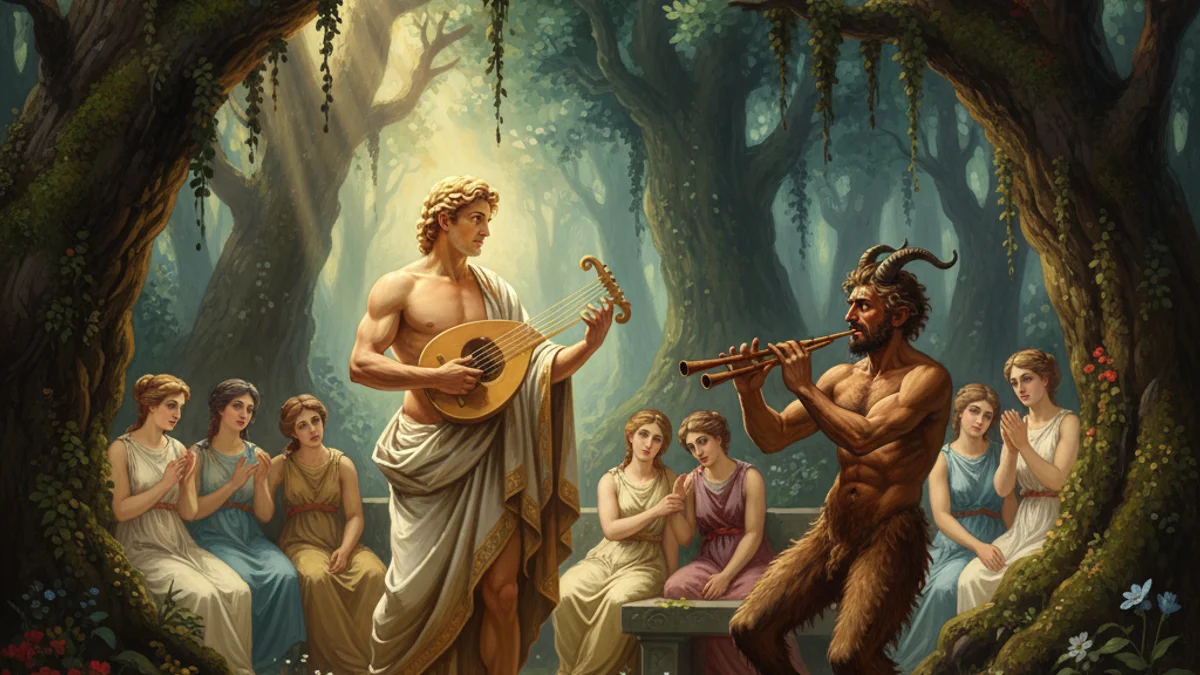
In the ancient, sun-drenched hills of Greece, the Satyrs roamed as the unruly spirits of the wild. Half-man and half-beast, with the horns and tails of goats or horses, they were the rowdy companions of Dionysus, the god of wine. Led by the wise but perpetually inebriated Silenus, they spent their days in a whirlwind of music, dancing, and mischief. They were masters of the syrinx—the panpipes—filling the forests with melodies that could make even the oldest trees sway. While they were often seen as symbols of unbridled desire and chaos, they represented the raw, untamed essence of nature. To encounter a Satyr was to witness the bridge between the animalistic and the divine, a reminder that within every civilized soul dwells a spark of the wild that longs to dance in the moonlight.
The Moral
The Satyrs remind us that while civilization provides order, we must acknowledge and respect our primal connection to the unbridled joy of nature.
“In the pipes of a Satyr, the forest finds its voice and the soul finds its wildness.”
Fun Fact
In early Greek art, Satyrs often had horse-like tails and ears; it wasn't until later that they became exclusively associated with the goat-like features of the god Pan.
Frequently Asked Questions
What is the moral of The Satyrs?
The moral of the Satyrs is that humans must find a balance between their civilized lives and their primal, natural instincts. They serve as a reminder that denying our connection to nature's wildness can lead to a loss of joy and vitality.
What is the difference between a Satyr and a Faun?
While often confused, Satyrs are Greek in origin and were originally depicted as horse-like, while Fauns are Roman and consistently goat-like. Over time, the Greek Satyr adopted the goat-like features of the god Pan, making the two figures nearly identical in modern interpretation.
Who was the leader of the Satyrs?
The oldest and wisest of the Satyrs was Silenus, who was also the tutor of Dionysus. Despite his constant intoxication, Silenus was believed to possess great prophetic wisdom and knowledge of the universe.
Why are Satyrs associated with Dionysus?
Satyrs represent the lack of inhibition and the celebration of life, which aligns perfectly with Dionysus's role as the god of wine and theater. They formed his 'thiasus,' or ecstatic retinue, following him through the world in a state of perpetual revelry.
Are Satyrs considered dangerous in mythology?
Satyrs were generally viewed as mischievous rather than purely evil, but they could be dangerous due to their unpredictable and lustful nature. They often pursued nymphs and caused chaos in mortal villages, representing the destructive potential of uncontrolled passion.
What role did Satyrs play in ancient Greek theater?
Satyrs were the namesake of 'Satyr plays,' which were tragicomical performances featuring a chorus of Satyrs. These plays provided comic relief between serious tragedies during the Great Dionysia festivals in Athens.