Story Summary
Discover the clever tale of The Rabbi and the Inquisitor, where a wise leader uses wit to escape a rigged game of life and death during the Inquisition.
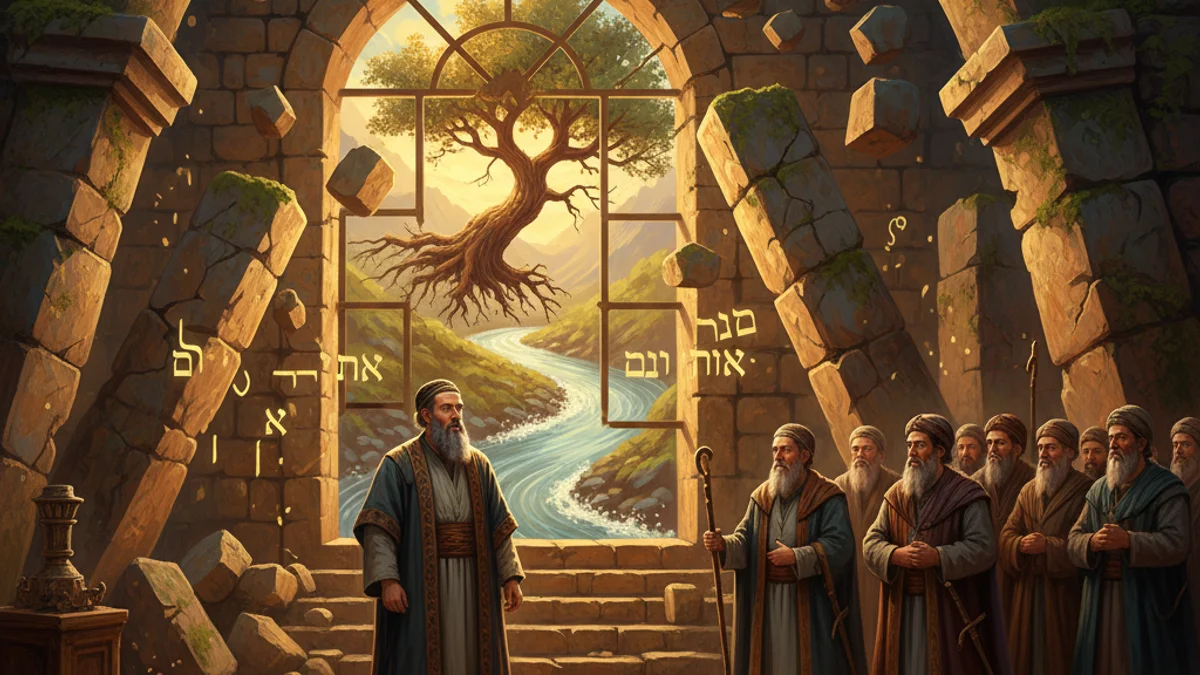
In a time of deep persecution, a wise Rabbi was summoned before a ruthless Inquisitor. Seeking a public execution but wanting the appearance of justice, the Inquisitor proposed a game of chance. He placed two folded slips of paper in a jar. "One says 'Life' and the other 'Death'," he declared. "Your fate is in your own hands." The Rabbi, sensing the Inquisitor had written "Death" on both papers to ensure his demise, did not falter. He stepped forward, drew one slip, and immediately swallowed it. The Inquisitor was stunned. "What have you done? How will we know your fate?" The Rabbi smiled calmly. "It is simple. Look at the paper remaining in the jar; my fate must be the opposite of what is written there." To save face and avoid exposing his own trickery, the Inquisitor was forced to release the Rabbi, as the remaining slip inevitably read "Death."
The Moral
Wisdom and quick thinking can overcome even the most rigged and treacherous circumstances.
“To know what I have chosen, one need only look at what remains.”
Fun Fact
This story is a classic example of a 'lateral thinking' puzzle, a motif found in various cultures where the protagonist wins by changing the rules of the engagement.
Frequently Asked Questions
What is the moral of The Rabbi and the Inquisitor?
The moral is that wisdom and presence of mind can defeat an enemy's deceit. It teaches that one should remain calm under pressure to find a creative solution to an impossible problem.
Is this story based on a real historical event?
While it captures the historical tension of the Inquisition, it is primarily a Jewish folktale. It serves as an allegory for the resilience and intellectual survival of the Jewish people throughout history.
How did the Rabbi know the Inquisitor was cheating?
The Rabbi understood the malicious intent of his captor and realized that a fair chance was never the Inquisitor's plan. By assuming the trap was rigged, he was able to devise a way to turn the lie against its creator.
What are the main themes of the story?
The primary themes include wit over might, survival under religious persecution, and the triumph of the underdog through intellectual superiority and lateral thinking.
Why is this story popular in Hasidic tradition?
It highlights the Hasidic value of the 'Tzadik' or wise leader who uses sharp logic and divine inspiration to protect his community from external threats and injustice.
What was the significance of swallowing the paper?
By swallowing the paper, the Rabbi removed the evidence of the Inquisitor's lie. This forced the outcome to be determined by the remaining paper, which the Inquisitor could not hide without admitting his fraud.
Discussion (0)
Share your thoughts on this story
No comments yet. Be the first to share your thoughts!