Story Summary
Discover The Daughter of the Moon, a poignant Latvian legend of celestial betrayal, divine justice, and why the sun and moon are destined to live forever apart.
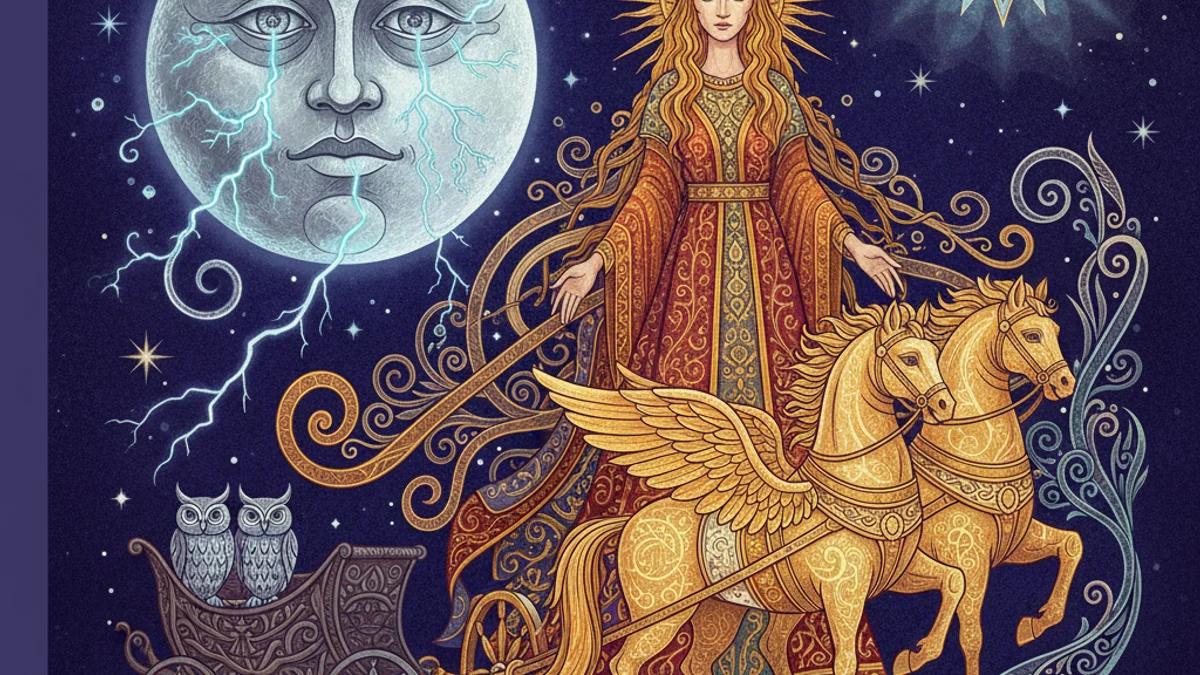
In the ancient celestial vault, the Sun, Saule, and the Moon, Mēness, were once a devoted husband and wife. Together, they watched over the world and raised their children, the stars. However, the Moon was restless and grew infatuated with Auseklis, the beautiful Morning Star. He began to neglect his duties, wandering away from Saule to pursue the silver light of the dawn. When Saule discovered her husband’s betrayal, her heart shattered. In a fit of divine fury, she took a silver sword and struck the Moon across his face, leaving the permanent scars and craters we see today. Since that day, they have lived in eternal separation; Saule rules the day with her warmth, while the Moon is relegated to the cold night, forever chasing the Morning Star but never allowed to walk beside his wife again. This cosmic tragedy explains the cycle of day and night and the sorrowful phases of the moon.
The Moral
Betrayal and the neglect of one's duties lead to an eternal loss of warmth and companionship.
“The Sun rules the day with warmth, but the Moon wanders the night in search of the love he threw away.”
Fun Fact
In Latvian folk songs called 'dainas', the Sun is often depicted wearing a crown of golden silk and silk shoes, symbolizing her royal and life-giving status.
Frequently Asked Questions
What is the moral of The Daughter of the Moon?
The story teaches that infidelity and the neglect of one's responsibilities carry heavy consequences. It serves as a mythological explanation for the permanent separation of day and night.
Who is Saule in Latvian mythology?
Saule is the Sun goddess, a powerful feminine deity representing life, fertility, and the protector of orphans. She is one of the most important figures in the Baltic pantheon.
Why does the Moon have craters according to this myth?
The legend states that the Moon's craters are actually scars left by the Sun, who struck him with a silver sword after discovering his infidelity with the Morning Star.
Is the Moon male or female in Baltic folklore?
Unlike many Western mythologies, the Moon (Mēness) is a masculine deity in Baltic mythology, while the Sun (Saule) is feminine.
Who is Auseklis in the story?
Auseklis is the Morning Star, a male deity associated with the dawn. In this myth, he is the figure the Moon pursues, leading to the breakdown of the Moon's marriage to the Sun.
What does the story explain about nature?
It provides a narrative for the phases of the moon, the reason the sun and moon are never seen together for long, and the origin of the stars as their children.
Discussion (0)
Share your thoughts on this story
No comments yet. Be the first to share your thoughts!