Story Summary
Explore the mystery of The Porter and the Three Ladies from the Arabian Nights, a classic tale of curiosity, magic, and storytelling in ancient Baghdad.
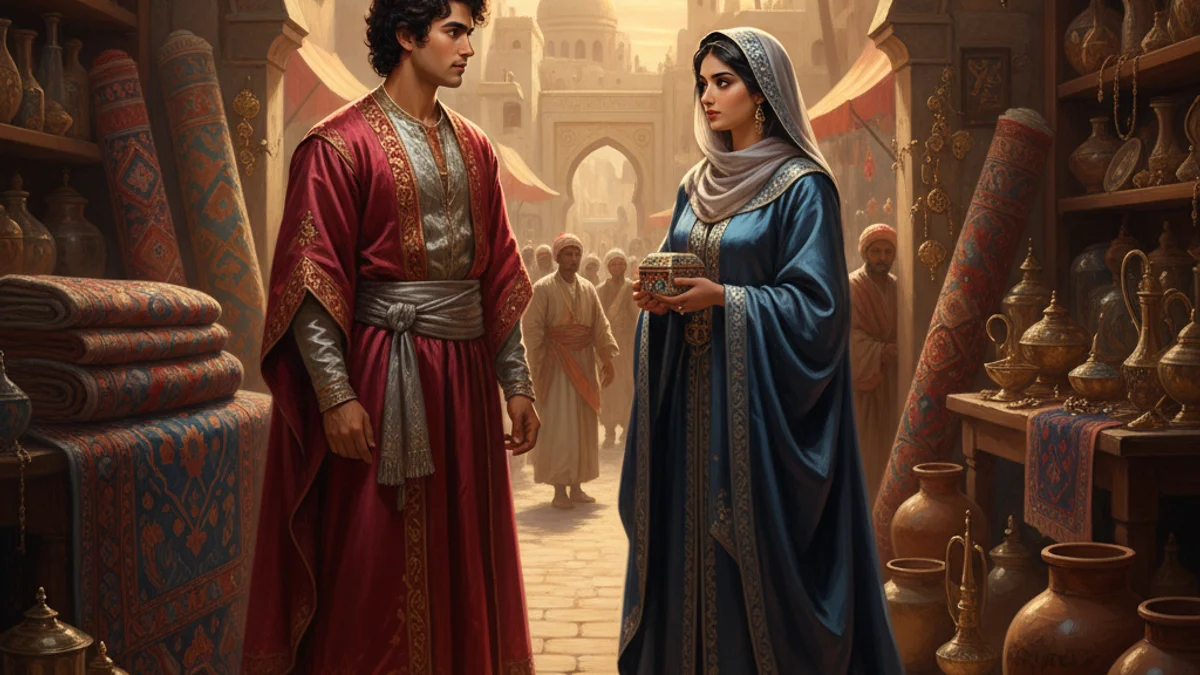
In the bustling city of Baghdad, a humble porter was hired by a beautiful woman to carry a massive load of provisions. He followed her to a magnificent house where two other equally stunning ladies resided. Enchanted by their hospitality, the porter was invited to stay for a night of feasting and wine. However, he noticed a stark warning inscribed over the door: 'Speak not of that which concerns you not, lest you hear that which shall please you not.' As the night progressed, three one-eyed dervishes and the disguised Caliph Harun al-Rashid joined the gathering. The atmosphere shifted when the ladies brought out two black dogs, whipped them until they cried, and then embraced them with tears of grief. Driven by unbearable curiosity, the guests broke the house rule and demanded an explanation. The ladies, offended but bound by the laws of hospitality, spared their lives on the condition that each guest tell their own life story. Through these woven tales of transformation, betrayal, and magic, the truth was revealed: the dogs were the ladies' transformed sisters, and the dervishes were fallen princes. Moved by their tragic honesty, the Caliph eventually revealed his identity, restored the cursed sisters to human form, and ensured the happiness of all involved.
The Moral
Respect the boundaries of others and remember that curiosity without caution can lead to unforeseen consequences, though honesty may eventually lead to redemption.
“Speak not of that which concerns you not, lest you hear that which shall please you not.”
Fun Fact
This story is famous for its 'Matryoshka' or nested structure, where characters within the story tell their own lengthy sub-stories, creating a complex narrative web.
Frequently Asked Questions
What is the moral of The Porter and the Three Ladies?
The primary moral is that curiosity and meddling in affairs that do not concern you can lead to danger. It also emphasizes that being truthful about one's past can lead to mercy and resolution.
What was the rule inscribed in the ladies' house?
The rule was: 'Speak not of that which concerns you not, lest you hear that which shall please you not.' It served as a warning to guests to mind their own business despite the strange things they witnessed.
Who were the disguised guests in the story?
The guests included the Caliph Harun al-Rashid, his Grand Vizier Ja'far, and the executioner Masrur. They were disguised as merchants to observe the city's happenings in secret.
Why did the ladies whip the black dogs?
The black dogs were actually the ladies' two older sisters who had been transformed by a jinni as punishment for their cruelty and jealousy. The ladies whipped them as part of a complex penance and curse.
How did the story end for the porter and the ladies?
Once the Caliph revealed his identity, he used his power and the help of a jinni to break the curses. He arranged for the sisters to be married and rewarded the porter for his companionship.
What role does Scheherazade play in this story?
This is one of the many tales told by Scheherazade to King Shahryar. It serves as a 'frame story,' containing several smaller stories within it told by the dervishes and the ladies.
Discussion (0)
Share your thoughts on this story
No comments yet. Be the first to share your thoughts!