Story Summary
Discover the legend of The Iron Wolf of Vilnius, where Grand Duke Gediminas's prophetic dream led to the founding of Lithuania's historic and vibrant capital city.
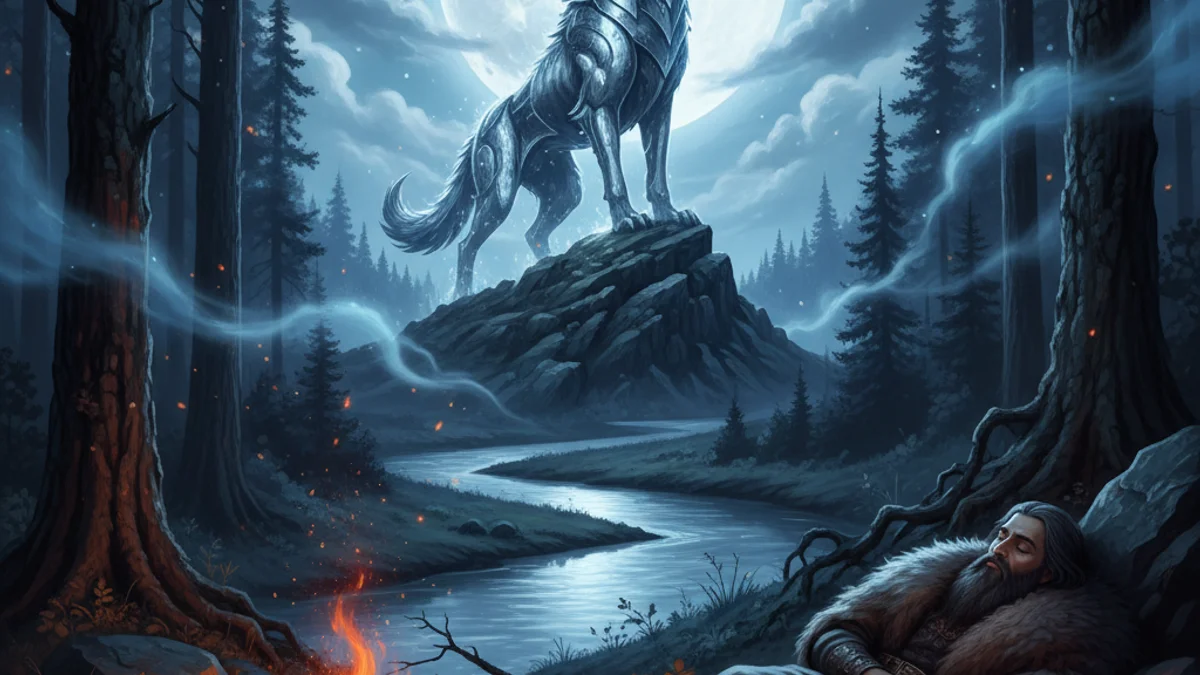
Long ago, Grand Duke Gediminas of Lithuania traveled from his capital in Trakai to hunt in the holy woods near the confluence of the Vilnia and Neris rivers. After a successful day of hunting a massive aurochs, the Duke decided to spend the night in the valley. As he slept, a vivid dream took hold of him. He saw a giant wolf made of iron standing atop a high hill, its head tilted back, howling with the strength and volume of a hundred wolves. Shaken, Gediminas sought the counsel of the pagan high priest, Lizdeika. The priest interpreted the vision: the iron wolf represented a castle and a city that Gediminas must build upon that very hill. Its iron hide meant the city would be impenetrable, and its howl signified that the fame of the city would echo throughout the world. Obeying the prophecy, Gediminas founded the city of Vilnius, which remains the capital of Lithuania to this day.
The Moral
Destiny is often revealed through signs, but it requires the wisdom to listen and the courage to build for the future.
“The iron wolf stands for a castle and a city which will be known for its strength and whose fame will reach the ends of the earth.”
Fun Fact
The legend was first recorded in the Lithuanian Chronicles in the 16th century, centuries after the city was actually founded, to give the capital a heroic origin story.
Frequently Asked Questions
What is the moral of The Iron Wolf of Vilnius?
The story teaches that visionary leadership and heeding wise counsel can lead to a legacy that lasts for centuries. It emphasizes the importance of building something strong and enduring for one's people.
Who was Grand Duke Gediminas?
Gediminas was a 14th-century ruler of the Grand Duchy of Lithuania, credited with expanding the territory and founding the city of Vilnius. He is considered one of Lithuania's greatest historical figures.
What does the iron wolf symbolize in the legend?
The iron represents the strength and invincibility of the city's walls and its defenders. The howl symbolizes the far-reaching fame and cultural influence the city would achieve across the world.
Who interpreted Gediminas's dream?
The dream was interpreted by Lizdeika, the Chief Pagan Priest (Krivis). According to legend, he was found as a baby in an eagle's nest, which gave him special spiritual insight.
Where is the Iron Wolf hill located today?
The hill from the dream is known as Gediminas' Hill in the heart of Vilnius, Lithuania. It is topped by the remains of the Upper Castle, specifically Gediminas' Tower.
Is the Iron Wolf a popular symbol in modern Lithuania?
Yes, the Iron Wolf is a major national symbol in Lithuania. It is used in the names of military units, sports teams, and various cultural organizations throughout the country.
Discussion (0)
Share your thoughts on this story
No comments yet. Be the first to share your thoughts!