Story Summary
The Washerman's Donkey follows a beast disguised in a tiger's skin to steal food. Discover why his true voice leads to his downfall in this Panchatantra tale.
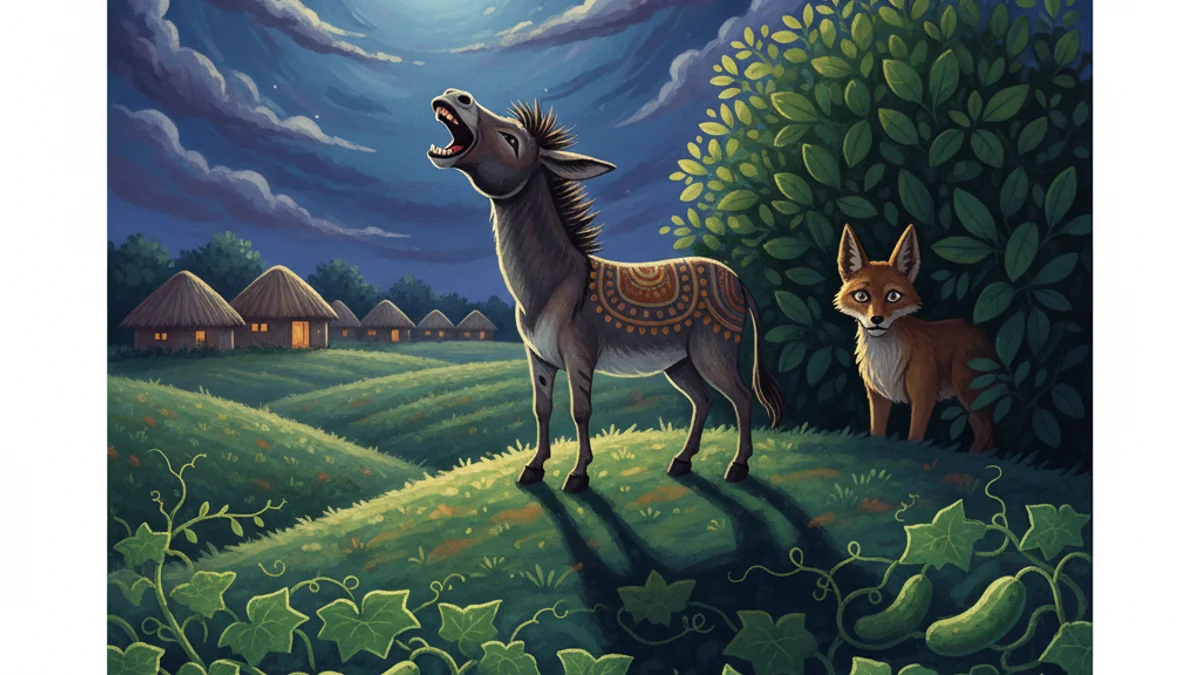
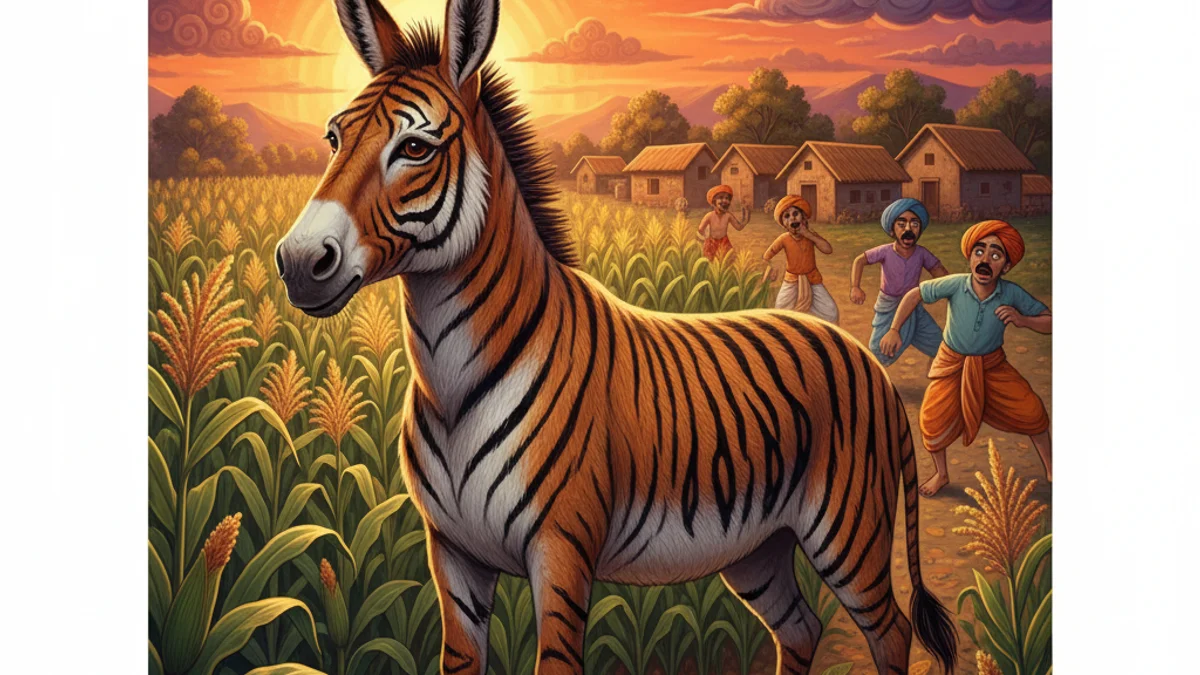
A washerman owned a donkey that had grown weak from overwork and lack of food. To help the animal graze, the washerman covered it with a tiger's skin and turned it loose in the village cornfields at night. The farmers, mistaking the donkey for a real tiger, fled in terror whenever they saw it. For many days, the donkey feasted on the lush crops and grew strong and fat. One night, however, as the donkey was grazing, it heard the distant braying of another donkey. Overjoyed and forgetting its disguise, it lifted its head and brayed loudly in response. Hearing the unmistakable sound of a donkey rather than a tiger's roar, the farmers realized they had been fooled. They rushed back into the fields with sticks and stones, giving the foolish donkey a sound thrashing for its deception.
The Moral
Deception may provide temporary benefits, but your true nature will eventually reveal itself, often at the worst possible time.
“The bray of a donkey cannot be hidden forever by the skin of a tiger.”
Fun Fact
This story is also found in the Jataka tales as the 'Sihacamma Jataka,' and it influenced similar 'donkey in a lion's skin' fables in Aesop's traditions.
Frequently Asked Questions
What is the moral of The Washerman's Donkey?
The primary moral is that clothes do not make the man; your true nature will always be revealed by your actions or speech. It also teaches that silence can often be a person's best protection.
Who wrote the story of The Washerman's Donkey?
This story is part of the Panchatantra, an ancient Indian collection of animal fables. These stories are traditionally attributed to the scholar Vishnu Sharma.
Why did the donkey reveal its identity?
The donkey was overcome by its own instincts when it heard another donkey braying in the distance. Its desire to communicate overrode its common sense, causing it to bray and blow its cover.
Is The Washerman's Donkey a Jataka Tale?
Yes, a very similar version of this story exists in the Buddhist Jataka tales, known as the Sihacamma Jataka. Both traditions use the story to warn against pretense.
What happened to the donkey at the end of the story?
Once the farmers realized the 'tiger' was actually just a donkey, they lost their fear. They attacked the donkey with sticks to drive it out of their fields, punishing it for the theft of their crops.
What does the tiger skin symbolize in the story?
The tiger skin symbolizes a false identity or a borrowed status. It represents how people often try to intimidate others using appearances rather than earning respect through their own merits.
Discussion (0)
Share your thoughts on this story
No comments yet. Be the first to share your thoughts!