Story Summary
Experience the powerful story of Rosa Parks on the Bus, whose refusal to give up her seat sparked the Montgomery Bus Boycott and changed history forever.
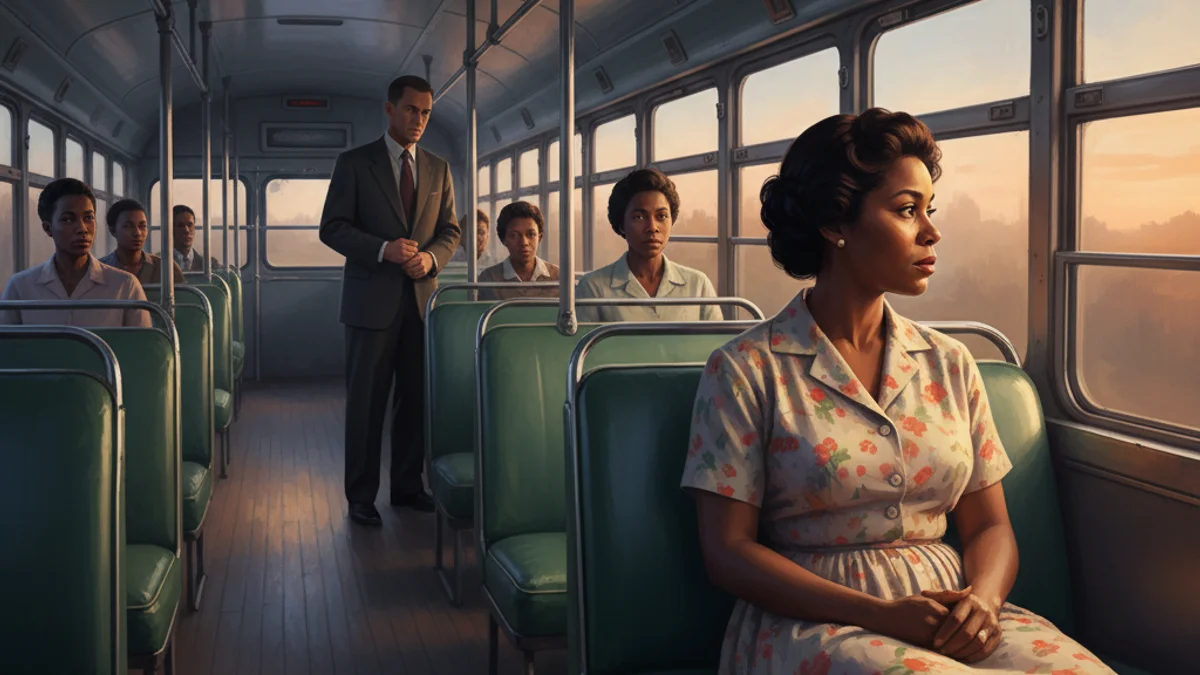
On December 1, 1955, in Montgomery, Alabama, a seamstress named Rosa Parks boarded a city bus after a long day of work. She took a seat in the first row of the 'colored' section. As the bus filled, the driver, James Blake, ordered Rosa and three others to stand so a white passenger could sit. While the others complied, Rosa remained seated. When the driver threatened to have her arrested, she quietly replied, 'You may do that.' She wasn't physically exhausted, but rather 'tired of giving in' to systemic injustice. Her arrest became the catalyst for the Montgomery Bus Boycott, a 381-day protest led by a young Dr. Martin Luther King Jr. that eventually led to the Supreme Court ruling that bus segregation was unconstitutional. Her quiet act of defiance proved that one person's courage can shift the course of history.
The Moral
True change begins with the courage of a single individual to stand up—or sit down—for their dignity and human rights.
“The only tired I was, was tired of giving in.”
Fun Fact
Rosa Parks was actually a seasoned civil rights activist and secretary of the local NAACP chapter long before her famous bus protest.
Frequently Asked Questions
What is the moral of Rosa Parks on the Bus?
The moral is that individual acts of bravery against injustice can inspire collective action and lead to monumental social change. It teaches us that one person's quiet resolve has the power to challenge and overturn unfair systems.
Why did Rosa Parks refuse to move?
Rosa Parks refused to move because she was tired of the indignity of segregation laws. She later clarified that she was not physically tired from work, but rather weary of constantly yielding to institutionalized racism.
What happened after Rosa Parks' arrest?
Her arrest sparked the Montgomery Bus Boycott, which lasted over a year. During this time, the Black community organized carpools and walked to work, severely impacting the city's bus revenue and drawing national attention to civil rights.
Who led the Montgomery Bus Boycott?
A young minister named Dr. Martin Luther King Jr. was chosen to lead the Montgomery Improvement Association, which coordinated the boycott. This event propelled him into the national spotlight as a leader of the Civil Rights Movement.
Was Rosa Parks the first person to refuse to give up her seat?
No, several others had done so before her, including 15-year-old Claudette Colvin nine months earlier. However, the NAACP felt Rosa Parks was the ideal person to build a legal challenge and public movement around.
How long did the Montgomery Bus Boycott last?
The boycott lasted 381 days, beginning on December 5, 1955, and ending on December 20, 1956. It ended only after the Supreme Court ruled that segregated seating on public buses was unconstitutional.
Discussion (0)
Share your thoughts on this story
No comments yet. Be the first to share your thoughts!