Story Summary
Explore the powerful story of Gandhi's Fast for peace in 1948. Witness how one man's non-violent sacrifice ended communal violence and united a divided nation.
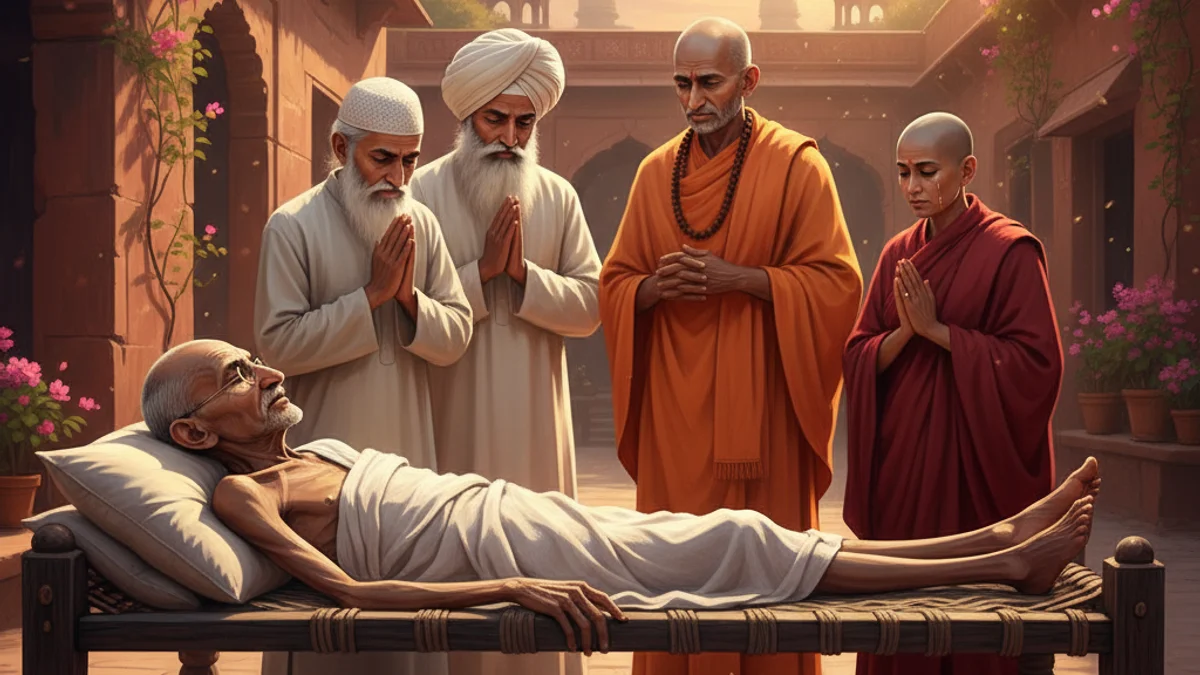
In January 1948, the city of Delhi was paralyzed by the bloody aftermath of India's partition. Communal violence between Hindus, Muslims, and Sikhs had turned neighbors into enemies. Mahatma Gandhi, then seventy-eight years old and frail, realized that words were no longer enough to stop the slaughter. He announced a fast unto death, stating he would not consume food until peace was restored and the hearts of all communities were united. As the days passed, Gandhi’s strength faded, and his health reached a critical point. The sight of the 'Father of the Nation' wasting away moved the citizenry to tears. Thousands of people from all faiths marched through the streets together, chanting for peace. Leaders from every faction finally met at his bedside, signing a solemn pact to protect one another and end the bloodshed. Only after receiving these assurances did Gandhi break his fast with a sip of orange juice, proving that the power of self-sacrifice could overcome the darkest of hatreds.
The Moral
True peace is achieved not through force, but through the power of self-sacrifice and the appeal to the human conscience.
“My life is my message.”
Fun Fact
This 1948 fast was Gandhi's fifteenth and final fast for public causes, ending just twelve days before his assassination.
Frequently Asked Questions
What is the moral of Gandhi's Fast?
The moral is that non-violence and self-sacrifice are more powerful than force. It teaches that one person's willingness to suffer for the truth can awaken the conscience of an entire nation.
Why did Gandhi fast in 1948?
Gandhi began his fast to end the horrific communal violence in Delhi following the partition of India. He sought to restore peace and safety for the Muslim minority and foster religious harmony.
How long did Gandhi's final fast last?
Gandhi's final fast for communal peace lasted five days. He broke it on January 18, 1948, after leaders of all communities signed a peace pledge.
What did Gandhi drink to break his fast?
Following the peace agreement, Gandhi broke his fast by drinking a glass of orange juice offered to him by a Muslim leader in the presence of Hindu and Sikh representatives.
What was the immediate impact of the fast?
The fast led to an immediate and dramatic drop in violence in Delhi. It forced political and religious leaders to take responsibility for the safety of all citizens, regardless of their faith.
Why is fasting considered a weapon of non-violence?
In Gandhi's philosophy of Satyagraha, fasting is a way to exert moral pressure. It avoids physical conflict while forcing the opposing side to confront their own actions and values.
Discussion (0)
Share your thoughts on this story
No comments yet. Be the first to share your thoughts!