Story Summary
Discover the powerful story of The Martyrdom of Guru Arjan, the fifth Sikh Guru who sacrificed his life for truth, faith, and the sanctity of the Adi Granth.
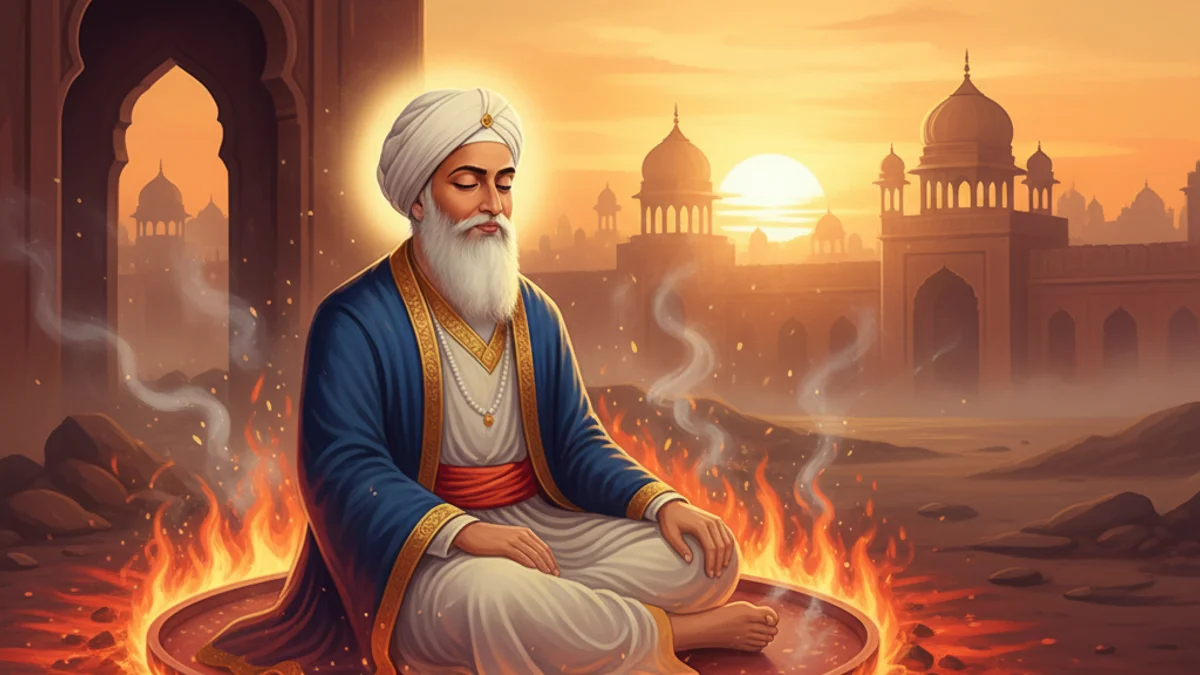
Guru Arjan Dev Ji, the fifth Guru of the Sikhs, was a beacon of peace and the compiler of the Adi Granth. His growing influence and the inclusive nature of the Sikh faith troubled the Mughal Emperor Jahangir. Under the pretext of political rebellion and pressured by the jealous official Chandu Shah, Jahangir ordered the Guru's arrest. Guru Arjan was subjected to horrific torture in the blistering heat of Lahore. He was made to sit on a red-hot iron plate while burning sand was poured over his body, and he was later placed in boiling water. Throughout this agony, the Guru remained in a state of deep meditation, uttering the words, 'Tera Kiya Meetha Lage' (Thy Will is sweet to me). He refused to alter the holy hymns or renounce his faith. Finally, after five days of torture, he asked to bathe in the River Ravi. He stepped into the cool waters and, amidst the chanting of prayers, his soul left his physical body, marking the first great martyrdom in Sikh history.
The Moral
True faith lies in the unwavering acceptance of God's will, even in the face of extreme suffering and death.
“Tera Kiya Meetha Lage, Har Naam Padarth Nanak Maange.”
Fun Fact
Guru Arjan Dev Ji was the first Sikh Guru to be martyred, and his sacrifice transformed the Sikh community into a 'Saint-Soldier' tradition under the next Guru.
Frequently Asked Questions
What is the moral of The Martyrdom of Guru Arjan?
The moral is the importance of 'Bhana' or accepting God's will with grace. It teaches that physical suffering cannot conquer a soul that is truly connected to the Divine.
Why was Guru Arjan Dev Ji martyred?
He was martyred because he refused to change the contents of the Adi Granth to suit Emperor Jahangir and for his refusal to pay an unjust fine or convert.
What does the phrase 'Tera Kiya Meetha Lage' mean?
It means 'Thy Will is sweet to me,' signifying absolute surrender to the divine decree regardless of the circumstances.
Who was the Mughal Emperor during Guru Arjan's time?
The Mughal Emperor was Jahangir, who viewed the Guru's growing religious and political influence as a threat to his authority.
What was Guru Arjan Dev Ji's major contribution to Sikhism?
His greatest contributions include the compilation of the Adi Granth, the first holy scripture of the Sikhs, and the completion of the Harmandir Sahib (Golden Temple).
Where did the martyrdom of Guru Arjan take place?
The martyrdom took place in Lahore, present-day Pakistan, near the banks of the River Ravi in May 1606.
Discussion (0)
Share your thoughts on this story
No comments yet. Be the first to share your thoughts!