Story Summary
Discover the touching story of Lincoln and the Sleeping Sentinel, where President Abraham Lincoln pardons a young soldier sentenced to death for sleeping on duty.
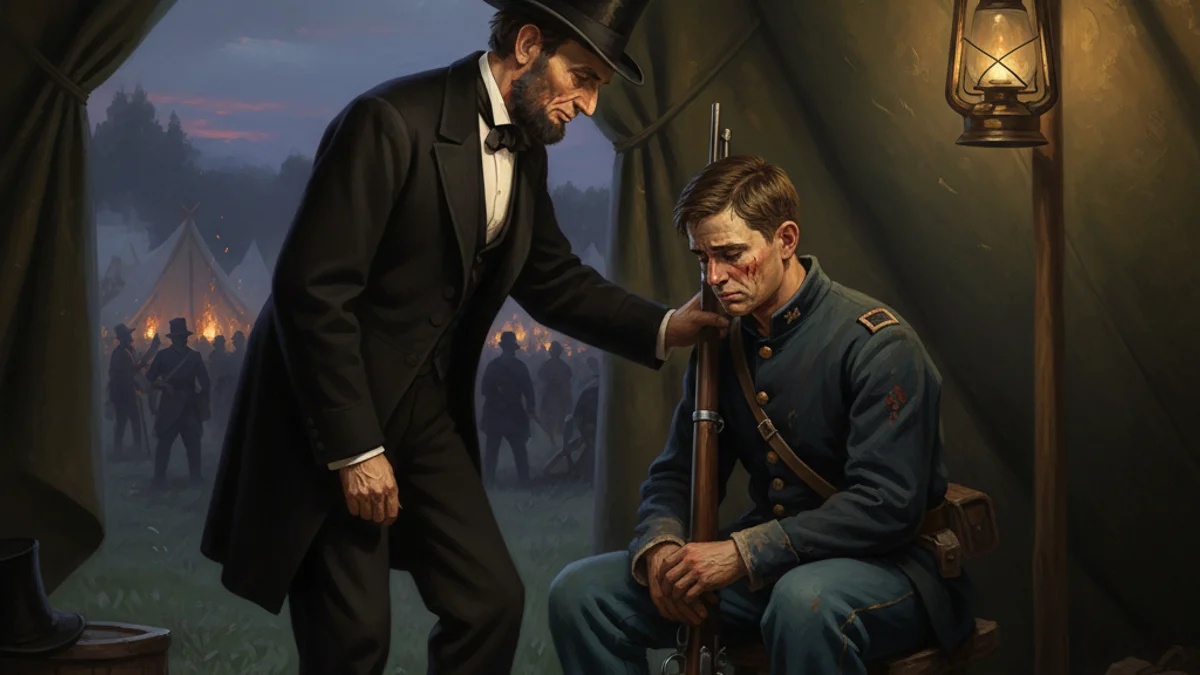
During the height of the Civil War, a young Vermont soldier named William Scott was found sleeping at his post. Exhausted from volunteering to take a sick comrade’s watch immediately after his own, he succumbed to fatigue. Under the harsh realities of military law, Scott was court-martialed and sentenced to death by firing squad. When President Abraham Lincoln heard of the case, he was moved by the young man's character. Rather than just signing a pardon, Lincoln personally visited the camp. He spoke fatherly to the terrified youth, learning of his farm life and his devotion to his mother. Lincoln told Scott he would not be shot, but that he now owed a great debt. 'I am going to trust you,' Lincoln said, 'and send you back to your regiment.' Scott took this mercy to heart, serving with renewed vigor. He later died a hero's death in battle, his final thoughts a prayer of gratitude for the President who gave him a second chance.
The Moral
Compassion and mercy can inspire far greater loyalty and sacrifice than the threat of punishment.
“I am going to trust you, and send you back to your regiment.”
Fun Fact
The story was so popular in the 19th century that it was turned into a famous poem by Francis de Haes Janvier, which Lincoln himself reportedly enjoyed.
Frequently Asked Questions
What is the moral of Lincoln and the Sleeping Sentinel?
The moral is that showing mercy and understanding can inspire a person to achieve greatness and demonstrate true loyalty. It suggests that human compassion often yields better results than the rigid application of law.
Who was the soldier in the story of the Sleeping Sentinel?
The soldier was Private William Scott of the 3rd Vermont Infantry, who was famously pardoned by Lincoln after being sentenced to death for sleeping on guard duty.
Did Abraham Lincoln really pardon William Scott?
Yes, historical records confirm that Lincoln pardoned William Scott in September 1861. This act of clemency became one of the most famous examples of Lincoln's legendary compassion.
How did William Scott die after being pardoned?
William Scott died a hero's death at the Battle of Lee's Mills in April 1862. He was shot while charging enemy lines, fulfilling his promise to serve his country faithfully.
Why was sleeping on sentry duty punished by death?
In wartime, a sleeping sentinel could leave an entire army vulnerable to a surprise attack. Military law treated this as a grave offense to ensure the safety and discipline of the troops.
Is the story of the Sleeping Sentinel a true story?
While some details have been dramatized in literature over time, the core events are historically accurate. Lincoln's intervention in the case of William Scott is a well-documented historical event.
Discussion (0)
Share your thoughts on this story
No comments yet. Be the first to share your thoughts!