Story Summary
In the classic African folktale Anansi and the Tiger's Stories, a clever spider uses his wit to win the rights to all the world's tales from a powerful cat.
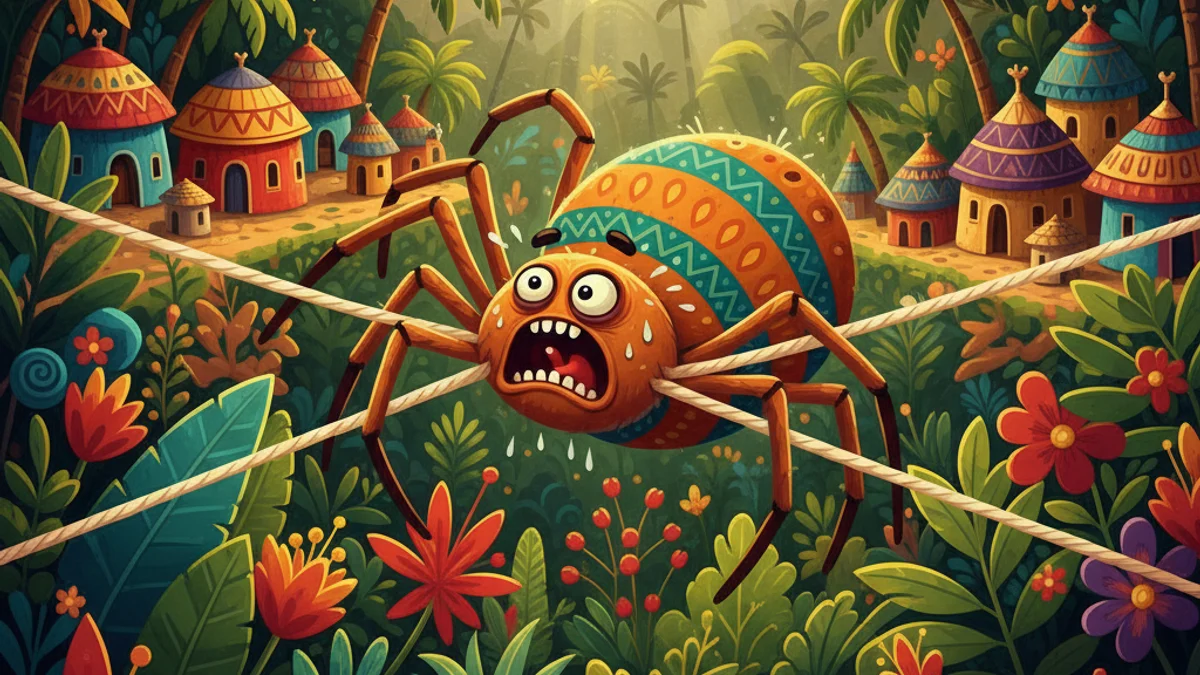
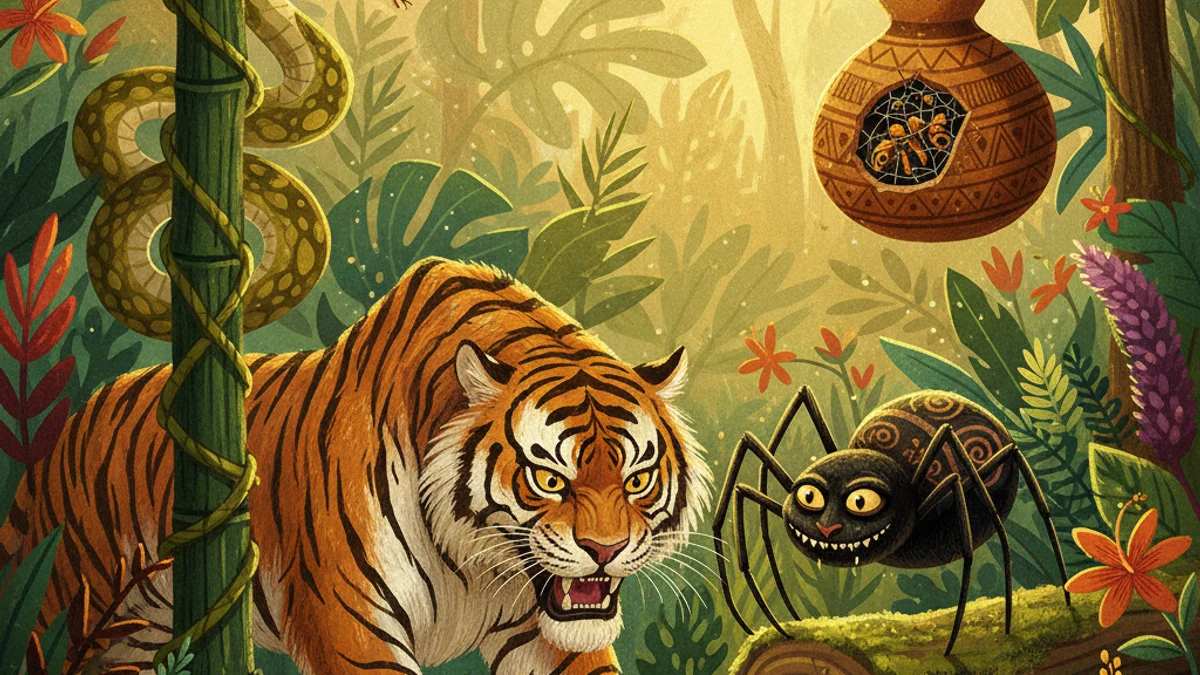
In the beginning, all stories belonged to Tiger. Anansi, the clever spider, wanted these tales for himself. Tiger laughed and set an impossible price: Anansi must capture the swarm of hornets, the great python, and the fierce leopard. Using his wit, Anansi first tricked the hornets into a gourd by faking rain. Next, he challenged the python to prove his length against a bamboo pole, tying him fast once he lay flat. Finally, he lured the leopard into a pit and tied him while pretending to help him out. Anansi delivered his prizes to the astonished Tiger. Impressed by the spider's cunning, Tiger declared that from that day forward, all the world's tales would be known as Anansi stories.
The Moral
Cunning and intelligence are more powerful than physical strength. Even the smallest creature can achieve great things through careful planning and wit.
“Today they are called Tiger's stories, but tomorrow they shall be called Anansi stories.”
Fun Fact
Anansi stories were so influential that they crossed the Atlantic during the slave trade, evolving into the 'Aunt Nancy' stories in the United States and influence other tricksters like Br'er Rabbit.
Frequently Asked Questions
What is the moral of Anansi and the Tiger's Stories?
The moral is that intelligence and strategy are superior to raw power. It demonstrates how a small individual can overcome a formidable opponent by using their mind instead of their muscles.
Who is Anansi the Spider?
Anansi is a West African trickster god originating from the Akan people of Ghana. He often takes the form of a spider and is known for his wisdom, mischief, and ability to outsmart larger animals.
How did Anansi trick the hornets?
Anansi poured water over his head and onto the hornets' nest, making them believe it was raining. He then offered his gourd as a dry shelter, trapping them inside once they flew in.
Why did Tiger give up his stories?
Tiger gave up the stories because Anansi successfully completed three seemingly impossible tasks. Tiger respected the terms of their agreement and was impressed by the spider's immense cleverness.
What culture does this story come from?
This story originates from the Ashanti or Akan people of Ghana. These 'Anansesem' (spider tales) are central to their oral tradition and have spread throughout the African diaspora, especially in the Caribbean.
What does the tiger represent in this folktale?
The tiger represents brute force, authority, and the status quo. In many variations, this role is actually played by Nyame, the Sky God, but the character always serves as a powerful obstacle for Anansi to overcome.
Discussion (0)
Share your thoughts on this story
No comments yet. Be the first to share your thoughts!