Story Summary
Explore the legendary Path of the Sword, where a young samurai learns that true mastery of the blade requires a disciplined soul and unwavering awareness.
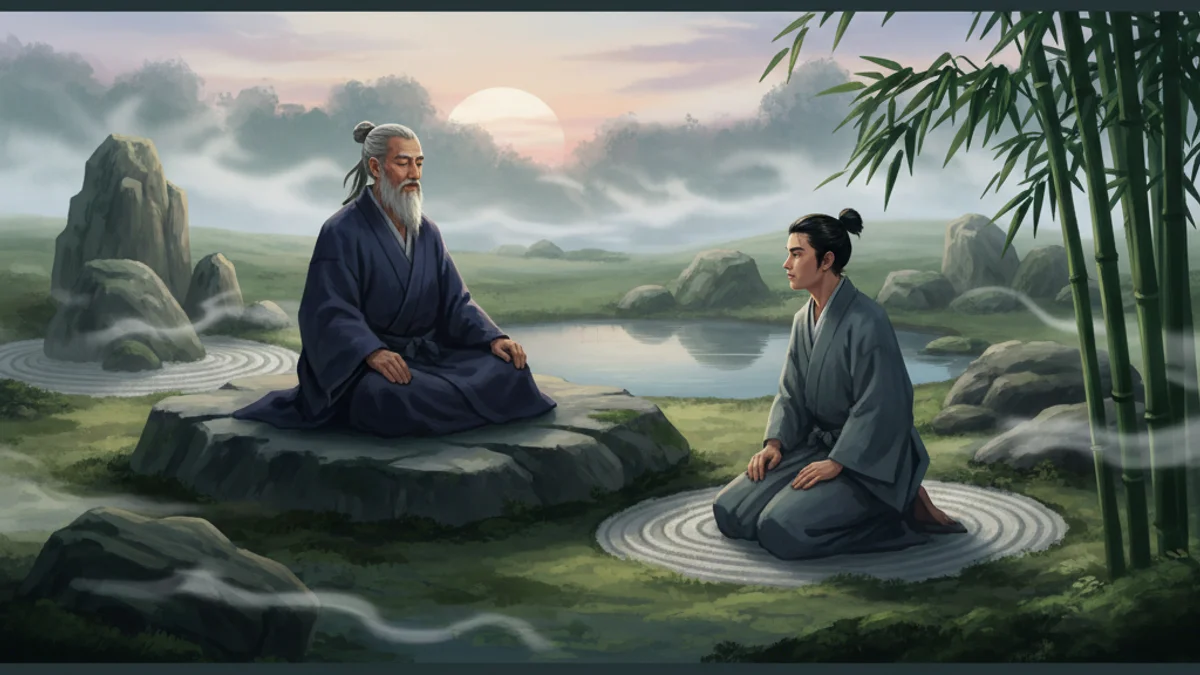
A young, headstrong samurai named Matajuro sought out the legendary master Tsukahara Bokuden, desperate to become the greatest swordsman in Japan. 'How long will it take to master the blade?' Matajuro asked. Bokuden looked at him and replied, 'Ten years.' Distressed, Matajuro promised to work day and night. 'In that case,' Bokuden said, 'it will take twenty years.' The youth was baffled, but he committed to the master's training. For years, however, Bokuden forbade him from touching a sword. Matajuro was made to cook, clean, and garden. Whenever Matajuro's mind wandered, Bokuden would suddenly strike him with a wooden stick. Gradually, the young man learned to be perpetually aware, moving with a fluid grace even while performing menial tasks. Only when Matajuro stopped seeking the destination did Bokuden finally hand him a steel blade. He had learned the ultimate lesson of Bushido: the path of the sword is not found in the strike, but in the unwavering discipline of the soul.
The Moral
True mastery is achieved through patience, humility, and the total mastery of one's own ego rather than through technical skill alone.
“The swiftest blade is the one that stays in its sheath until the soul is ready.”
Fun Fact
Tsukahara Bokuden is a real historical figure who reportedly fought 19 duels and 37 battles, remaining undefeated throughout his entire life.
Frequently Asked Questions
What is the moral of The Path of the Sword?
The story teaches that mastery requires patience and the removal of ego. One cannot master a craft until they have first mastered their own mind and discipline.
Who was Tsukahara Bokuden in Japanese history?
Bokuden was a legendary swordsman of the Sengoku period who founded the Kashima Shintō-ryū school. He is famous for winning dozens of duels without ever being wounded.
Why did the master increase the years of training?
The master increased the time because Matajuro was too focused on the result rather than the process. Impatience is a barrier to the deep focus required for true mastery.
What does the wooden stick symbolize in the story?
The stick represents constant awareness and the unpredictability of life. It taught Matajuro to stay present and alert at every moment, not just during combat.
How does this story reflect the values of Bushido?
It reflects the values of self-discipline (Jiki), perseverance, and the idea that a samurai's spirit is more important than his physical weapon.
What is the 'Sword of No-Sword' philosophy?
It is the concept that the highest level of martial arts is to win without fighting. By mastering oneself, a warrior can resolve conflict through wisdom and presence.