Story Summary
Discover the classic Panchatantra tale Loss of Gains. A monkey uses his wit to escape a crocodile's betrayal, teaching us that presence of mind saves lives.
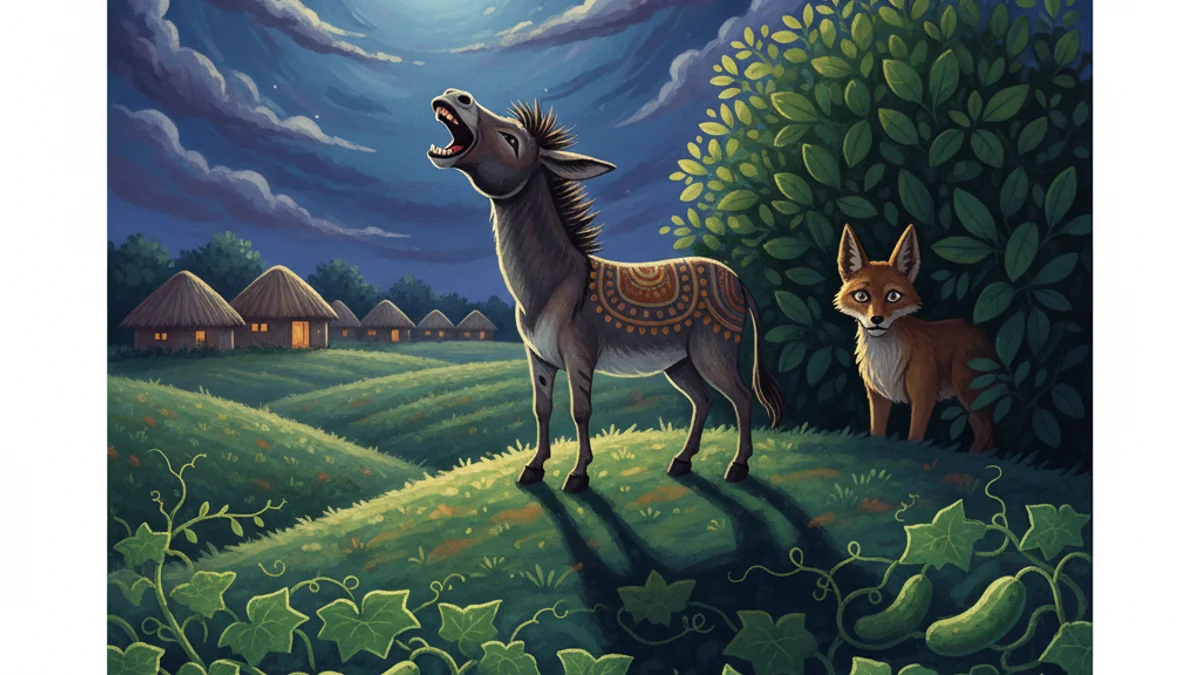
Raktamukha, a clever monkey, lived on a Jamun tree by a river, spending his days eating the sweet, purple fruits. He befriended a crocodile named Karalamukha, sharing the delicious harvest with him. The crocodile took some fruit home to his wife, who, upon tasting them, grew greedy. She reasoned that if the fruits were so sweet, the monkey’s heart, which processed them daily, must be the sweetest meat of all. She feigned illness and told her husband only a monkey’s heart could cure her. Torn between friendship and his wife, Karalamukha eventually invited the monkey to his home for dinner. As the monkey rode on the crocodile's back across the deep river, the crocodile confessed his dark intent. Raktamukha didn't panic. He laughed and told the crocodile that monkeys keep their hearts in the hollows of their trees for safekeeping. Foolishly believing him, the crocodile swam back to the shore. The moment they reached the bank, the monkey leaped onto the tree, mocking the crocodile for his treachery and stupidity. Through his presence of mind, the monkey saved his life and ended a false friendship.
The Moral
Presence of mind and quick thinking can save one from the most dangerous situations and treacherous companions.
“A quick wit is the best companion when a false friend leads you into deep waters.”
Fun Fact
Loss of Gains is the English translation of the Sanskrit title 'Labdhapranasam,' which serves as the fourth book of the five-volume Panchatantra collection.
Frequently Asked Questions
What is the moral of Loss of Gains?
The moral is that presence of mind and quick thinking can help one overcome even the most life-threatening situations. It also teaches that a person should never trust someone who has already proven to be a traitor.
Who wrote the story Loss of Gains?
This story is part of the Panchatantra, an ancient Indian collection of animal fables. It is traditionally attributed to the sage Vishnu Sharma, who used these tales to teach political science and wisdom to young princes.
Why did the crocodile's wife want the monkey's heart?
She believed that because the monkey ate sweet Jamun fruits every day, his heart would be the sweetest and most delicious meat on earth. She used her influence over her husband to demand the heart as a supposed cure for her illness.
How did the monkey trick the crocodile in Loss of Gains?
The monkey claimed that he did not carry his heart inside his body, but kept it hidden in a hollow of the Jamun tree. This convinced the crocodile to swim back to the shore, giving the monkey the chance to escape.
What does the title Loss of Gains signify?
It refers to 'Labdhapranasam,' the fourth book of the Panchatantra. It signifies how one can lose what they have already gained—in this case, the crocodile lost a loyal friend and a constant food source due to his foolishness.
What lesson does the story teach about friendship?
The story teaches that true friendship is based on trust and mutual respect. Once a friend betrays that trust for their own gain, the relationship is dead, and one should never return to a person who intended to harm them.
Discussion (0)
Share your thoughts on this story
No comments yet. Be the first to share your thoughts!