Story Summary
Experience the epic sacrifice of Prince Devavrata in Bhishma's Vow. A legendary tale of duty and celibacy that changed the fate of the throne of Hastinapur.
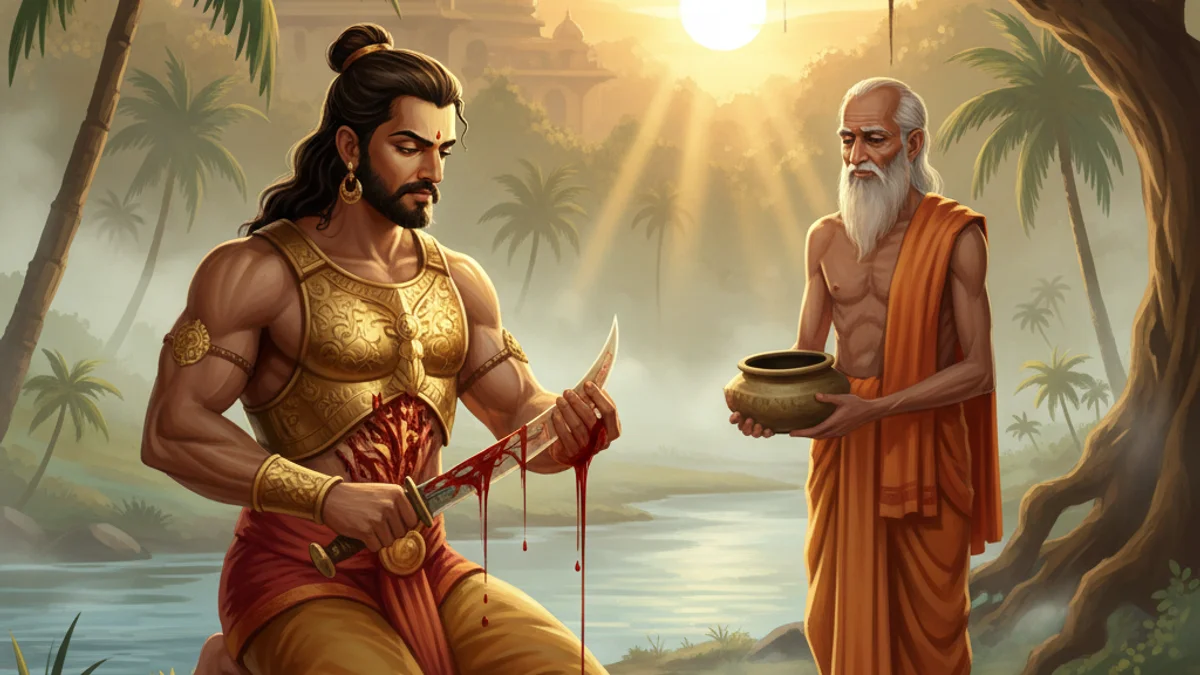
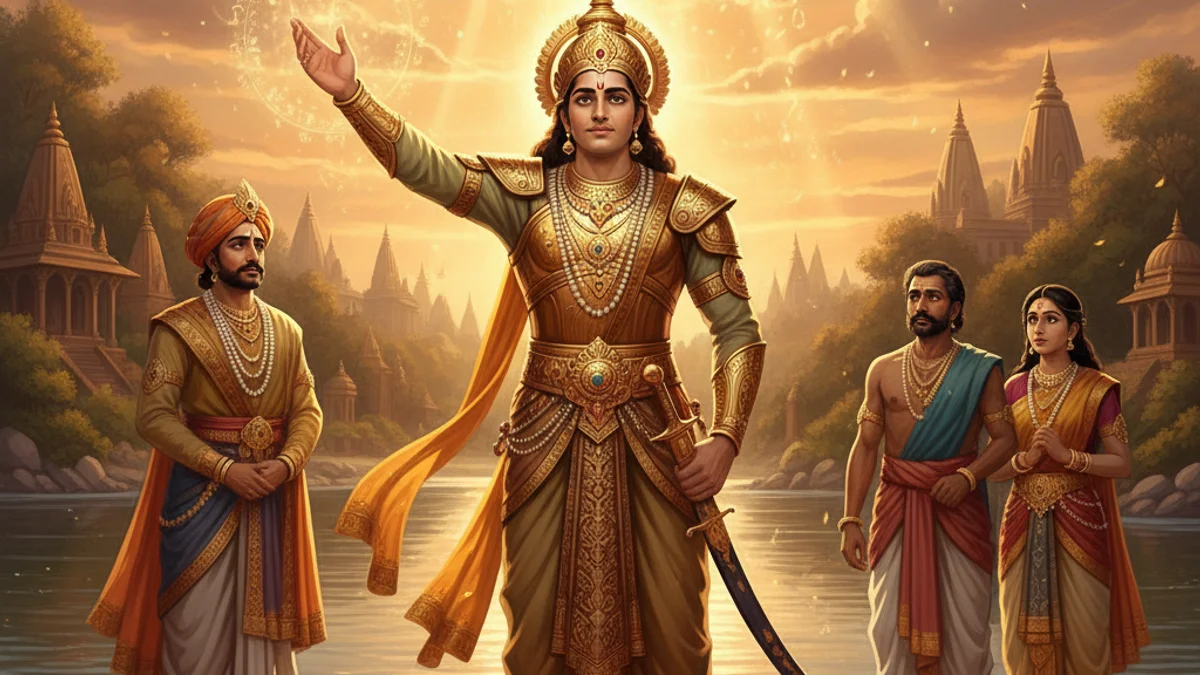
Prince Devavrata, the son of King Shantanu and the river goddess Ganga, was the celebrated heir to the throne of Hastinapur. One day, King Shantanu fell deeply in love with Satyavati, a beautiful fisherwoman. However, her father refused the marriage unless Satyavati's future sons were guaranteed the throne. Knowing this would displace Devavrata, the King returned to his palace in silent grief. Upon learning the cause of his father's sorrow, Devavrata approached the fisherman chief. To secure his father's happiness, he first renounced his claim to the kingdom. When the fisherman voiced concerns that Devavrata's children might later contest the throne, the prince took an even more 'terrible' oath: he vowed to remain a lifelong celibate, ensuring no heirs would ever be born to him. The heavens rained flowers as he was renamed Bhishma, the one of the terrible vow. This selfless act allowed his father to marry Satyavati but bound Bhishma to a life of duty and sacrifice that would shape the destiny of the Kuru dynasty.
The Moral
True devotion and filial piety involve selfless sacrifice, though rigid vows can have complex consequences for future generations.
“I shall remain a celibate all my life. Even if I lose the three worlds, I shall never break this vow.”
Fun Fact
Bhishma is known as the 'Pitamaha' or grandfather of the Kuru clan, as he lived long enough to serve as a guardian for both the Pandava and Kaurava generations.
Frequently Asked Questions
Why did Devavrata take the vow of celibacy?
He took the vow to ensure that no child of his would ever challenge the right of Satyavati’s future children to the throne, satisfying her father's strict conditions for marriage.
What does the name Bhishma mean?
The name 'Bhishma' translates to 'The Terrible' or 'The Formidable,' referring to the incredible difficulty and weight of the life-long oath he swore.
Who were Bhishma's parents?
Bhishma was the son of King Shantanu of Hastinapur and the river goddess Ganga, which endowed him with divine strength and wisdom.
What boon did King Shantanu give to Bhishma?
Moved by his son's sacrifice, Shantanu granted Bhishma the boon of 'Ichcha Mrityu,' meaning he could choose the exact moment of his own death.
How did Bhishma's vow affect the Mahabharata?
His vow bound him to protect the throne of Hastinapur, eventually forcing him to fight for the Kauravas against the Pandavas, despite his personal love for the latter.
Is Bhishma's vow seen as a positive act?
While it is the ultimate example of filial devotion, it is also viewed as a tragic turning point that led to the eventual succession crisis and the Kurukshetra War.