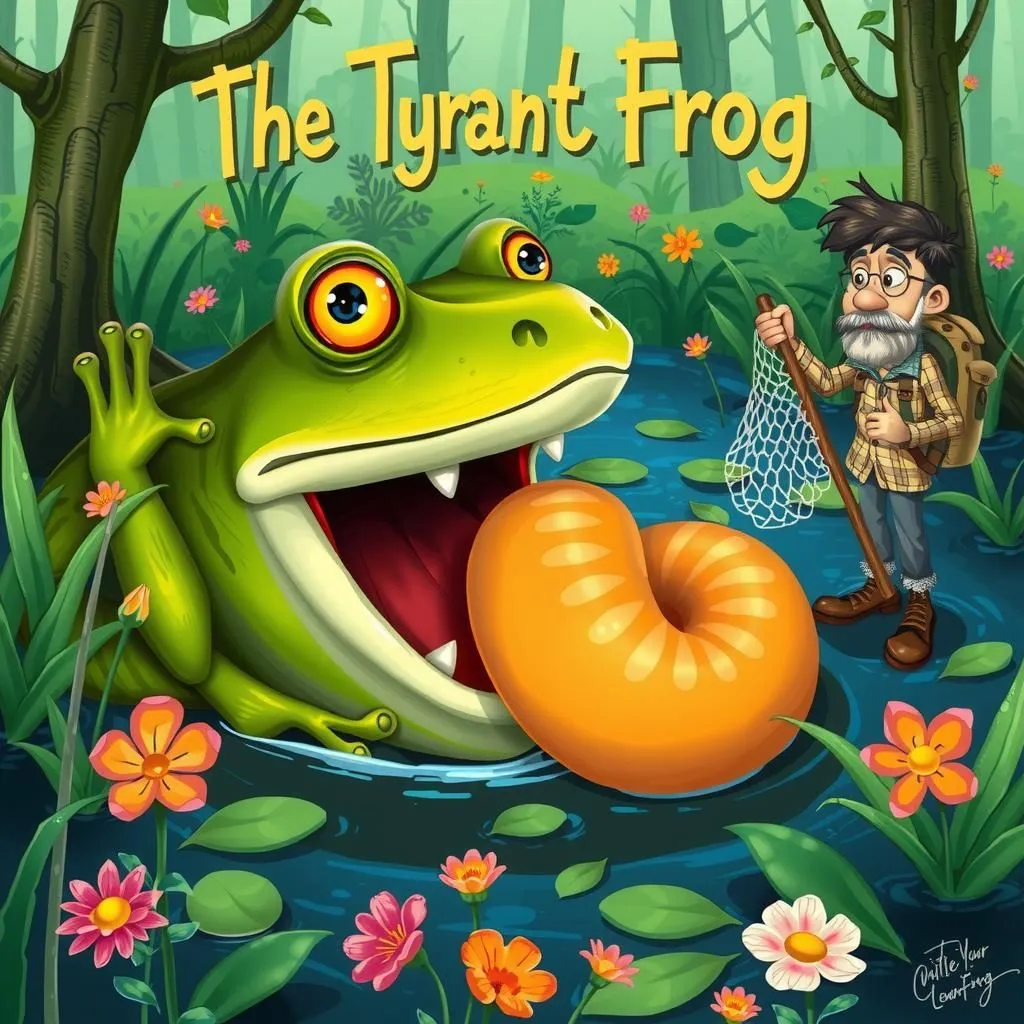

The Tyrant Frog

Story Summary
In "The Tyrant Frog," a clever fable with a moral, a snake being swallowed by a frog pleads for help from a passing naturalist, who misinterprets the situation as a simple dining scenario. The naturalist, more focused on acquiring a snakeskin for his collection, highlights the importance of understanding context before jumping to conclusions. This easy small story serves as a valuable lesson in awareness and perspective, making it a fitting addition to short story collections with moral themes for personal growth.
Click to reveal the moral of the story
The story illustrates that appearances can be deceiving, and one must be cautious in interpreting situations without understanding the full context.
Historical Context
This story is reminiscent of Aesop's Fables, which often feature anthropomorphized animals to convey moral lessons through their interactions. The fable exemplifies themes of deception and misunderstanding, rooted in a tradition that spans ancient Greece and has been retold across various cultures, reinforcing the moral that appearances can be misleading. Such narratives have historically served to reflect human behavior and societal norms, using animals as allegorical devices to explore complex themes in a digestible format.
Our Editors Opinion
This fable highlights how appearances can be deceiving, and it serves as a reminder to look deeper before jumping to conclusions in our modern, fast-paced world. For instance, in a workplace setting, a manager might assume that an employee is slacking off when they see them chatting with coworkers, but in reality, they could be fostering teamwork and collaboration that benefits the entire project.
You May Also Like

The Circular Clew
In "The Circular Clew," a detective follows a mysterious Clew for a year in search of a murderer, only to discover the deceased is confirmed dead in the Morgue's register. This well-known moral story illustrates the futility of chasing false leads, emphasizing the importance of clarity and truth in the pursuit of justice. Ultimately, the Detective's lack of progress serves as a lesson in personal growth, reminding readers that not all paths lead to meaningful discoveries.

The Fox and the Monkey
In "The Fox and the Monkey," a boastful Monkey claims that monuments in a cemetery honor his illustrious ancestors, who were esteemed freedmen. The clever Fox highlights the ease of lying when there are no witnesses to challenge the falsehoods, illustrating that a false tale often betrays itself. This fable serves as a life-changing story with a moral, reminding readers of the importance of honesty in impactful moral stories.

Physicians Two
In "Physicians Two," a wicked old man feigns illness to avoid taking medicine prescribed by two conflicting physicians, who treat him for weeks. When the doctors accidentally meet and argue over their differing remedies, the patient reveals he has been well for days, highlighting a humorous life lesson about honesty and the absurdity of trying to manipulate others. This quick moral story reminds us that deceit can lead to unnecessary complications and that honesty is often the best policy.
Other names for this story
The Frog's Deception, The Snake's Dilemma, Nature's Twist, The Unlikely Rescue, A Frog's Folly, The Naturalist's Choice, Swallowed Secrets, The Reptile's Ruse
Did You Know?
This story highlights the theme of misinterpretation, as the Naturalist initially perceives the snake's plight as a natural feeding behavior, illustrating how perspective can drastically alter understanding of a situation. It also subtly critiques human curiosity and the often exploitative nature of collecting specimens in the name of science.
Subscribe to Daily Stories
Get a new moral story in your inbox every day.