
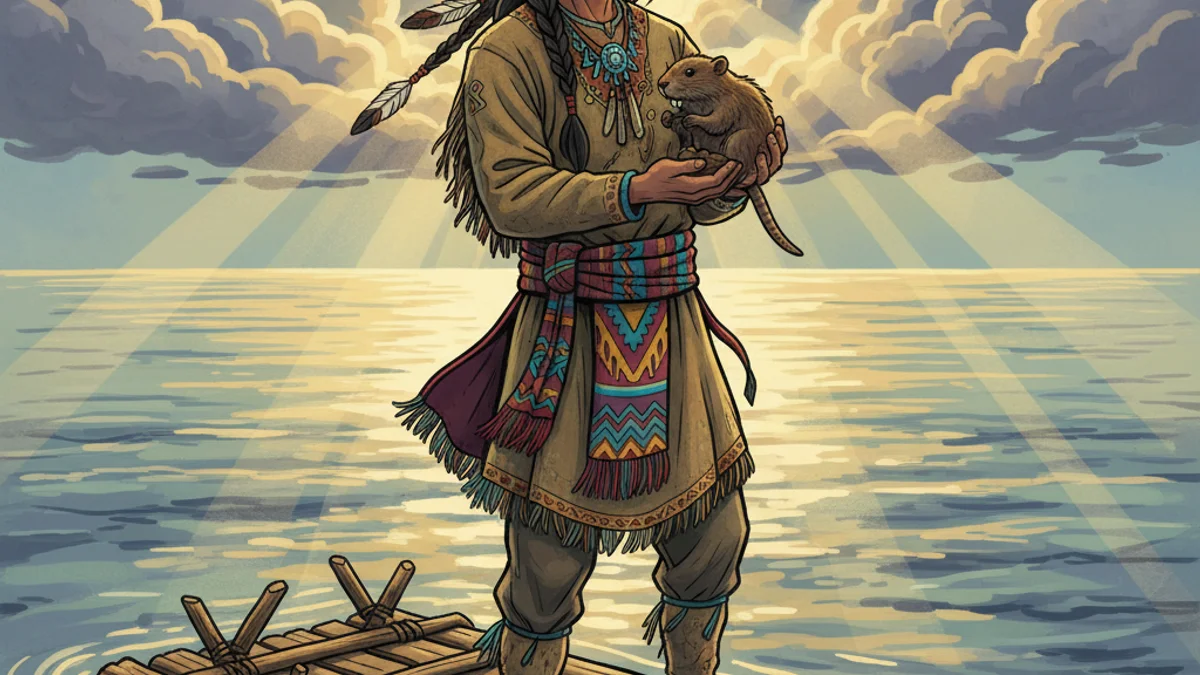
Long ago, during the time of the Great Flood, Wisakedjak found himself floating on a vast raft with all the animals of the world. The Great Spirit had sent the waters to cleanse the earth, but Wisakedjak, the benevolent trickster, wanted to bring the land back. He spoke to the strongest swimmers first. 'Beaver,' he said, 'dive down and bring me a handful of earth from the bottom.' Beaver dived deep and stayed down for a long time, but he returned empty-handed, exhausted by the depth. Next, the Otter tried, but even he could not reach the bottom. Finally, the tiny Muskrat volunteered. The others laughed, but Wisakedjak encouraged him. Muskrat stayed underwater for so long that the animals feared he had drowned. When his small paws finally broke the surface, he was breathless and weak, but held within his tiny claws was a small clump of mud. Wisakedjak took the earth, blew upon it, and placed it on the raft. As he sang his sacred songs, the mud began to grow and stretch, spreading across the waters until it became the vast, beautiful land we inhabit today.
Persistence and bravery are not measured by size, and even the smallest individual can change the fate of the world.
Questions about this story
Who is Wisakedjak in Cree mythology?
Wisakedjak is a primary figure in Cree legends, known as a trickster and a teacher who helped shape the world for humans. While he is often mischievous, he is generally seen as a benevolent protector of the earth and its creatures.
What is the moral of the Wisakedjak Tales?
The stories emphasize that every creature, regardless of its size or perceived strength, has a vital role to play in the universe. It teaches lessons of humility, persistence, and the importance of community effort.
How does Wisakedjak compare to other trickster spirits?
Like the Anishinaabe's Nanabozho or the Lakota's Iktomi, Wisakedjak is a shapeshifter who learns through trial and error. His stories serve as both entertainment and a moral compass for the community.
Why is the Muskrat important in this story?
The Muskrat represents the 'underdog' who succeeds where the more powerful animals fail. His sacrifice and determination highlight the theme that heart and spirit are more important than physical might.
Advertisement

Good night.
