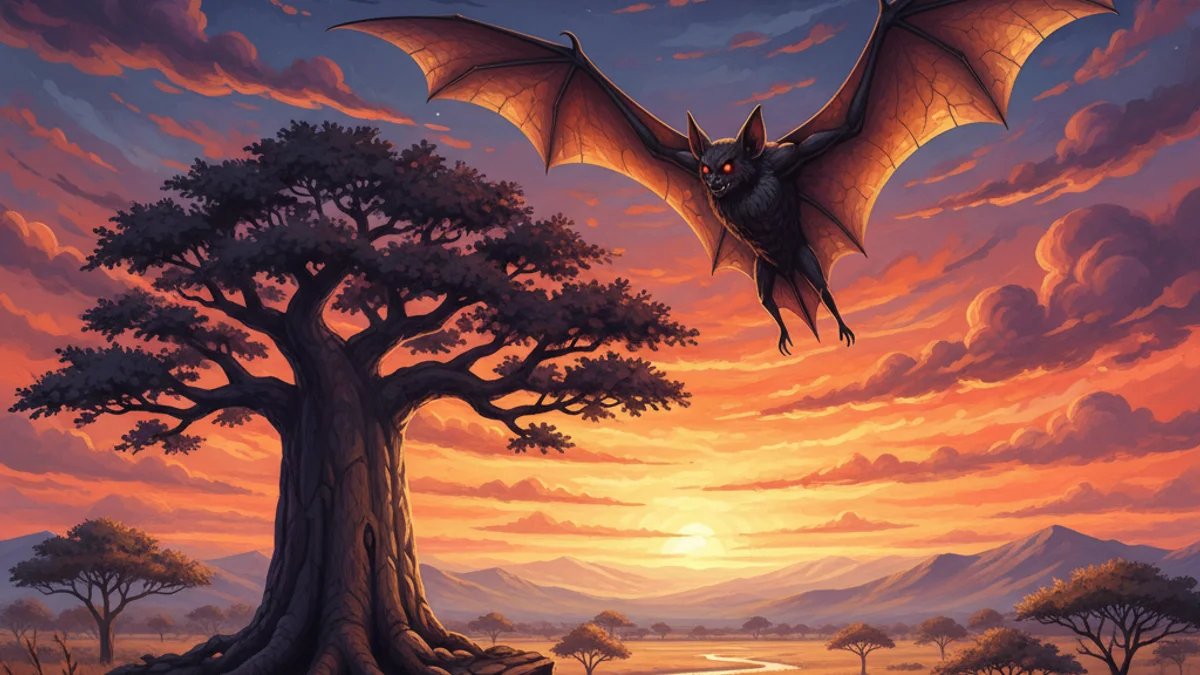
Long ago, the Bat and the Bush Rat were the closest of friends. The Bat was a clever cook, and the Bush Rat always marveled at the deliciousness of the Bat’s soup. One day, the Bat revealed his 'secret': he claimed that he boiled himself in the pot to release his natural flavors. To prove it, the Bat jumped into a pot of lukewarm water and emerged quickly, unharmed. Eager to impress his own wife, the Bush Rat went home and jumped into a pot of truly boiling water. He died instantly. When the King discovered the Bat’s lethal deception, he was furious and ordered the Bat’s immediate arrest. To escape the King’s guards and the judgment of the light, the Bat began hiding in dark caves during the day, only venturing out under the cover of darkness where he could remain unseen. This is why the bat never flies during the day.
Deceit and jealousy destroy friendships and lead to a life of fear and isolation.
Questions about this story
What is the moral of Why the Bat Flies at Night?
The moral is that treachery and jealousy carry heavy consequences. By tricking his friend, the bat lost his social standing and was forced into a lonely, nocturnal existence to avoid justice.
Is this a creation myth or a fable?
It serves as both. It is a 'pourquoi tale' that explains a natural phenomenon—the bat's nocturnal behavior—while using animal characters to teach a moral lesson about the dangers of envy.
Who are the main characters in the story?
The primary characters are the Bat, who acts as the trickster, and the Bush Rat, his victim. The King acts as the authority figure who seeks justice for the Rat's death.
Why did the Bat trick the Bush Rat?
The Bat was motivated by jealousy and a desire to prove his superiority. He used a deceptive cooking demonstration to lead the Rat into a fatal mistake, showing the destructive nature of false friendship.
Advertisement


Good night.
