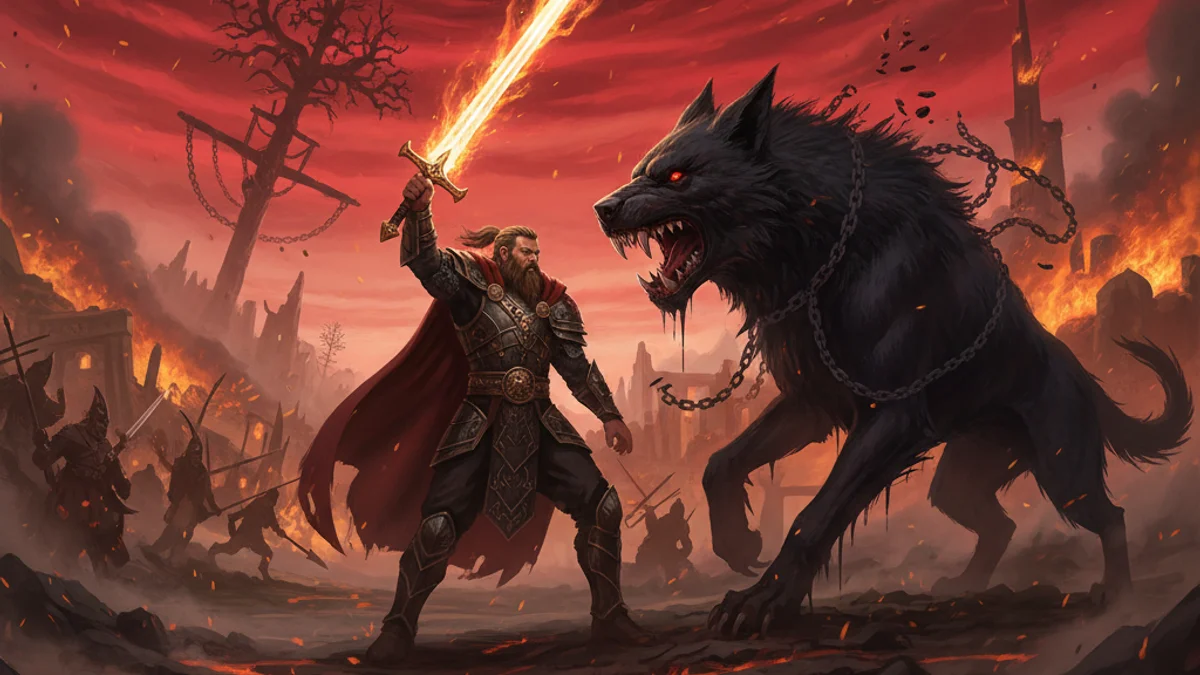
As the twilight of the gods descended upon the worlds, the horn Gjallarhorn echoed through the Nine Realms, signaling the arrival of Ragnarok. From the frozen gates of Hel, the monstrous hound Garm, his breast slick with the blood of the dead, broke free from his ancient chains. Tyr, the brave one-handed god of justice and war, stood ready to meet the beast on the plains of Vigrid. Despite his missing hand—lost long ago to the jaws of the wolf Fenrir—Tyr fought with the divine valor that defined his character. The clash was a whirlwind of steel and fangs. Garm lunged with primal fury, a shadow of death, while Tyr struck with the precision of law and order. In the end, neither emerged victorious; as Tyr delivered the killing blow to the Great Hound, he succumbed to his own mortal wounds. They fell together in the dust, a testament to the sacrifice required to end the old cycle and make way for the new.
True courage is found in fulfilling one's duty and standing for justice even when personal sacrifice and total destruction are certain.
Questions about this story
What is the moral of Tyr and Garm?
The story emphasizes that duty and honor are paramount, even in the face of inevitable death. It shows that maintaining order requires a willingness to sacrifice oneself completely.
Who is Garm in Norse mythology?
Garm is the blood-stained guard dog of the gates of Hel, the realm of the dead. He is often depicted as a monstrous hound and is one of the primary antagonists during Ragnarok.
How did Tyr lose his hand?
Tyr sacrificed his hand to the wolf Fenrir to convince the beast to be bound by the chain Gleipnir. It was an act of brave deception to protect the other gods.
Who wins the fight between Tyr and Garm?
Neither character wins the fight, as they kill each other simultaneously. This mutual destruction is a common theme among the major gods and monsters during the events of Ragnarok.
Advertisement
Good night.
