
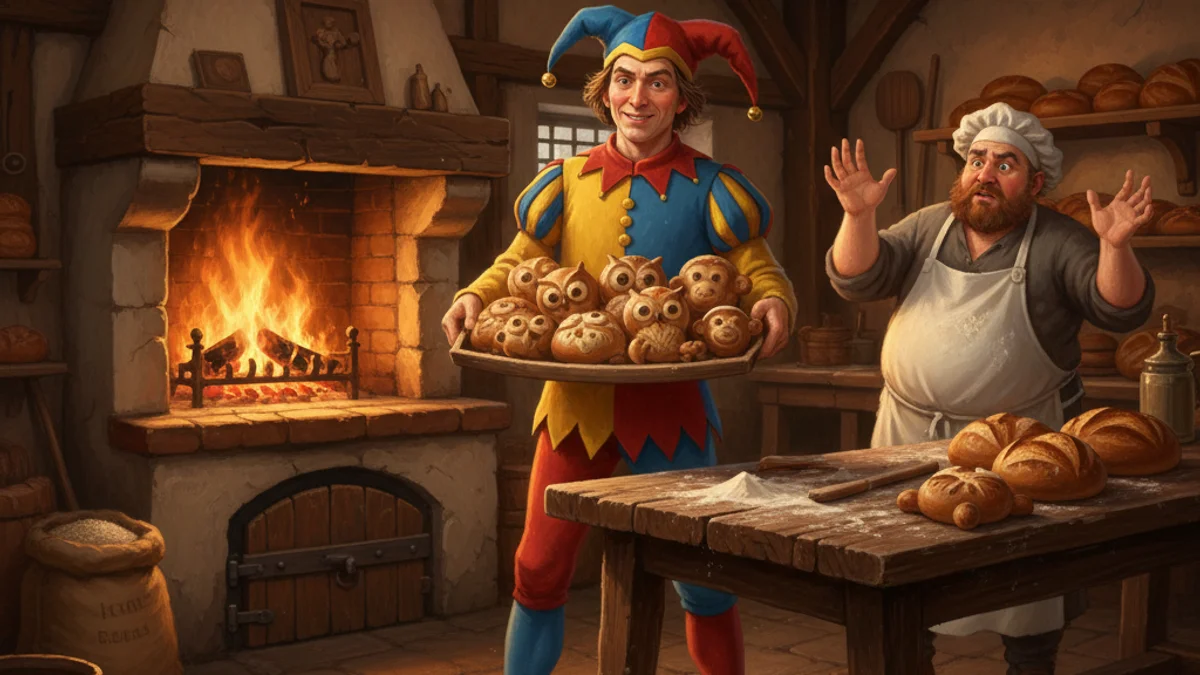
Till Eulenspiegel once found work in a bakery in Brunswick. When night fell, the baker instructed Till to stay and bake while he slept. Till asked what he should bake, but the baker, annoyed by the question, replied sarcastically, "What should you bake? Owls and long-eared monkeys, for all I care!" Ever the literalist, Till did exactly that. He spent the night meticulously shaping the dough into little owls and monkeys. When the baker woke and saw the odd menagerie instead of rolls, he was furious and demanded Till pay for the wasted dough. Till paid, took his doughy creatures to the market square, and sold them for a higher price than common bread because of their novelty. In the end, Till profited from the baker's own mockery.
Be careful with your words, as sarcasm can be turned against you. It also teaches that creativity and wit can turn a perceived failure into a success.
Questions about this story
What is the moral of Till and the Baker?
The moral is to be precise with your instructions and avoid using sarcasm with those who might take you literally. It highlights how a quick-witted person can find opportunity in a difficult situation.
Why did Till bake owls and monkeys?
He baked them because the baker sarcastically told him to when Till asked for instructions. Till used his literal-minded trickery to expose the baker's rudeness and lack of clear guidance.
Who is Till Eulenspiegel?
Till Eulenspiegel is a legendary trickster figure from German folklore known for his practical jokes. He travels across Europe, often exposing the hypocrisy and foolishness of craftsmen and authority figures.
Does the baker lose money in the story?
The baker initially makes Till pay for the dough, thinking he has punished him. However, the baker loses out on the profit Till makes by selling the novelty bread for more than the price of ordinary rolls.
Advertisement


Good night.
