
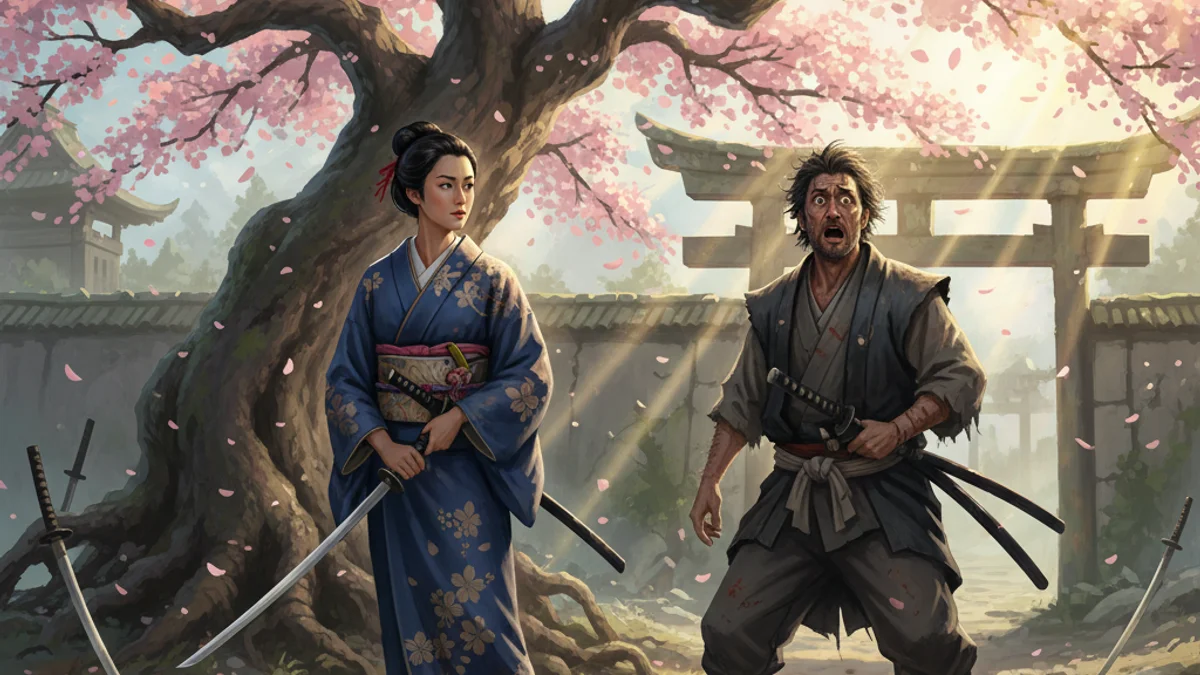
Lord Yamanouchi’s tea master was a man of peace, yet his duty required him to travel through dangerous lands dressed in the robes and swords of a samurai. One day, a fierce ronin challenged him to a duel, sensing the master was an impostor. Terrified and knowing he could not fight, the tea master visited a local sword master to learn how to die with dignity. The sword master observed the tea master’s focused preparation of tea and realized his discipline was already perfect. He told the tea master to treat the duel exactly like a tea ceremony. When the encounter began, the tea master closed his eyes, cleared his mind, and raised his sword with such profound calm and steady resolve that the ronin was paralyzed with fear. Sensing a master of immense hidden power, the ronin apologized and fled before a single blow was struck.
True strength is found in a disciplined mind and unwavering focus rather than physical violence.
Questions about this story
What is the moral of The Way of the Warrior?
The moral is that true mastery and courage come from internal discipline and a focused mind. When one achieves inner peace, they can overcome external threats without resorting to violence.
Is The Way of the Warrior a true story?
This legend is a popular folk tale used to illustrate the principles of Bushido. While it may be based on historical cultural values, it functions primarily as a teaching parable for students of Japanese martial arts.
What does Bushido mean in Japanese culture?
Bushido, or 'The Way of the Warrior,' is a moral code concerning samurai attitudes, behavior, and lifestyle. It emphasizes virtues such as honor, courage, discipline, and loyalty above all else.
How did the tea master defeat the ronin?
The tea master did not use physical force but instead demonstrated 'zanshin' or total awareness. His perfect composure and lack of fear convinced the ronin that he was a deadly combatant, causing the aggressor to flee.
Advertisement
Teach next
Good night.
