
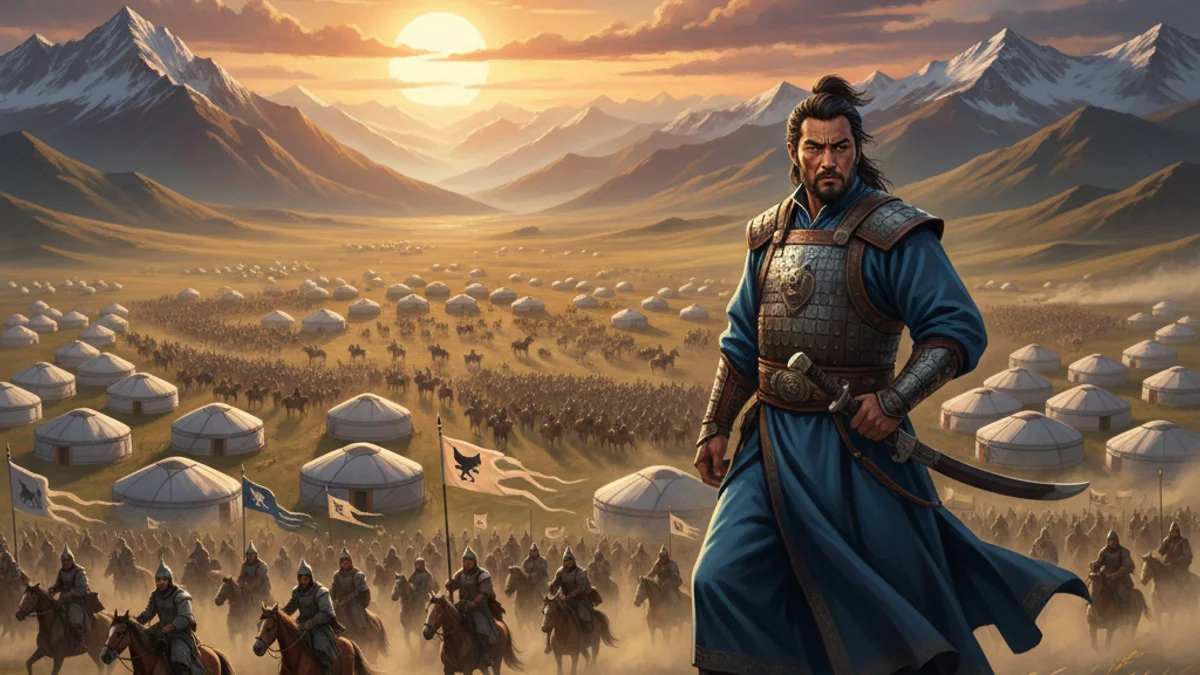
In the vast, wind-swept steppes of Central Asia, the Mongol tribes were once fractured, locked in endless cycles of blood feuds and raids. Out of this chaos rose Temujin, a man who had known the bitterness of betrayal and the cold of poverty. Temujin realized that as long as the tribes fought each other, they would remain prey to outside empires. Drawing upon the ancient wisdom of his ancestor Alan Gua—who taught her sons that a single arrow is easily snapped but a bundle is unbreakable—Temujin began a journey of conquest and diplomacy. He rewarded merit over noble birth, drawing loyal warriors to his side regardless of their clan. After defeating his rival Jamukha and surviving countless betrayals, he called for a great assembly, the Kurultai, in 1206. Beside the Onon River, the leaders of the unified tribes raised the white spirit banner and proclaimed Temujin as Genghis Khan, the Universal Ruler. By forging a single national identity from dozens of warring factions, he created a force that would change the course of world history.
Unity is the ultimate source of strength; a divided people are easily conquered, but a unified nation can move mountains.
Advertisement
Questions about this story
What is the moral of The Unification of the Mongol Tribes?
The core moral is that strength lies in unity and collective identity. By setting aside petty differences and clan loyalties for a common cause, the tribes became an unstoppable force.
Who was Genghis Khan's greatest rival during the unification?
His greatest rival was Jamukha, his blood brother (anda), who represented the old aristocratic traditions of the steppes compared to Temujin's meritocratic approach.
What was the Kurultai of 1206?
The Kurultai was a massive political and military council where the tribal leaders officially recognized Temujin as Genghis Khan, the supreme leader of the unified Mongol nation.
What was the lesson of the five arrows?
It is a famous Mongolian parable where a mother shows her sons that while one arrow can be broken easily, five arrows bundled together are unbreakable, symbolizing the power of family and tribal unity.
Advertisement
