
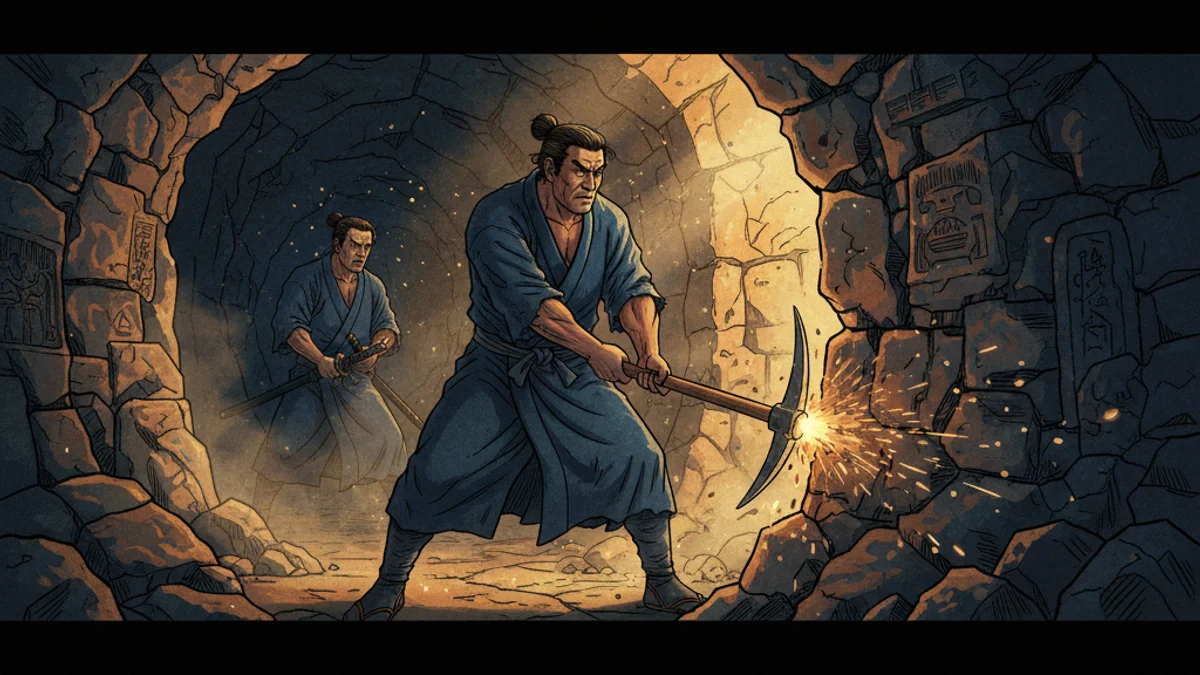
Zenshai was the son of a samurai who, in a fit of rage, killed an official and fled. Seeking to atone for his crime, he vowed to complete a project that would benefit the public: digging a tunnel through a treacherous mountain pass where many travelers had fallen to their deaths. For twenty years, he worked alone with a pickaxe, slowly carving through the solid rock. One day, the son of the man Zenshai had killed tracked him down, seeking vengeance. Zenshai did not flee; he simply asked for enough time to finish the tunnel so that his life’s work would not be in vain. The young man agreed and sat down to wait. As months passed, the young man grew tired of watching and began to help Zenshai. They worked side-by-side for several more years. When the last wall of rock finally crumbled and the tunnel was complete, the son of the official knelt before Zenshai. 'I cannot kill you,' he said through tears, 'for you have become my teacher.'
True redemption is achieved through selfless service, and even the deepest hatred can be transformed through shared purpose and hard work.
Questions about this story
What is the moral of The Tunnel?
The moral is that selfless labor and a commitment to helping others can lead to true redemption. It also shows that shared effort can dissolve hatred and turn enemies into allies.
Who is Zenshai in this Zen story?
Zenshai is a former samurai's son who committed a murder and spent the rest of his life seeking atonement. He becomes a symbol of perseverance and the transformative power of hard work.
Is The Tunnel based on a true story?
Yes, it is based on the real-life monk Zenkai, who spent 30 years carving the Ao no Domon tunnel in Japan during the 18th century. The tunnel still exists today in Oita Prefecture.
Why did the son help Zenshai dig the tunnel?
Initially, the son helped only to speed up the process so he could finally take his revenge. However, through the act of working together toward a noble goal, his heart was softened.
Advertisement


Good night.
