
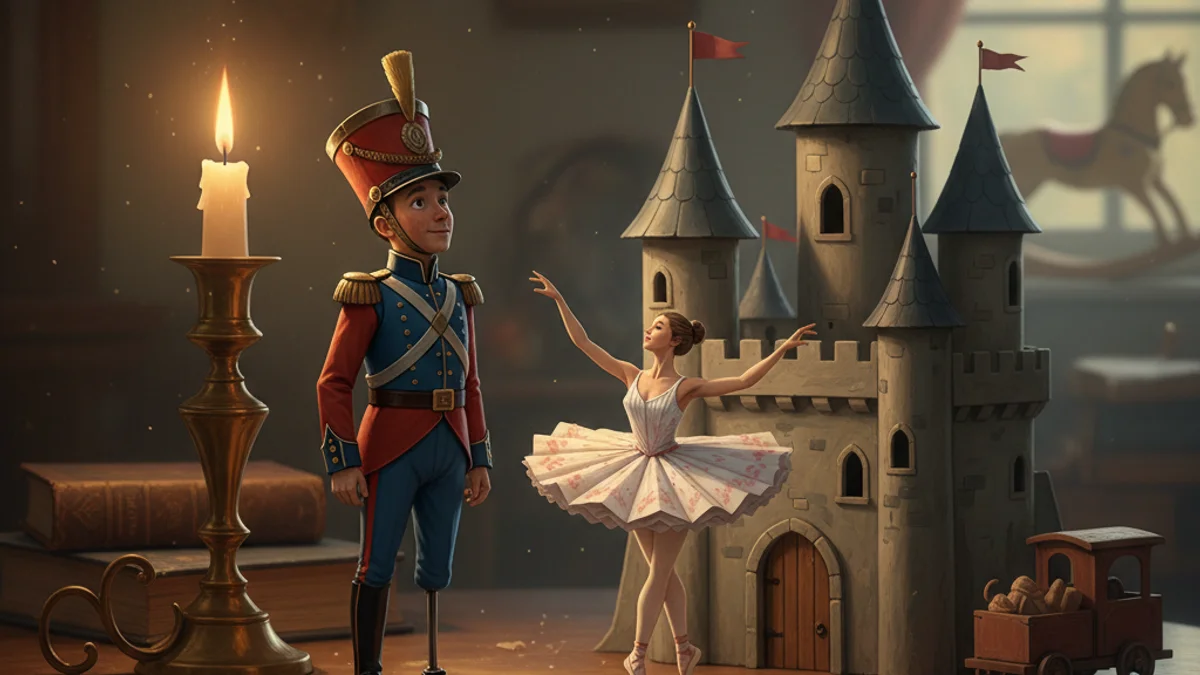
There were once twenty-five tin soldiers, all brothers, for they had been made out of the same old tin spoon. They were all exactly alike except for one, who had been cast last when the tin ran short; he had only one leg. This steadfast soldier stood tall and fell in love with a beautiful paper ballerina who stood on one leg outside a cardboard castle. A jealous jack-in-the-box goblin warned the soldier to stop staring, and the next day, the soldier fell from a window. He was found by boys who set him adrift in a paper boat through a gutter and into a dark canal. He faced a water rat and was eventually swallowed by a large fish. Miraculously, the fish was caught and sold back to the same house. Reunited with his ballerina, a boy suddenly threw the soldier into the stove for no reason. A draft blew the paper ballerina into the flames beside him. The next morning, among the ashes, the maid found a small tin heart and a scorched tinsel rose.
True devotion and courage persist even through life's most unpredictable and tragic misfortunes.
Questions about this story
What is the moral of The Steadfast Tin Soldier?
The moral is about the power of constancy and endurance. Despite facing numerous hardships and a tragic end, the soldier never wavers in his courage or his devotion to the ballerina.
Why does the Tin Soldier only have one leg?
He was the last of twenty-five soldiers to be cast from an old tin spoon. The metal ran out before he could be finished, yet he stood as firmly on his one leg as the others did on two.
Who wrote The Steadfast Tin Soldier?
The story was written by the famous Danish author Hans Christian Andersen. It was first published in 1838 as part of his Fairy Tales Told for Children collection.
Does The Steadfast Tin Soldier have a happy ending?
The ending is bittersweet and tragic rather than traditionally happy. While the soldier and ballerina are both consumed by fire, they are united in death, leaving behind a tin heart and a tinsel rose.
Advertisement


Good night.
