
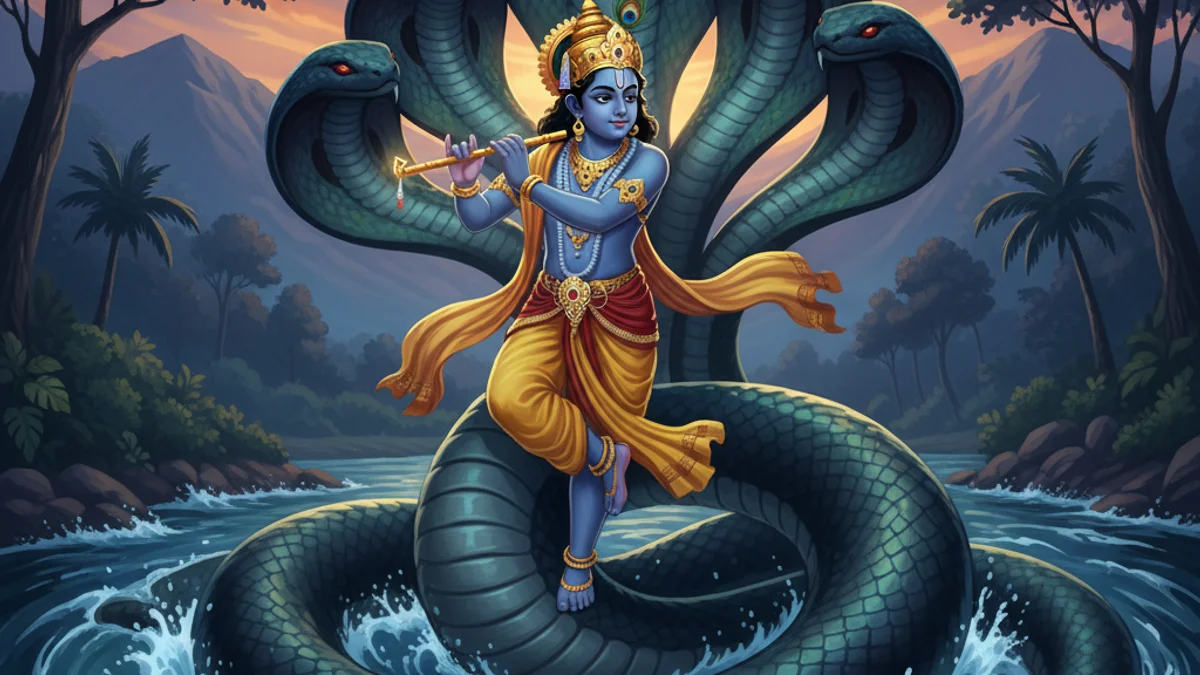
In the idyllic land of Vrindavan, the Yamuna River suddenly became a place of death. The water boiled with black venom, and birds fell from the sky if they flew too close. The source of this poison was Kaliya, a thousand-headed serpent who had taken refuge there to escape the wrath of the eagle-god Garuda. One day, young Krishna climbed a Kadamba tree and leapt into the toxic depths. As the massive serpent coiled around him, tightening its grip, Krishna expanded his body, forcing the snake to release him. Krishna then began a cosmic dance upon Kaliya's many heads, each stomp subduing the serpent's ego and strength. As Kaliya neared death, his wives, the Nagapatnis, emerged and pleaded for mercy. Seeing their devotion and Kaliya’s surrendered spirit, Krishna spared him, commanding the serpent to leave the river forever and reside in the ocean, where Garuda would no longer harm him because of the marks of Krishna’s feet left on his hoods.
Arrogance and malice can be overcome through divine grace and humble surrender, transforming even the most toxic hearts.
Questions about this story
What is the moral of The Serpent Kaliya?
The story teaches that ego and pride lead to destruction, but surrendering to the divine brings purification. It also emphasizes the importance of protecting the environment from pollution and malice.
Why did Kaliya live in the Yamuna River?
Kaliya lived in the Yamuna to hide from Garuda, the celestial eagle. Garuda had been cursed by a sage never to enter that specific part of the river, making it a safe haven for the serpent.
How did Krishna defeat the serpent Kaliya?
Krishna jumped into the river and engaged the serpent in battle. He eventually subdued Kaliya by performing a divine dance on the serpent's many heads, striking them until the snake was exhausted.
Why did Krishna spare Kaliya's life?
Krishna spared Kaliya because the serpent's wives, the Nagapatnis, pleaded for mercy and recognized Krishna's divinity. Furthermore, Kaliya himself eventually surrendered his ego and asked for forgiveness.
Advertisement

Good night.
