
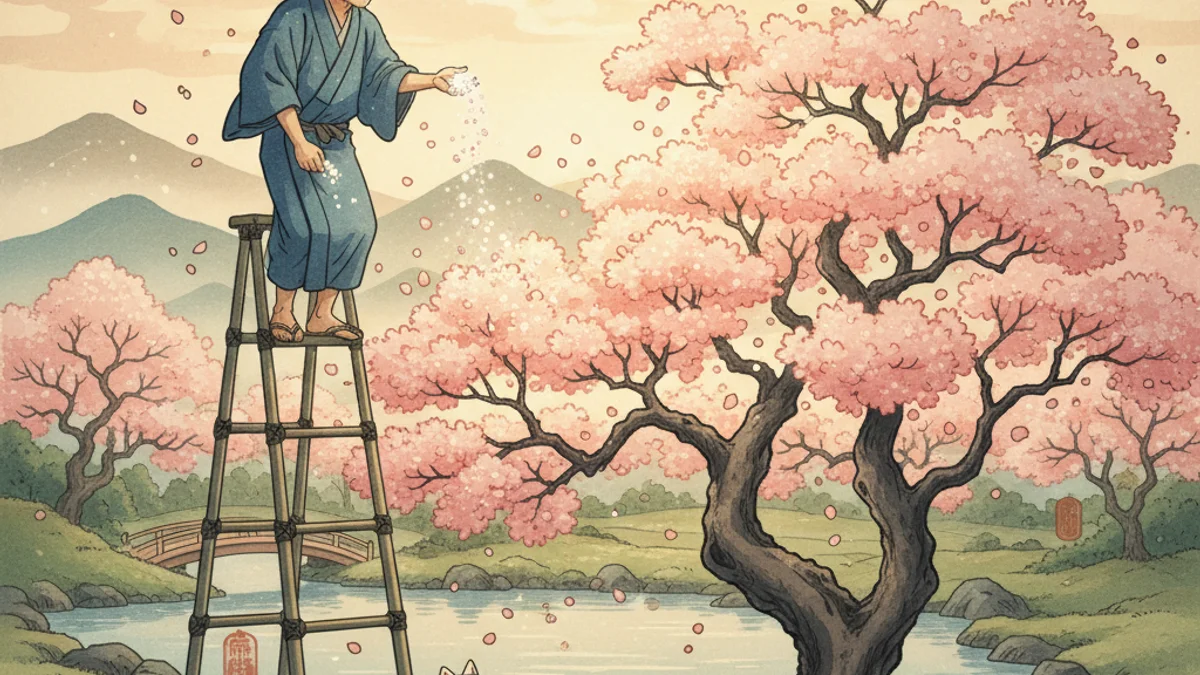
Long ago, a kind old couple lived with their loyal dog, Shiro. One day, Shiro led the old man to a spot in the garden and began to dig. To the man's surprise, he found a hoard of gold coins. Their greedy neighbor, seeing this, borrowed Shiro to find his own fortune, but the dog only led him to a pile of filth. Enraged, the neighbor killed the dog. The heartbroken old man buried Shiro under a pine tree. Soon after, Shiro appeared in a dream, telling the man to cut down the tree and make a mortar. When the couple used the mortar to grind rice, each grain turned into gold. The greedy neighbor stole the mortar, but in his hands, it produced only foul waste, so he burned it in a rage. The old man, following another vision of Shiro, collected the ashes. He discovered that when he scattered the ashes on withered cherry trees, they instantly burst into beautiful pink blossoms. A passing prince was so delighted by the miracle that he gave the old man many gifts. When the greedy neighbor tried to mimic the feat, he only succeeded in blowing ash into the prince's eyes and was severely punished, proving that a kind heart bears the sweetest fruit.
Kindness, loyalty, and a pure heart bring true rewards, while greed and cruelty lead only to misfortune and ruin.
Questions about this story
What is the moral of The Old Man Who Made Trees Bloom?
The moral is that virtue and kindness are eventually rewarded by the universe, whereas greed and malice lead to one's own downfall. It emphasizes that a pure heart creates beauty, while a selfish heart creates only waste.
Who is Shiro in the story?
Shiro is the loyal dog of the kind old couple. Even after his death, his spirit continues to guide and provide for his masters, acting as a symbol of eternal loyalty and the bond between humans and animals.
Why did the greedy neighbor fail to make the trees bloom?
The neighbor failed because his intentions were rooted in envy and greed rather than genuine kindness. The magic in the ashes responded only to the purity of the old man's heart, resulting in common dust when used by the neighbor.
What does the mortar symbolize in Japanese folklore?
The mortar (usu) often symbolizes domestic prosperity and the transformative power of hard work. In this story, it serves as a magical conduit that transforms humble labor into wealth for the deserving.
Advertisement

Good night.
