
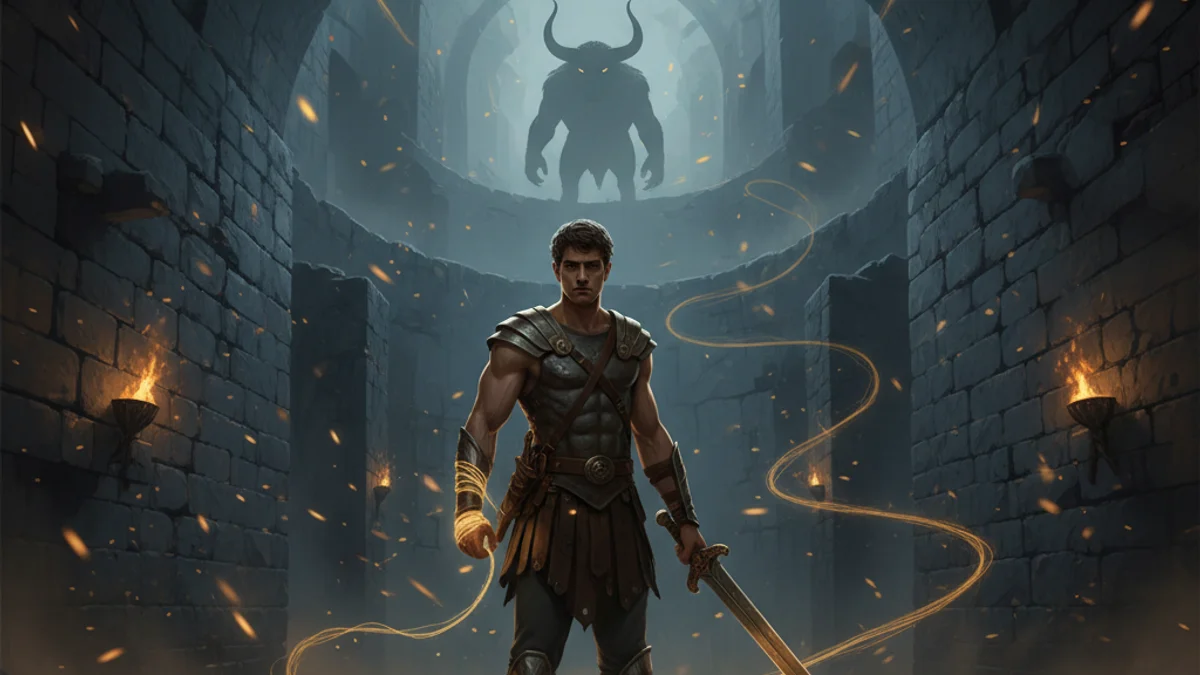
Deep beneath the palace of King Minos in Crete lay the Labyrinth, a maze of such complexity that none who entered could find their way out. Within its shadows lurked the Minotaur, a fearsome creature with the body of a man and the head of a bull. Every nine years, Athens was forced to send seven young men and seven maidens as a sacrifice to the beast. Determined to end this cruelty, Prince Theseus of Athens volunteered to be among the victims. Upon his arrival in Crete, Princess Ariadne fell in love with him. She gave Theseus a magic ball of thread and a silver sword, instructing him to tie the thread to the entrance. Theseus ventured deep into the dark corridors, unspooling the line as he went. At the heart of the maze, he faced the roaring Minotaur and, after a grueling battle, slew the monster. Following the golden thread back through the darkness, he led the other Athenians to safety and escaped the island.
Courage is most effective when paired with preparation and the wisdom to accept help from others.
Questions about this story
What is the moral of The Minotaur's Labyrinth?
The story teaches that even the most daunting obstacles can be overcome through a combination of physical bravery and intellectual ingenuity. It also highlights the importance of tools and support, as Theseus could not have succeeded without Ariadne's help.
Who killed the Minotaur?
Theseus, the prince of Athens, killed the Minotaur using a sword provided by Princess Ariadne. He volunteered as a sacrifice specifically to find and destroy the beast to save his people.
How did Theseus escape the Labyrinth?
He used a ball of thread, often called Ariadne's thread, which he tied to the entrance of the maze. After killing the monster, he simply followed the trail of thread back to the door.
Why did King Minos create the Labyrinth?
King Minos commissioned the master craftsman Daedalus to build the Labyrinth to imprison the Minotaur. The creature was a source of great shame and danger to the royal family.
Advertisement

Good night.
