
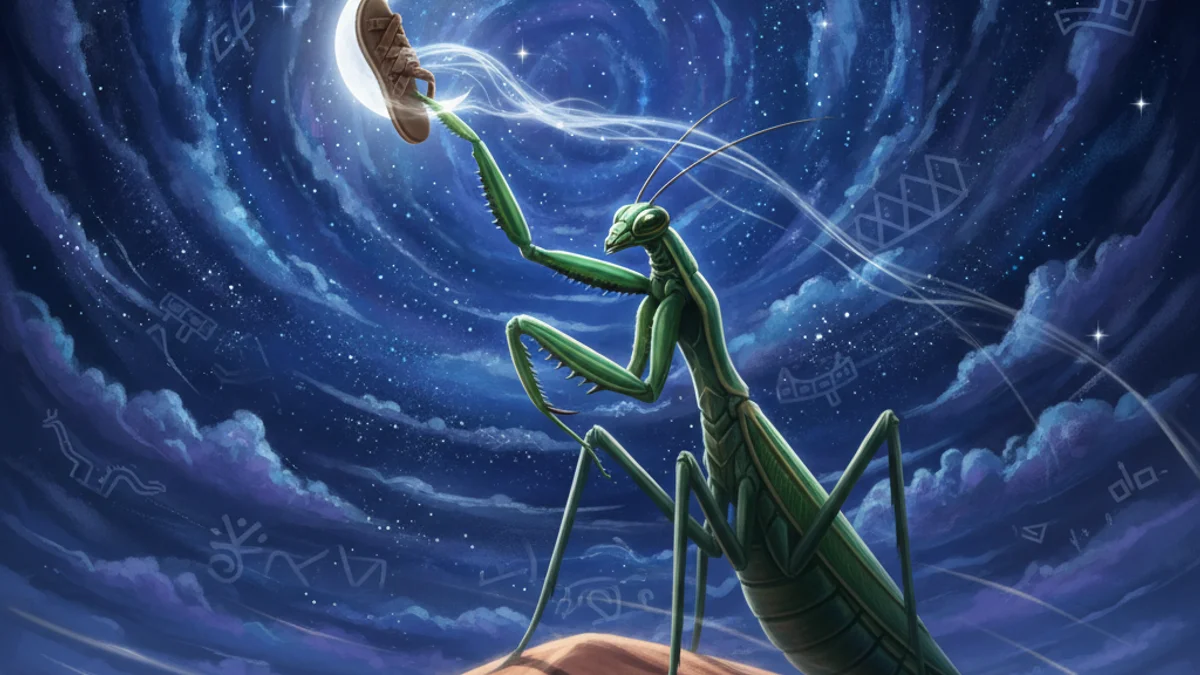
In the early days when the world was shrouded in darkness, the great trickster and creator, Kaggen the Mantis, found himself stumbling through the night. Frustrated by the gloom that hid the paths of the hunters and the tracks of the springbok, he paused in the cool desert air. He took off one of his leather sandals, worn from many journeys across the Kalahari. With a powerful swing and a shout of command, he flung the sandal high into the sky. As it rose, the dust of the earth fell away, and the leather began to glow with a cold, silver light. It hung there, a beacon in the void, becoming the Moon. Kaggen smiled, for now the people would never be lost in the dark, and the night would always have its own gentle sun to guide the way.
Even small, humble things can become great lights when sacrificed for the benefit of others.
Questions about this story
What is the moral of The Mantis and the Moon?
The story teaches that creativity and sacrifice can bring light to the community. By giving up his own sandal, Kaggen provides a lasting gift that allows all people to navigate the darkness safely.
Who is Kaggen in San folklore?
Kaggen is the Mantis, a central deity and trickster figure in San mythology. He is a shape-shifter and creator who often uses his cleverness, and sometimes his mistakes, to shape the natural world.
Why did the Mantis create the moon?
He created the moon because the night was originally pitch black, making it impossible for his people to hunt or find their way. He sought to create a 'night sun' to provide guidance and safety.
Is the moon really a sandal in this story?
Yes, according to this San myth, the moon is Kaggen’s discarded leather sandal. The dark patches seen on the moon's surface are said to be the Kalahari dust that remained on the leather.
Advertisement

Good night.
