
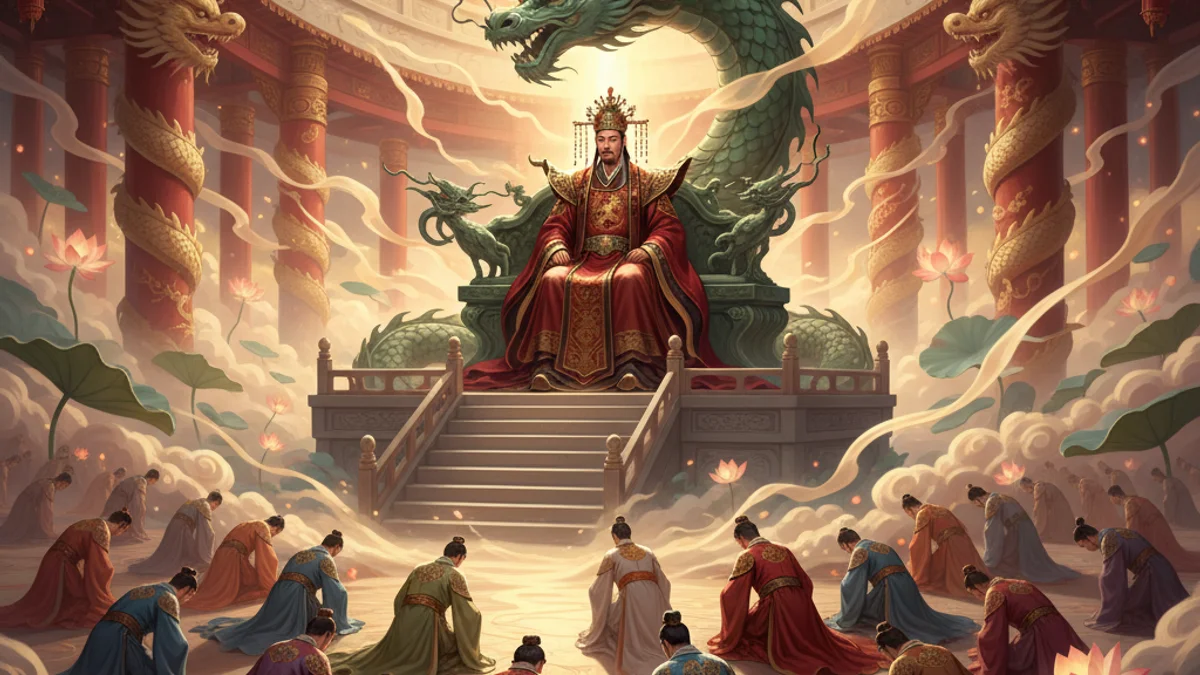
Long ago, before the heavens were organized, a mortal prince spent eons in deep cultivation, showing immense compassion to all living beings. After millions of years of refining his spirit, he ascended to the celestial realms. At that time, a powerful demon was terrorizing the gods, seeking to plunge the universe into chaos. While the other deities faltered, the Jade Emperor used his vast wisdom and spiritual power to defeat the demon, restoring cosmic balance. In recognition of his supreme virtue, the gods elected him the Ruler of Heaven, Earth, and the Underworld. He established a grand celestial court, mirroring the earthly imperial system, where he appointed gods to oversee the sun, moon, wind, and rain, ensuring that harmony prevailed throughout the universe.
True authority is earned through self-discipline, compassion, and the commitment to serving the greater good of all beings.
Questions about this story
What is the moral of The Jade Emperor's Court?
The story teaches that leadership and power should be based on merit, virtue, and long-term self-cultivation. It emphasizes that order in the universe is maintained through the compassion and wisdom of its ruler.
Who is the Jade Emperor in Chinese mythology?
He is the supreme deity in Taoist theology and Chinese folk religion, considered the ruler of all existence. He governs the heavens, earth, and the underworld, much like an earthly emperor.
How did the Jade Emperor become the ruler of heaven?
He spent millions of years in cultivation and performed countless acts of kindness before defeating a powerful demon that threatened the gods. His victory and character led the other deities to name him their supreme leader.
What is the Jade Emperor's role in the Chinese Zodiac?
In popular legend, the Jade Emperor organized the 'Great Race' to determine which animals would be part of the lunar calendar. He set the order of the signs based on the sequence in which the animals finished the race.
Advertisement
Good night.
