
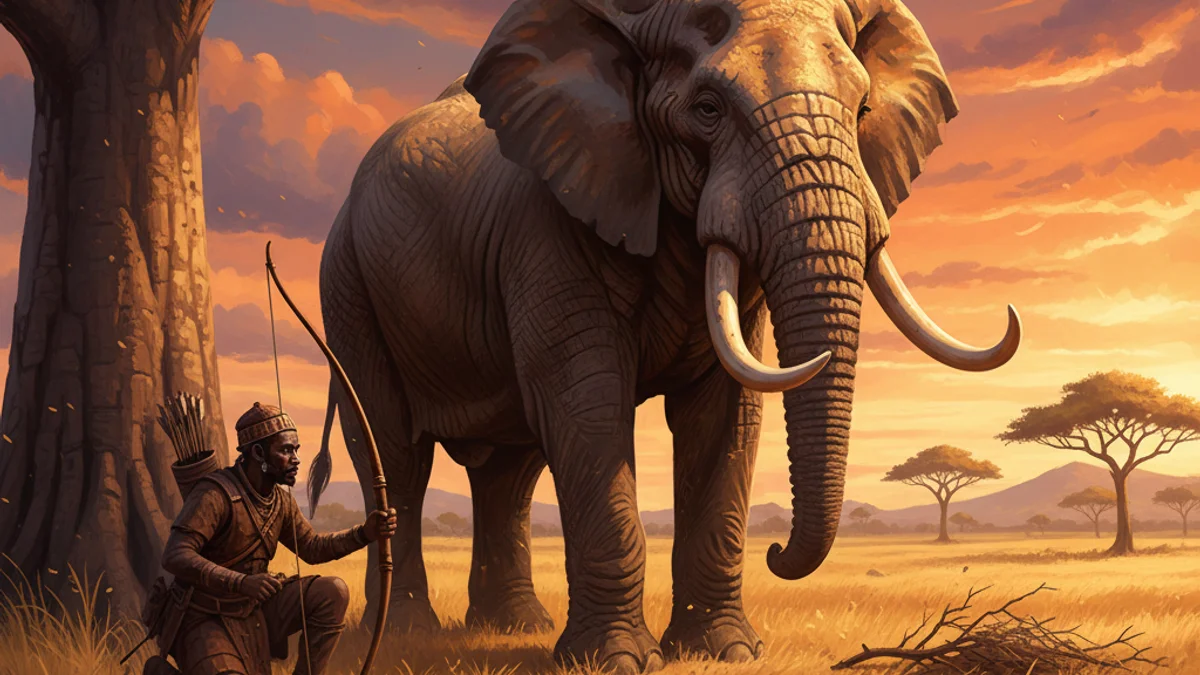
In the heart of the vast savanna, a renowned Hausa hunter sought the ultimate prize: the King of the Forest, the Great Elephant. Armed with a poisoned spear and a heart full of ambition, he tracked the giant for days. He finally found the beast near a drying watering hole and struck a fatal blow. As the elephant collapsed, it looked at the hunter with mournful eyes and whispered, 'By killing me, you kill the pathfinder of the plains.' The hunter, blinded by the prospect of selling the massive tusks, ignored the warning. He returned to his village a hero, but his triumph was short-lived. Without the elephant to dig for underground water and clear the dense thickets, the watering hole vanished completely, and the trails became overgrown and impassable. The drought took hold, and the village’s cattle perished. The hunter realized too late that the ivory in his hands could not buy back the life of the forest that had sustained his people for generations.
Greed and the destruction of nature's giants lead to the collapse of the entire community's well-being.
Questions about this story
What is the moral of The Hunter and the Elephant?
The story teaches that every creature, no matter how large, plays a vital role in the environment. It warns against greed and the short-sightedness of destroying natural resources for immediate gain.
Where does the story of The Hunter and the Elephant come from?
This story is a traditional Hausa fable from Northern Nigeria and parts of West Africa. It is part of a rich oral tradition used to teach children about nature and ethics.
What does the elephant represent in Hausa folklore?
In Hausa tales, the elephant often symbolizes power, majesty, and the foundational strength of the natural world. Killing it represents a disruption of the environmental order.
What are the main themes of this West African tale?
The primary themes include the balance of nature, the consequences of greed, and the relationship between humans and the wild. It explores how human intervention can lead to unintended disasters.
Advertisement


Good night.
