
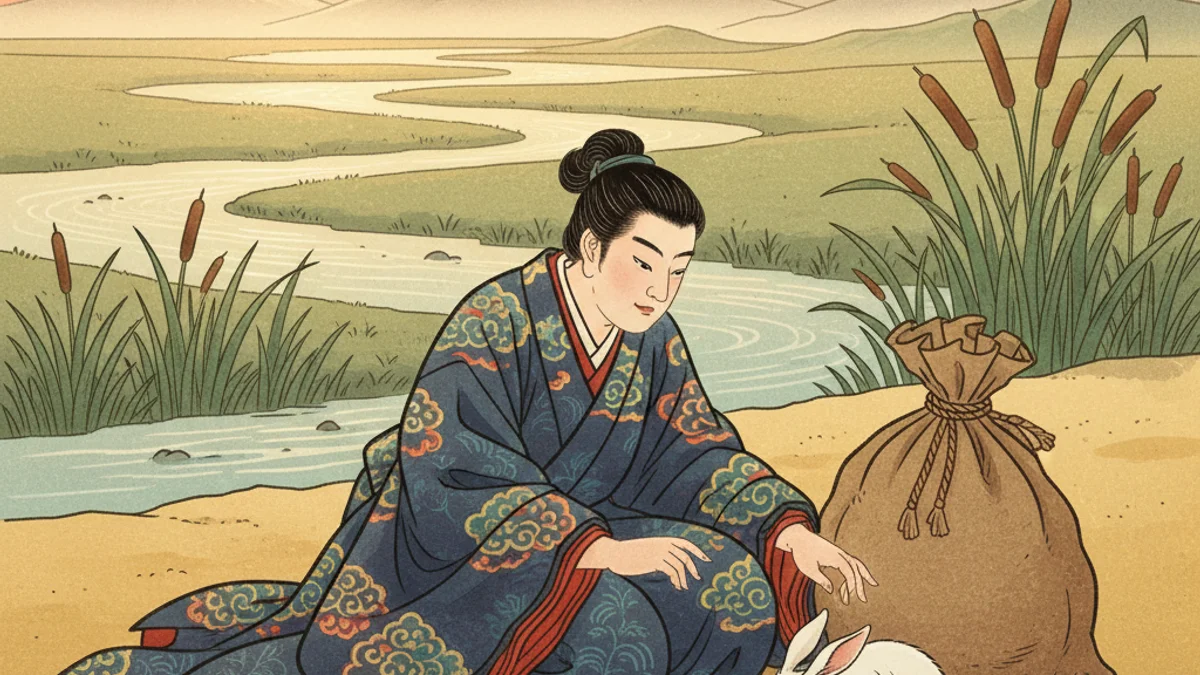
Deep in the age of myths, a clever white hare lived on the island of Oki, longing to reach the mainland of Inaba. Lacking wings or a boat, he devised a scheme, challenging the sharks of the sea to a contest of numbers. Tricked into forming a bridge with their bodies, the sharks watched as the hare hopped across their backs. But as he reached the final span, the hare's pride overcame him; he mocked the sharks for their foolishness. Enraged, the last shark lunged and stripped the hare of his snowy fur. When eighty brothers—gods traveling to seek the hand of Princess Yakami—passed the weeping, flayed creature, they cruelly advised him to bathe in the stinging sea. It was only the youngest brother, Okuninushi, burdened by his brothers' luggage but rich in spirit, who offered true mercy. He instructed the hare to bathe in fresh water and rest upon a bed of cattail pollen. Healed by this grace, the hare foretold that Okuninushi, the most humble among them, would be the one to win the princess's heart.
Kindness and empathy toward those in pain bring true rewards, while arrogance and deception lead to misfortune.
Advertisement
Questions about this story
What is the moral of The Hare of Inaba?
It teaches that compassion and honesty are superior to trickery and cruelty. Those who help others in need, like Okuninushi, are often the ones who receive the greatest blessings.
Who is Okuninushi in Japanese mythology?
Okuninushi is a major deity in Shintoism, known as the god of nation-building, farming, and business. He is the central figure of the Izumo myths and is celebrated for his kindness and resilience.
Why did the sharks skin the hare?
The hare tricked the sharks into forming a bridge so it could cross the sea, then mocked them for their gullibility. In their anger at being used, the sharks attacked and stripped the hare of its skin.
What did the eighty brothers tell the hare to do?
The cruel brothers told the hare to bathe in the salty sea and dry itself in the wind. This bad advice caused the salt to crystallize in the hare's wounds, doubling its agony.
Advertisement
