
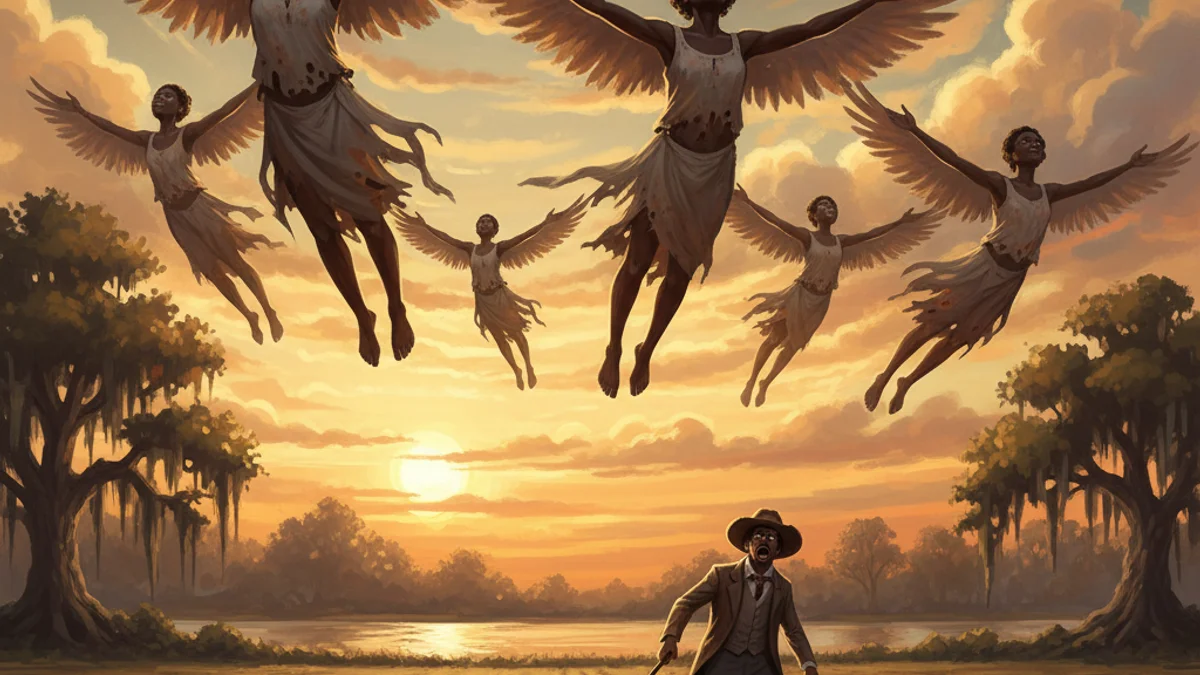
On a scorching plantation in the Sea Islands, the enslaved people labored under the cruel lash of the overseer. Among them was Sarah, a young mother who worked with her babe strapped to her back. When the baby cried from hunger and the heat, the overseer struck them both. Sarah fell, but an old man named Toby, who possessed the ancient secrets of their ancestors, whispered words of power into her ear. Suddenly, Sarah didn't feel the whip; she felt the wind. She stood, stretched out her arms, and rose into the air, soaring above the fields. One by one, Toby spoke the secret words to others who had forgotten their magic in the misery of bondage. They dropped their hoes, clapped their hands, and took flight, a great flock of liberated souls gliding over the dark waters of the Atlantic, leaving the stunned overseer behind as they returned to their home in Africa.
The human spirit possesses an innate power to transcend physical suffering and reclaim its freedom through cultural memory and hope.
Questions about this story
What is the moral of The Flying Africans?
The moral is that the spirit cannot be permanently enslaved and that hope and cultural heritage provide the wings for liberation. It emphasizes that true freedom begins with the mind and the memory of one's roots.
Is The Flying Africans based on a true story?
The legend is rooted in the historical event of Igbo Landing in 1803, where a group of Igbo captives chose to walk into the water and drown rather than live in slavery. Over time, this act of resistance was transformed into a myth of magical flight.
Who is Toby in the legend?
Toby is often depicted as a wise elder or 'conjure man' who carries the secret words of power. He acts as a spiritual guide who helps others remember their divine ability to fly and escape oppression.
What does the ability to fly symbolize?
Flight symbolizes the ultimate escape from the physical bonds of slavery and the reclamation of African identity. It represents a spiritual return to a place of dignity, safety, and ancestral connection.
Advertisement
Good night.
