
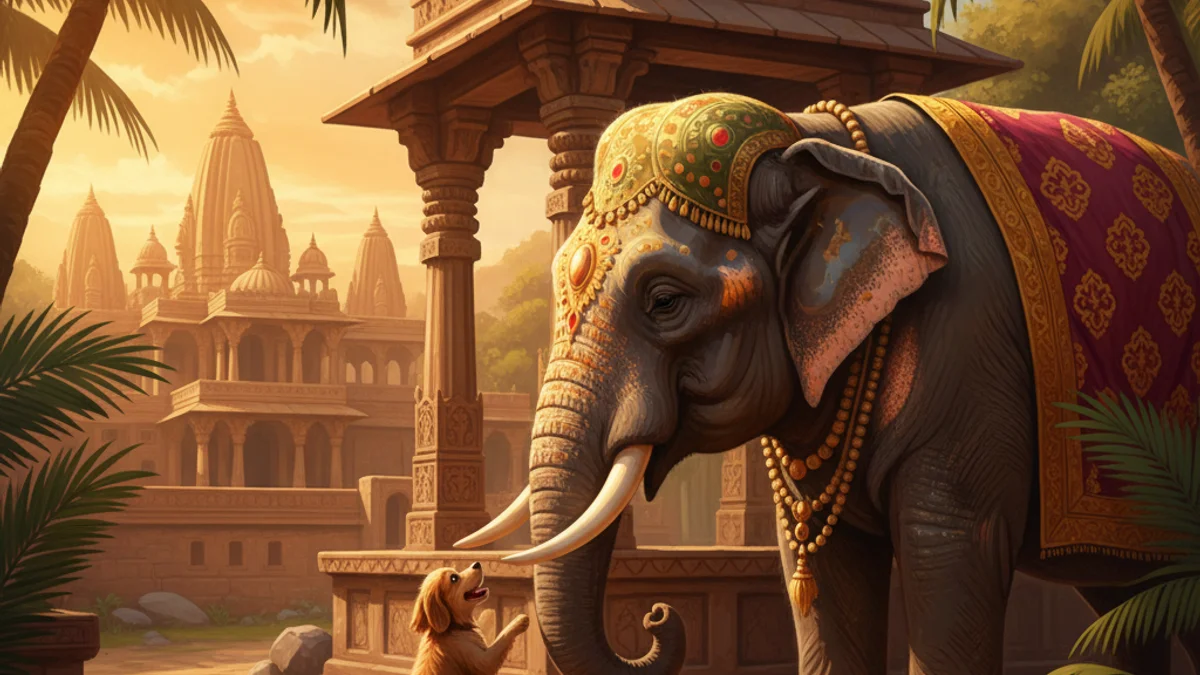
In the ancient city of Varanasi, a royal elephant and a stray dog formed an unlikely but inseparable bond. The dog would often wander into the elephant's stable to eat leftovers, and soon, they became best friends, playing together and sleeping side by side. One day, a villager saw the dog and, admiring its temperament, bought it from the mahout to take to his distant home. Without his companion, the elephant fell into a deep depression; he refused to eat, drink, or bathe, and his health rapidly declined. The King, concerned for his prize animal, sent a wise minister to investigate. The minister realized the elephant was not physically ill but heartbroken. He advised the King to declare that anyone harboring the dog must release it immediately. Upon his release, the dog ran straight back to the stables. The elephant trumpeted with joy, lifted the dog with his trunk, and immediately began to eat again, his spirit fully restored by the return of his faithful friend.
True friendship is a powerful bond that sustains the spirit and is essential for emotional well-being.
Advertisement
Questions about this story
What is the moral of The Faithful Friend?
The moral is that true friendship is a vital source of life and strength. It teaches us that emotional bonds are as significant to our health as physical needs like food and water.
Who are the main characters in this Jataka tale?
The story centers on a royal elephant and a stray dog. A wise minister, representing the Bodhisatta, and the King also play key roles in resolving the conflict.
Why did the elephant stop eating and bathing?
The elephant was suffering from a broken heart after his best friend, the dog, was sold and taken away. His physical decline was a direct result of his grief and loneliness.
How did the wise minister solve the problem?
The minister observed that the elephant showed no signs of physical disease. He deduced the elephant was lonely and suggested the King order the dog's immediate return to the palace.
Advertisement


