
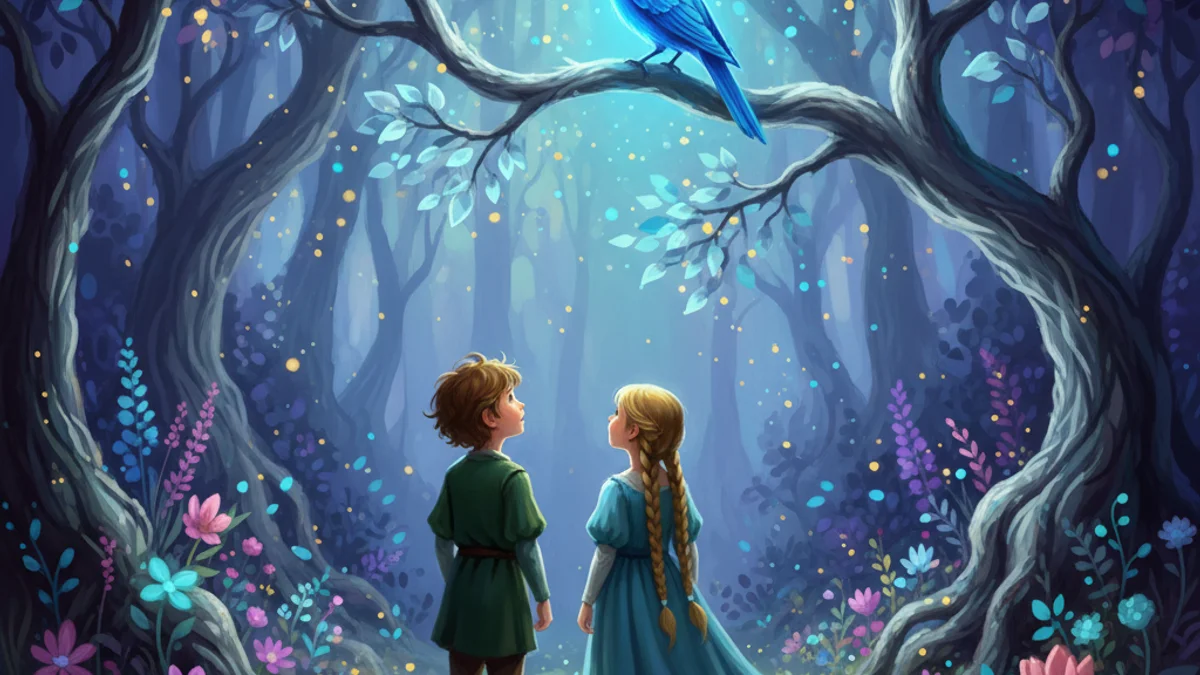
On Christmas Eve, siblings Tyltyl and Mytyl are visited by the fairy Bérylune, who seeks the Blue Bird of Happiness to cure her sick daughter. Tyltyl is given a magical diamond that allows him to see the inner souls of all things, bringing to life the spirits of Bread, Fire, Water, and their pet Dog and Cat. Together, they embark on a journey through mystical realms, including the Land of Memory, where they visit deceased grandparents, and the Palace of Night, where they face personified terrors. They even travel to the Kingdom of the Future, filled with souls yet to be born. While they find many birds, each one either dies, turns black, or flies away. Returning home empty-handed and weary, the children wake up to find their own pet bird has turned a brilliant blue. When they gift the bird to a neighbor’s sick child, the girl is miraculously healed, teaching the children that true happiness is found in the kindness we show at home.
True happiness is not found in far-off lands or through endless searching; it is found in our own homes and through the act of being kind to others.
Questions about this story
What is the moral of The Blue Bird?
The moral is that happiness is often right in front of us if we only have the eyes to see it. It teaches that true contentment comes from appreciating our surroundings and helping those in need rather than chasing elusive dreams.
Who wrote the original story of The Blue Bird?
The story was originally written as a play by the Belgian playwright Maurice Maeterlinck in 1908. It quickly became a masterpiece of Symbolist literature and was later adapted into several books and films.
What does the Blue Bird symbolize?
The Blue Bird is a universal symbol for happiness and the meaning of life. Its elusive nature in the story suggests that while we search for happiness externally, it is an internal state found in selfless acts.
What happens in the Land of Memory?
In the Land of Memory, the children visit their deceased grandparents and siblings who explain that the dead live on as long as the living remember them. This sequence emphasizes the importance of memory and ancestral connection.
Advertisement

Good night.
