
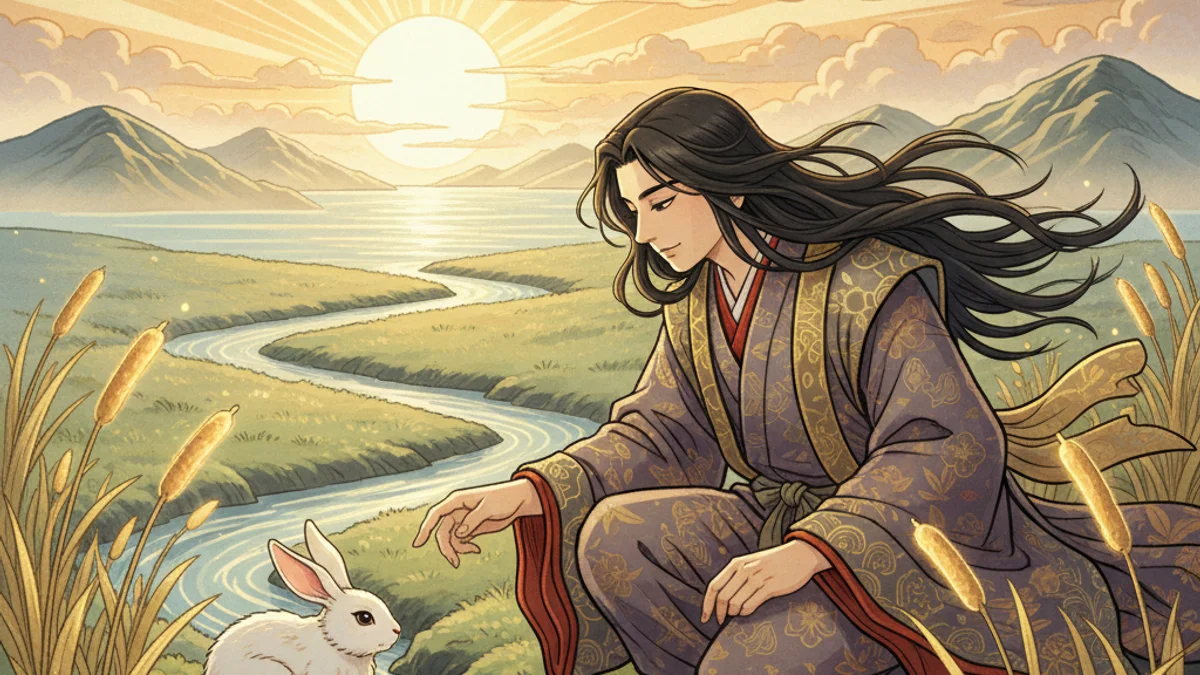
Okuninushi was the youngest of eighty brothers, all of whom sought the hand of the beautiful Princess Yakami. As they journeyed to the land of Inaba, the brothers forced Okuninushi to carry their heavy bags. Along the way, they encountered a white rabbit, flayed and weeping in pain. The rabbit had tried to cross the sea by tricking sharks into forming a bridge, but the last shark had stripped him of his fur. The cruel brothers told the rabbit to bathe in salt water and dry in the wind, which only caused the rabbit's skin to crack and bleed further. When Okuninushi arrived, he was moved by the rabbit's suffering. He advised the hare to wash in fresh river water and roll in the pollen of cattails. Healed and grateful, the rabbit revealed himself as a deity and prophesied that Okuninushi, not his brothers, would win the princess. Despite his brothers' jealousy, the prophecy came true, and Okuninushi became the great ruler of the land.
Compassion and genuine kindness are the true markers of a leader and will always be rewarded over cruelty and arrogance.
Questions about this story
What is the moral of Okuninushi and the White Rabbit?
The moral is that true strength lies in compassion and kindness. While the eighty brothers were selfish and cruel, Okuninushi's willingness to help a suffering creature proved he was the most worthy to lead and find happiness.
Who is Okuninushi in Japanese mythology?
Okuninushi is a major deity in Shintoism, known as the god of nation-building, agriculture, and medicine. He is also considered a patron of matchmaking and 'En-musubi' (the tying of bonds).
How did the White Rabbit lose its fur?
The rabbit wanted to cross from the Oki Islands to the mainland and tricked sharks (or sea monsters) into forming a bridge by counting them. When he bragged about the trick at the very end, the last shark stripped him of his fur in revenge.
Where did the story of the Hare of Inaba take place?
The story is set on the coast of Inaba, which is located in the modern-day Tottori Prefecture of Japan. The Hakuto (White Rabbit) Shrine still stands there today to commemorate the legend.
Advertisement


Good night.