
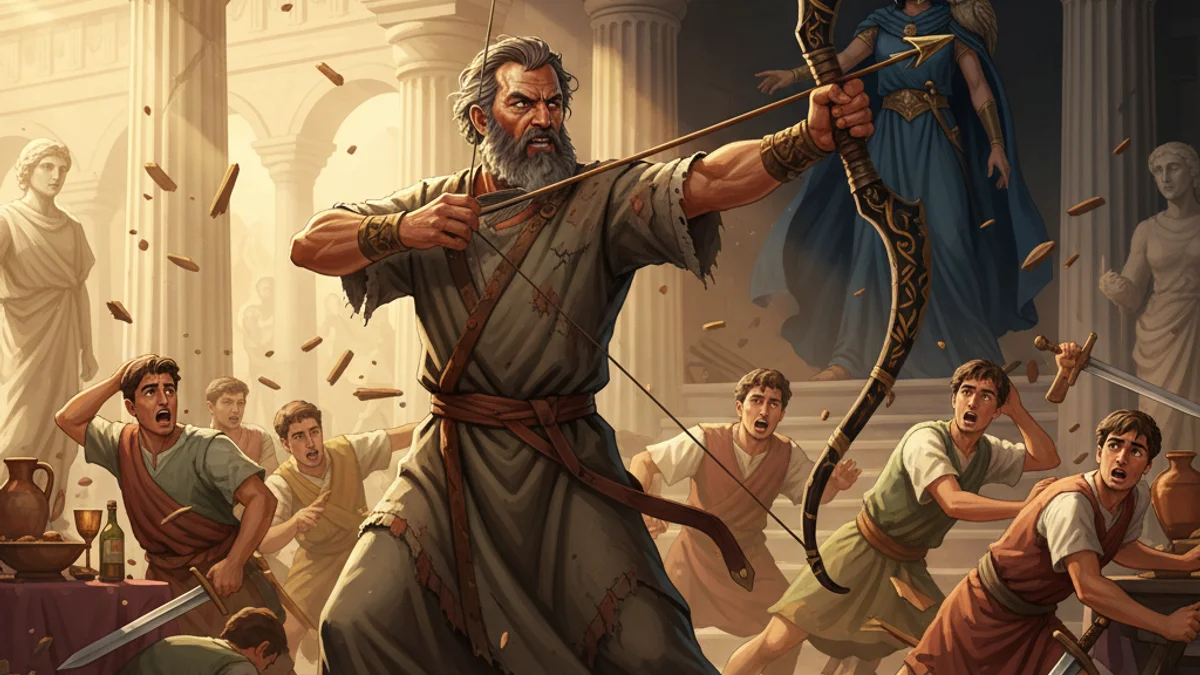
After twenty years of war and wandering, Odysseus finally reached the shores of Ithaca. To test the loyalty of those he left behind, the goddess Athena disguised him as a weathered beggar. He found his palace overrun by arrogant suitors who sought his throne and his wife, Penelope. With the help of his son Telemachus and a few loyal servants, Odysseus planned his reclamation. Penelope, weary of the suitors' pressure, announced a challenge: she would marry whoever could string Odysseus’s great bow and shoot an arrow through twelve axe-heads. Every suitor failed miserably. When the 'beggar' stepped forward, the suitors mocked him, but Odysseus strung the bow effortlessly and sent the arrow true. Shedding his rags, he revealed his true identity and, with divine aid, purged the palace of the usurpers. Finally, Penelope tested him one last time regarding the secret of their immovable bed, which Odysseus had carved from a living olive tree. Recognizing her husband's knowledge, she embraced him, and the king of Ithaca was finally home.
True strength lies in patience and wisdom, and loyalty remains the ultimate foundation of a home.
Questions about this story
What is the moral of Odysseus Returns Home?
The moral emphasizes that perseverance and strategic thinking are more effective than brute force. It also highlights the sacred nature of loyalty between family members and the rewards of remaining steadfast in the face of adversity.
How did Penelope recognize Odysseus?
She tested him by asking a servant to move their marriage bed. Odysseus became angry because he knew the bed was immovable, having built it around a living olive tree, a secret known only to them.
Who helped Odysseus fight the suitors?
Odysseus was aided by his son Telemachus, his loyal swineherd Eumaeus, and the cowherd Philoetius. The goddess Athena also provided divine protection and guidance during the battle.
Why did Odysseus disguise himself as a beggar?
He used the disguise to scout the palace, assess who remained loyal to him, and catch the suitors off guard. This allowed him to strike at the most opportune moment rather than facing a large group of enemies openly.
Advertisement


Good night.
