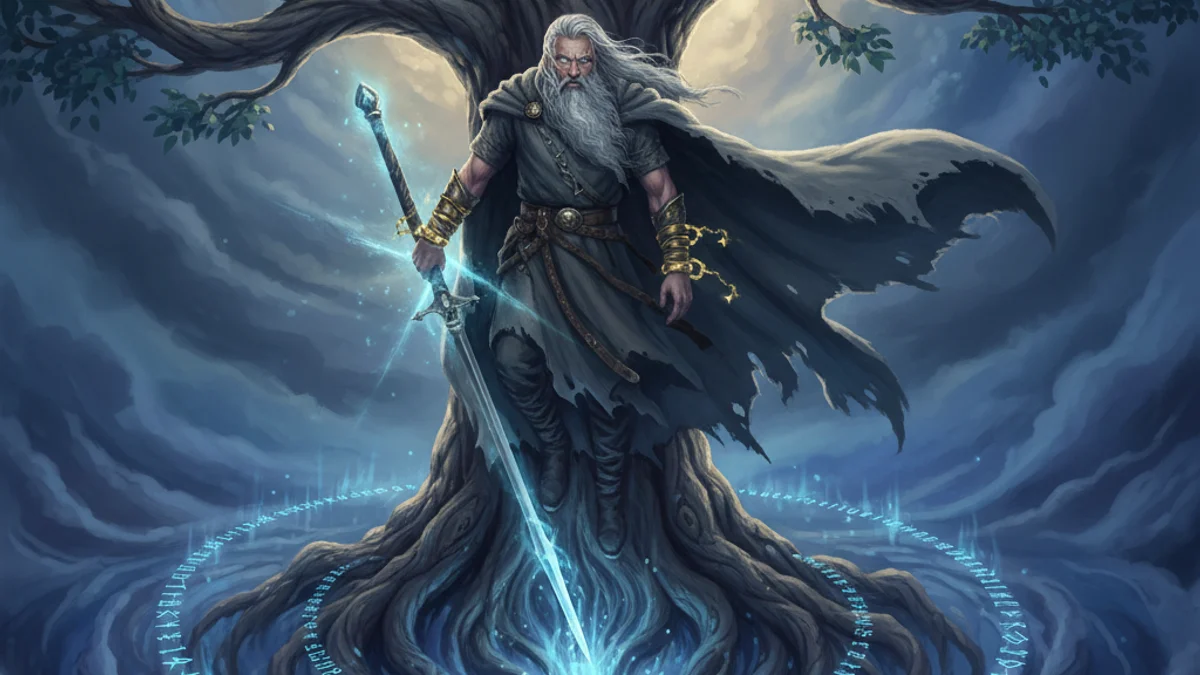
Driven by an insatiable thirst for universal wisdom, Odin, the All-Father, undertook a trial of ultimate endurance. He traveled to the World Tree, Yggdrasil, and committed an act of profound sacrifice: he hung himself from a windswept branch, pierced through the side by his own spear, Gungnir. For nine long days and nine agonizing nights, he remained suspended between the heavens and the roots, refusing food, water, or any worldly comfort. He looked down into the bottomless abyss of Ginnungagap, offering himself 'to himself' in a ritual of cosmic proportions. On the ninth night, through the haze of pain and near-death, the secrets of the universe were revealed to him. He glimpsed the magical Runes—symbols of power and fate—shimmering in the depths. With a final, roaring effort, he reached out, seized their wisdom, and fell from the tree, reborn as the master of magic, poetry, and prophecy.
True wisdom and enlightenment often require profound personal sacrifice and the willingness to endure suffering for the sake of growth.
Questions about this story
What is the moral of Odin Hangs on Yggdrasil?
The story teaches that great knowledge and power are not given freely but must be earned through dedication and sacrifice. It emphasizes that self-improvement often requires enduring personal hardship.
Why did Odin sacrifice himself to himself?
In Norse theology, Odin is the highest being; therefore, there was no higher power to whom he could offer a sacrifice. By sacrificing himself to himself, he unified his mortal struggle with his divine will to attain hidden knowledge.
How long did Odin hang on the World Tree?
Odin hung on Yggdrasil for nine days and nine nights. This number is significant in Norse mythology, representing the nine worlds and the completion of a cosmic cycle.
What are the Runes Odin discovered?
The Runes are more than an alphabet; they are magical symbols representing the fundamental forces of the universe. By seizing them, Odin gained the ability to cast spells, heal the sick, and influence fate.
Advertisement
Good night.
